Introduction to Pollination
Goal:
Goal:

What is pollination?
Pollen is the yellow powder that may make you sneeze, but it allows plants to reproduce. That means it makes more plants. Without pollen, we would not have food. Pollination is when pollen moves from one plant to another.
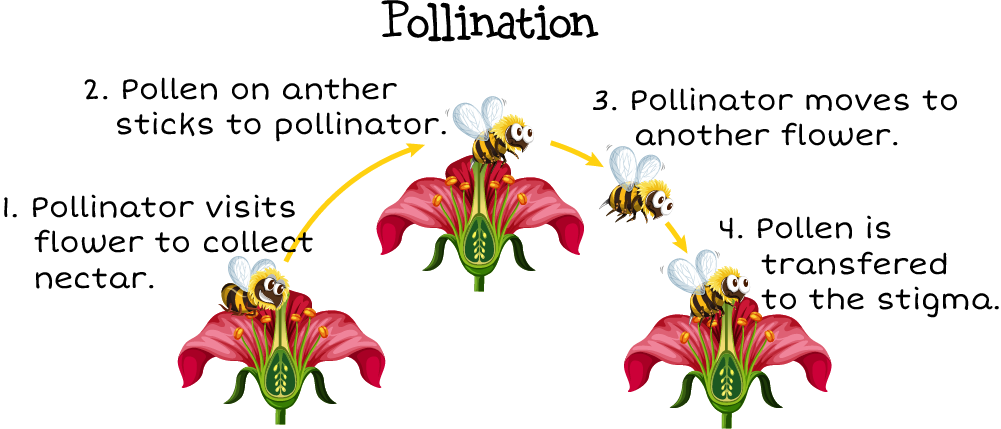
This diagram shows the four steps of pollination using three pink flowers and a honeybee. At the top, the word "Pollination" is written in large letters. The process follows these steps:
- Pollinator visits flower to collect nectar: A honeybee lands on the first pink flower to find sweet liquid to eat.
- Pollen on anther sticks to pollinator: As the bee sits on the flower, tiny yellow dust called pollen sticks to its fuzzy body.
- Pollinator moves to another flower: The bee flies away from the first flower and moves toward a different one.
- Pollen is transfered to the stigma: The bee lands on the new flower, and the yellow pollen from its body drops onto the middle part of the flower to help it make new seeds.
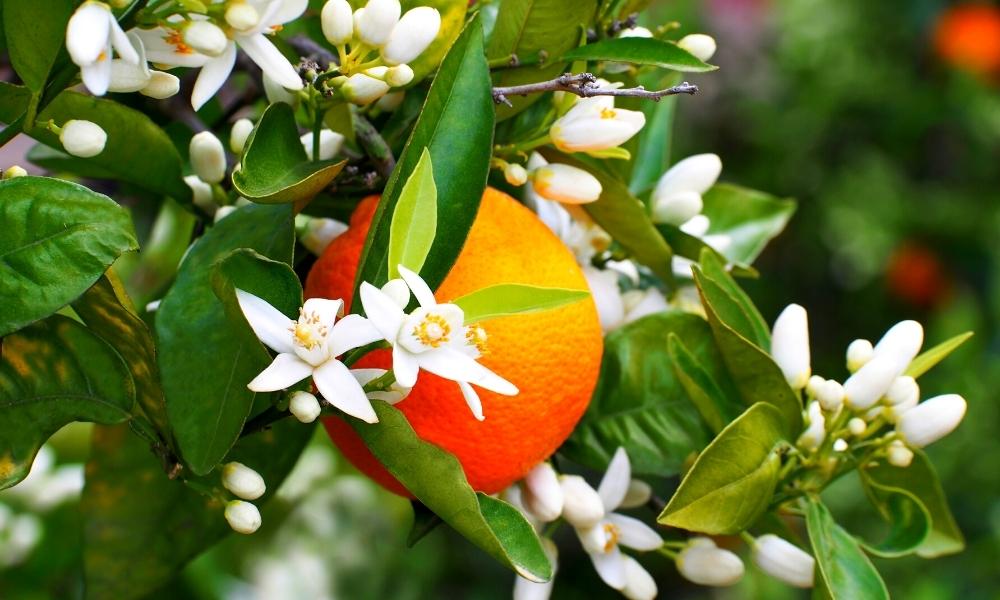
Once the pollen moves to the new flower, the plant can now grow fruit. The flower drops, and the fruit, like this orange, begins to grow.
Question
How does fruit grow?
Once the pollen moves to a new flower, the flower can drop, and fruit can grow.