The Supreme Court justices did not officially comment on FDR's Judicial Procedures Reform Bill of 1937, let alone attack it. The Court, then as now, positioned itself as above the fray of politics. Plus, the justices were probably pretty sure that the bill would never pass...
...but they may have been a little worried. FDR was still very popular, and if the justices were presented as men trying to hurt the economy by fighting the New Deal for no apparent reason, the bill might actually pass. Or, if not this exact bill, some future legislation that changed the Court might pass. In April 1937, before the bill had even come to a vote in Congress, the Court announced two rulings in New Deal cases: The Court voted in favor of the National Labor Relations Act and the Social Security Act. Americans were surprised to learn that two of the Four Horsemen who had been fighting the New Deal changed their votes to support the programs. Their last-minute switch saved both New Deal programs from being shut down as unconstitutional.
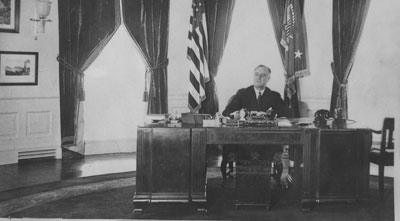 |
| FDR was isolated after the court-packing scheme. |
After the summer of 1937, the Supreme Court did not overturn any more New Deal legislation. FDR got what he wanted. But it had cost him a great deal: the nation's trust, Congressional cooperation, and political and personal respect. FDR was isolated from Congress and from the public, neither of which trusted him as they once had.
Test your understanding of the court-packing scheme by answering these questions.
Why might the Court worry about FDR's bill, even if it failed to pass Congress?
- It could put the idea in the public's mind that the Court was a problem.
- FDR could pass the bill without congressional support with an executive order.
- Most Americans resented the Court for opposing the New Deal.
- It showed that Congress had the power to change the Court.
FDR could not have passed the bill with an executive order; that would have been unconstitutional. Most Americans did not resent the Court, so while Congress technically had the power to change the Court, it would not. The real threat was that the bill would get people feeling negative about the Court, possibly enough that one day they would support a bill to change it.
FDR could not have passed the bill with an executive order; that would have been unconstitutional. Most Americans did not resent the Court, so while Congress technically had the power to change the Court, it would not. The real threat was that the bill would get people feeling negative about the Court, possibly enough that one day they would support a bill to change it.
FDR could not have passed the bill with an executive order; that would have been unconstitutional. Most Americans did not resent the Court, so while Congress technically had the power to change the Court, it would not. The real threat was that the bill would get people feeling negative about the Court, possibly enough that one day they would support a bill to change it.
FDR could not have passed the bill with an executive order; that would have been unconstitutional. Most Americans did not resent the Court, so while Congress technically had the power to change the Court, it would not. The real threat was that the bill would get people feeling negative about the Court, possibly enough that one day they would support a bill to change it.
Why did the conservative justices change their votes on the National Labor Relations Act and the Social Security Act?
- Those programs were clearly constitutional.
- They were afraid of FDR's bill.
- Historians cannot be sure why.
- Congress put pressure on them.
Most people think the justices switched their votes because they wanted to appease FDR and were afraid his bill would pass, but no one knows that. There were good arguments against both programs, and Congress put no pressure on the Court to vote one way or the other.
Most people think the justices switched their votes because they wanted to appease FDR and were afraid his bill would pass, but no one knows that. There were good arguments against both programs, and Congress put no pressure on the Court to vote one way or the other.
Most people think the justices switched their votes because they wanted to appease FDR and were afraid his bill would pass, but no one knows that. There were good arguments against both programs, and Congress put no pressure on the Court to vote one way or the other.
Most people think the justices switched their votes because they wanted to appease FDR and were afraid his bill would pass, but no one knows that. There were good arguments against both programs, and Congress put no pressure on the Court to vote one way or the other.
Summary
 Questions answered correctly:
 Questions answered incorrectly:
