An empire the size of Rome was expensive to maintain. To help grow the empire while holding onto their own power and control, Roman leaders developed economic systems that were very different from the way humans had exchanged goods and services in the past. Most people at the time used a barter system--they exchanged one object or service for another object or service. The Romans created a currency system, based on money, to help them carry out the work of empire-building.
Unfortunately, some Roman emperors decided to see just how far they could stretch a "dollar," and the empire's currency system became inflated. Inflation occurs when it suddenly takes more money to buy an item than people are used to paying, and it tends to weaken an economy rather than strengthen it.
Use this slideshow to learn how the Romans' use of a currency system gradually fell apart.
|
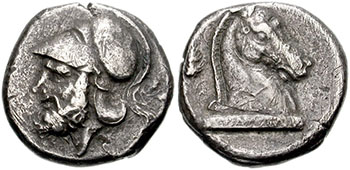
The early ancient Romans shifted from bartering to the use of metal as currency. The first Roman silver coins were created around 312 BCE.
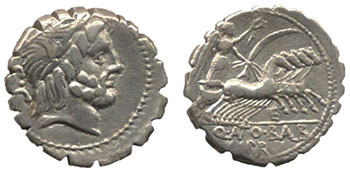
The denarius became the main currency of the Roman Empire and remained so until the 3rd century CE. Initially, the coins were made entirely of silver, a valuable metal.
Over time, the amount of silver in each coin was reduced. The result was that it took more coins to buy the same item, such as a loaf of bread. Otherwise, the baker would get less silver for his product.
As the Roman Empire expanded and conquered more territories, it found itself with more people to house and feed, which led to even more of an appetite for money and resources.
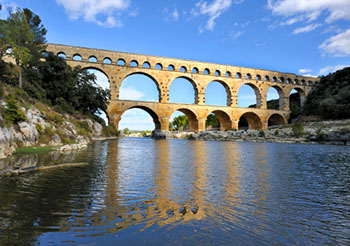
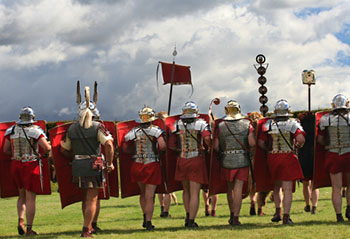
By the 3rd century CE, the Romans had a vast empire which required a lot of money to maintain. There was an army to feed and equip, there were roads and aqueducts to build, and the Roman elite insisted on maintaining a luxurious lifestyle. Take that away from them, and they would refuse to support their leaders.
The use of military conquest to grow the economy meant that Rome depended less and less on internal production of goods by its citizens and more and more on politics and trade. Rome became a service and trade center, not a place to make goods, which means it depended on the people it conquered or traded with to provide food, tools, weapons, and building materials.
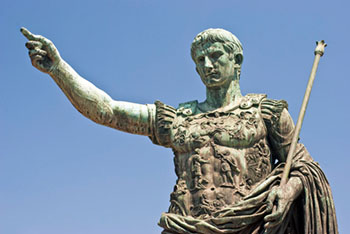
Wars were financed by the wealthy, who would then receive part of the wealth looted from conquered lands. These senators and nobility used their wealth to buy land, making them the main landowners in the empire.
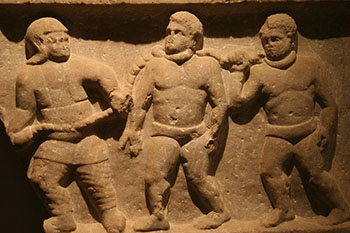
Success in war also meant that the Roman slave trade was huge--since many of the people Rome conquered became its slaves. Slaves were so widely available that the cost of slaves was very low. It was cheaper to purchase slaves than to pay free workers a salary. The rich became increasingly richer while the poor couldn't find jobs that paid a decent wage.
With Rome's economy so bound to its need to conquer and control other people, it was only a matter of time before the powerful of Rome found themselves vastly outnumbered by the people they had conquered, plundered from, taxed heavily, or enslaved.
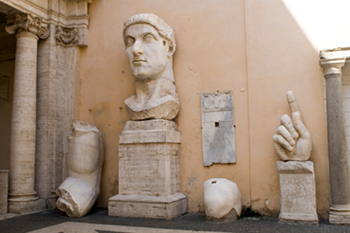
Over the centuries several emperors tried to introduce reforms to improve the economy. Emperor Constantine around the year 300 attempted some important economic reforms, but none were successful.
|
 |



How did Rome pay for the luxurious lifestyles of its noble elite citizens?
- It produced a great number of goods, which its traders sold far and wide.
- It conquered other lands and peoples, took their resources, and made them pay taxes.
- It sold pieces of land to other empires whenever it needed money to keep the nobles happy.
Rome's powerful elite (upper class) would support an emperor only if he kept invading and looting other lands--then passing the wealth along to the nobles.
Rome's powerful elite (upper class) would support an emperor only if he kept invading and looting other lands--then passing the wealth along to the nobles.
Rome's powerful elite (upper class) would support an emperor only if he kept invading and looting other lands--then passing the wealth along to the nobles.
How did the economic problems contribute to the fall of the Roman Empire?
- The cost of items became higher, which made it harder for people to maintain a safe and healthy life in Rome's cities.
- Managing the growing empire cost a lot of money, and each conquest of a new territory made it harder to control everybody.
- Since Rome produced very few goods or food on its own, very little money came into Rome except through conquest or trade.
- All of the above
As the Roman Empire expanded and conquered more territories, it found itself with a greater need for money and resources. The use of military conquest to grow its economy meant that Rome depended less and less on internal production of goods by its citizens. This dependence on the people it had conquered became its downfall.
As the Roman Empire expanded and conquered more territories, it found itself with a greater need for money and resources. The use of military conquest to grow its economy meant that Rome depended less and less on internal production of goods by its citizens. This dependence on the people it had conquered became its downfall.
As the Roman Empire expanded and conquered more territories, it found itself with a greater need for money and resources. The use of military conquest to grow its economy meant that Rome depended less and less on internal production of goods by its citizens. This dependence on the people it had conquered became its downfall.
As the Roman Empire expanded and conquered more territories, it found itself with a greater need for money and resources. The use of military conquest to grow its economy meant that Rome depended less and less on internal production of goods by its citizens. This dependence on the people it had conquered became its downfall.
Summary
 Questions answered correctly:
 Questions answered incorrectly:
