Complete and Incomplete Metamorphoses
Some animals go through dramatic changes during their life cycles.
Goal:
Goal:
|
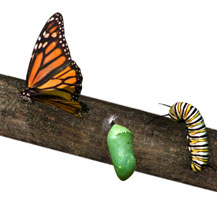
Butterflies and Complete Metamorphosis A butterfly is an example of an animal that goes through complete metamorphosis. This means its form changes dramatically during the four stages of its life cycle. An adult butterfly lays eggs like many species. However, after the eggs are born they don't look like butterflies at all. This first stage of life is called larva. For the butterfly, the larva is also known as a caterpillar. The main purpose of a caterpillar is to eat. When it has finally had its fill, the caterpillar will attach itself to a leaf, branch, or other structure. It will become a pupa, or chrysalis, at this stage. The pupa surrounds itself with a hard outer layer. Inside, its body basically breaks down and regrows as a butterfly. When it's ready, a fully grown adult butterfly will emerge from the hard shell, let its wings dry, and fly away to start the cycle all over again.
Frogs and Incomplete Metamorphosis Incomplete metamorphosis is a three-stage process that doesn't include the pupa stage. For example, frogs hatch from eggs in water as tadpoles. The tadpoles swim around for a while, looking more like tiny fish with tails than frogs. They eat and grow. Eventually, legs form and their bodies absorb their tails. Soon, they are ready to hop about on land and begin the adult stage of their life cycle.
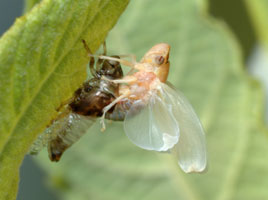
Insects and Incomplete Metamorphosis Damselflies, grasshoppers, and cicadas are examples of insects that go through incomplete metamorphosis. They hatch from eggs and become nymphs. As the nymphs grow, they shed their skin and sprout wings several times until they reach the adult stage. These animals skip the pupa stage.
|
 |

![By Rainforest_harley (Flickr) [CC-BY-SA-2.0], via Wikimedia Commons](https://s3.amazonaws.com/cms.accelerate-ed.com/image/1dc315f8-c51d-4b82-a32c-c5cee21d899a.jpg)