Rocks
How do rocks change over time?
Goal:
Goal:
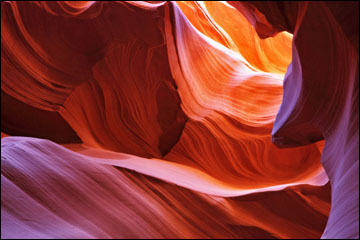 Wind, water, and living things change rocks. They break large rocks into smaller rocks. Sometimes, nature wears away very small pieces of rock. This is called weathering. Water causes the majority of weathering on Earth.
 The photo to the left was taken at Antelope Canyon, Arizona, which was formed by the erosion of sandstone. This erosion is primarily due to flash flooding. Rainwater spills into the slot canyon, picking up speed and sand as it rushes into the narrow passageways. Over time, the passageways are eroded away, which makes the corridors deeper and smoother. This type of erosion carves the characteristic "flowing" shapes into the sandstone.
If possible, collect rocks from a creek bed. Notice how these rocks are different from the rocks that you collected last week from other places. Why are they different?
Wind also changes rocks. As sediment blows against them, the rocks slowly wear away. When wind or water carry soil and rocks away, we call it erosion. Look for evidence of erosion in your environment.
Plants help to hold rocks and soil in place so that the wind does not blow them away. This is why we must be very careful about digging up the plants in any area. If we leave an area bare, wind and water on the exposed landscape will cause it to erode much faster.
Plants and animals also cause erosion--plants' roots and stems push on the rocks as they grow, and animals dig into the ground for food and shelter. Often, the rocks get chipped and loosened up, then water and wind carry the pieces away.
Try to locate a place in your environment where trees or plants are growing out of cracks in the stone. Perhaps a large tree root is pushing up part of a sidewalk or driveway.