Perhaps you’ve encountered someone who doesn’t exactly know how to tell a good story. They may include unimportant details, over-explain everything, bring up people who have nothing to do with the story, and wander from one unnecessary point to another. These are clearly not examples of effective anecdotes.
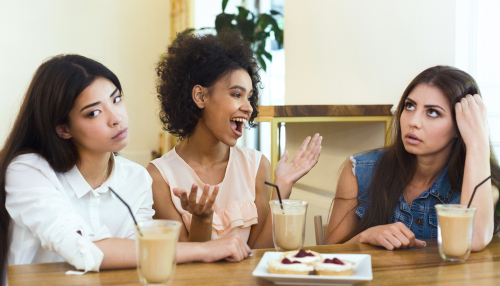
On the other hand, maybe you know someone who make the most boring story sound like an adventure. In this lesson, you’ve learned what makes an anecdote effective. Now it’s your turn to see if you can identify those characteristics in an anecdote from Chris Jacobs’ narrative Everlasting.
Everlasting
The car ride would have been long for a grown-up. For a first-grader, it was eternity. There were no iPads or even Game Boys back then to hold my focus; all I had was my red Thundercats lunchbox, the occasional emerald highway sign to mark our progress, and a tongue that churned out Whys like a Ford factory line.
Why do we have to get up when it’s still nighttime? Why am I going to a new school? Why does it have to be so far?
Over the course of the first few weeks—once my mom caught on that these questions were actually complaints, her responses lost some of their patience. Though she handled the daily drives with grace, the bluish bags forming under her eyes told a different story: one about her years spent in poorly-funded, inner-city schools, and the doors that would close on her because of them. But I didn’t get to hear that story till years later. For now, I just settled into a frustrated six-year-old silence, my attention flitting to the many switches and buttons in her aging ’76 Dodge Aspen.
On one morning’s ride, in an attempt to run defense on my mischief, Mom held up my lunchbox.
“Listen,” she hushed, giving it three good shakes.
I gasped, my body snapping to attention. Two shakes would have been enough for me to recognize that sound—a deep, delicious clack of candy marbles that could only be—yes, yes, they were—
“Gobstoppers!!” I tore the lunchbox from her hands, pouring its contents onto my lap. “A whole box?!” I squealed.
I raised the bright yellow box of candy in the air and tilted it against my ear, gingerly enough to hear the small spheres slide and clatter from one end to the other. Everlasting Gobstoppers were not just a candy, you see, they were an experience—they changed color as you ate them, and in the mouth of an experienced sucker, each one provided fifteen minutes of sticky-fingered, germ-filled entertainment. And a box—well a box just made for the world’s most perfect Saturday
Even though it was only Tuesday, the rattle of the candy in my lunchbox made it feel like the weekend. After forgetting to thank my mother, I spent most of that school morning daydreaming about my unexpected hoard. As soon as recess came, I hopped on a chipped wooden bench and clicked open the lunchbox, raising the unopened box to the light of the sun so that I could watch the shadows of each jawbreaker as they rolled left, then right, then left—
“Hey, new kid!” A hoarse voice interrupted my daydream from across the school playground. I looked up to see a short boy with a baggy purple sweatshirt and jet-black hair perched on the tallest point of a chunky blue plastic slide.
I nearly dropped my Gobstoppers. In six weeks at this new school, no one but my teacher had ever addressed me when it wasn’t absolutely necessary. He had to speak again — “Yeah, you!” — before I actually started toward him. The slide was at the far end of an elaborate, fortress-like structure with a suspension bridge, a jungle gym, a sliding pole, and monkey bars. Though it was my first time getting close to it, I had spent most recesses since joining this new school admiring it from afar. The chunky blue slide was topped by a wooden hutch big enough for three or four kids to inhabit.
Purple Sweatshirt got right to the point. “I’m Naveen.” He shot a thumb at a redhead with a frizzy mop-top who was peeking out from behind him. “This is Larry.” Naveen’s eyes flashed toward my hands, which had become clammy. “You new here or something?”
I tried to speak but couldn’t find the words. Larry let a chuckle escape as I settled on a weak nod.
Naveen wasn’t fazed. “Well New Kid, we’re part of a special recess club here called ‘The Fluffies,’ and we’re considering letting you join.”
Naveen sounded so sophisticated—did ‘consider’ mean I was in? These were older boys—second or third grade at least—and I suddenly felt a need to be known by them. “M’kay,” I said. “What do I hafta do?”
Naveen’s eyes wandered again toward the Gobstoppers. “You gotta give us your dessert every day. We all do it. ‘Cause it costs to be a Fluffy.”
The club’s name made me think of things I loved: the belly of my mom’s boyfriend’s golden retriever, Angel; freshly spun, hot-pink cotton candy from the Topsfield Fair; and the fur of my favorite stuffed bear, Snuggles, before my mom ruined him forever at the laundromat. I surveyed the rest of the playground, wondering how many of the screaming, dancing children had paid the price to become a Fluffy.
I heard Larry chuckle again. I glanced down at the golden treasure in my hand, then back up at Naveen. Finally, I stretched my arm high, offering up my perfect Saturday to him.
It was Larry who responded, monkeying his way down from the top of the slide to snatch the Gobstoppers from me. As he disappeared behind Naveen’s purple sweatshirt, I heard the candy clacking in its box one last time. “Welcome to the Fluffies!” Naveen called down to me. “Now I’m gonna need you to guard the bottom of our slide until the end of recess.”
I wanted to protest, but I didn’t. Instead, I stood awkwardly beneath the Fluffy fortress, shame swelling larger in my chest with every moment that passed. I felt the sting of injustice, but I was way too young to have called it that. The laughter tumbling from the wooden hutch made the last four minutes of recess seem like an eternity.
I was a hair’s breadth from full-on tears when a single Gobstopper came rolling out down the blue plastic slide, fast enough that I could only stare as it plopped into the damp sand at the bottom. I bent down to examine it, and the lump in my throat exploded into a sob. Before Naveen or Larry could see, I shot the lone Gobstopper into my mouth and stashed it under my tongue, where I held it—like a secret—for much of the next hour.
How does Jacobs begin his anecdote?
- in the middle of the action
- by providing some context
- with an unrelated story
Sometimes writers jump into the action and then backtrack to explain what is happening.
Sometimes writers jump into the action and then backtrack to explain what is happening.
Sometimes writers jump into the action and then backtrack to explain what is happening.
Why doesn’t Jacobs include more details about why he is being driven to a new school?
- They are not important to the anecdote.
- Other details will be addressed later
- They would reveal too much about him.
Jacobs only includes the most important details of the story.
Jacobs only includes the most important details of the story.
Jacobs only includes the most important details of the story.
Why does Jacobs include dialogue in this scene?
- The dialogue shows what Jacobs’ mom is like.
- The dialogue helps set up the scene of the story.
- The dialogue helps move along the action of the story.
Although Jacobs could have described this scene rather than using dialogue, he instead uses just a few words to move the action forward.
Although Jacobs could have described this scene rather than using dialogue, he instead uses just a few words to move the action forward.
Although Jacobs could have described this scene rather than using dialogue, he instead uses just a few words to move the action forward.
Which sense does Jacobs NOT appeal to in this paragraph?
- sound
- smell
- touch
Jacobs describes what the candies look like, how they sound rolling around in the box, what they taste like, and how they make one’s fingers sticky.
Jacobs describes what the candies look like, how they sound rolling around in the box, what they taste like, and how they make one’s fingers sticky.
Jacobs describes what the candies look like, how they sound rolling around in the box, what they taste like, and how they make one’s fingers sticky.
Which of these is an example of a specific detail that Jacobs uses to describe the playground?
- across the school playground
- chunky blue plastic slide
- three or four kids
Concrete details specifically describe what something looks like.
Concrete details specifically describe what something looks like.
Concrete details specifically describe what something looks like.
What part of the anecdote is Jacobs explaining in these paragraphs?
- the background to the story
- the importance of the story
- the action in the story
After setting up how important the Gobstoppers are to him and how much they meant to him as a lonely kid in a new school, Jacobs is now getting to the action of the story.
After setting up how important the Gobstoppers are to him and how much they meant to him as a lonely kid in a new school, Jacobs is now getting to the action of the story.
After setting up how important the Gobstoppers are to him and how much they meant to him as a lonely kid in a new school, Jacobs is now getting to the action of the story.
Why is this anecdote important to Chris Jacobs?
- It shows how his move to a new school negatively affected him.
- It reminds him that all new students are picked on at first.
- It implies that this is when he learned it’s best to share with others.
Jacobs retells this anecdote to show how this experience affected him.
Jacobs retells this anecdote to show how this experience affected him.
Jacobs retells this anecdote to show how this experience affected him.
Summary
Questions answered correctly:
Questions answered incorrectly:
