For any challenging task, choosing a strategy is often the best first step. For instance, when you start a new jigsaw puzzle, you might complete the outside border first. Edge pieces are easy to find, and the border gives you a foundation for working on the rest of the puzzle. Another example of a strategy is packing your lunch and backpack before you go to bed--the next morning, they’re ready to go when you are, which can help you get to school on time.

While you may not be aware of it, you also choose and use strategies when you read. For example, you might stop and reread a paragraph that seems confusing, use context clues for unfamiliar words, or close your eyes and visualize what you’re reading. You do not use every strategy every time you read, of course. Good readers know a variety of possible techniques, and they know exactly when to use them.

Let's break it down . . .
How many reading strategies do you know? Review the ones described on the tabs below, and decide which ones you could add to your own reading tool set.

Metacognition happens when you think about your own thinking. When readers use metacognition as a strategy, they pause and ask themselves if they understand what they just read.
Question
Why is metacognition a helpful reading strategy?

In some reading situations, you automatically relate what you read to similar events in your own life. In other cases, you have to make an extra effort to connect the writer’s ideas to something you already know or to an emotional situation you recognize--because you’ve been there.
Question
How does making connections improve your comprehension?

Graphic organizers, or “thinking maps,” help you identify the separate ideas, events, or characters in a text. The most commonly used graphic organizers for reading are T-charts, Venn diagrams, tables, bubble maps, and plot diagrams.
Question
Why are graphic organizers helpful?
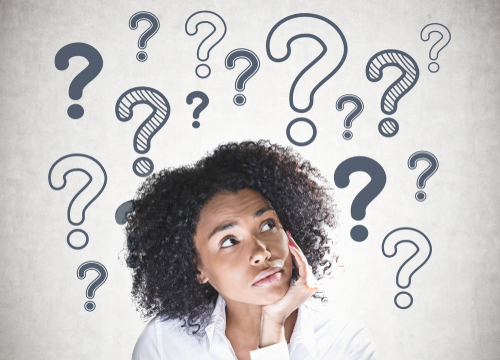
Good readers wonder about what they read. They may ask--without verbalizing the question--why a character behaved in a certain way or how a particular problem will be solved.
Question
How often should you ask questions when you’re reading?

Authors have many choices for how to organize their ideas. They may describe events in chronological order, compare and contrast two different subjects, or offer a solution to a problem. They may use subheadings to set apart related ideas, or they may choose to divide a novel into a few parts instead of many chapters. These organizational patterns are sometimes called text structures.
Question
Why should a reader be able to recognize text structures?

You may think that summarizing only happens after you finish reading a story or text. However, good readers tend to summarize chapters, paragraphs, sections, and scenes. They don’t usually write these summaries down, of course. Instead, they review what has happened so far and use that understanding to predict what might happen next.
Question
How are summarizing and metacognition related?
