Did you know that poets often choose words that don't mean what they say? It's true. In fact, you do the same thing—whenever you use a figure of speech. Figures of speech are also called figurative language. They consist of words and phrases that mean something different, or something more, than what they literally say.
Speakers use figurative language all the time, just as writers do. A friend might put off a decision with this phrase: "We'll cross that bridge when we get to it." There's no real bridge involved. This is a figurative way to say, "We'll wait to decide later, when we have to do so."
In poetry, figurative language helps poets pack meaning into a few carefully chosen words. From the first line of "Mending Wall" to its close, Frost uses figurative language to reveals his poem's theme, an idea that arises from the neighbors' work on the wall. Use the tabs below to take a close look at some examples.
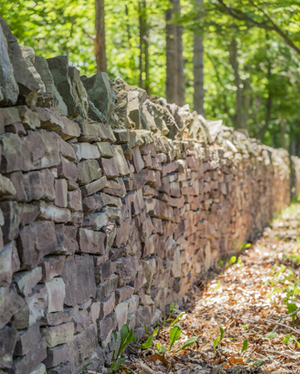
This form of figurative language gives human traits to something that's not human. In the first line of "Mending Wall" ("Something there is that doesn't love a wall"), the something is nature. The changing of seasons "sends the frozen-ground-swell" that topples stones from the wall. Winter can't actually love or not love something, but this figurative language gets across an important idea.
Question
What belief about walls does Frost's use of personification suggest?
Metaphor is figurative language that compares things that don't seem alike, as in "He is all pine and I am apple orchard." A metaphor makes a direct comparison by saying that one thing actually is another thing. Literally, the speaker has an apple orchard on his side of the wall, and the neighbor has pine trees on his side. But by saying that the neighbor is all pine and the speaker is apple orchard, Frost hints that more is going on figuratively.
Question
What reality does this metaphor suggest?
A simile is figurative language that compares things using as or like. In "Mending Wall," a story that begins on a bright spring day takes a slightly dark turn when the speaker's neighbor insists that “Good fences make good neighbors.” At that moment, the neighbor seems like "like an old-stone savage armed."
Question
How does this simile ("like an old-stone savage armed") represent a change in the speaker's feelings about his neighbor?
A symbol represents, or stands for, something beyond its more obvious meaning. Darkness becomes a symbol in these lines:
He moves in darkness as it seems to me,
Not of woods only and the shade of trees.
Question
What does the darkness in these lines symbolize?
