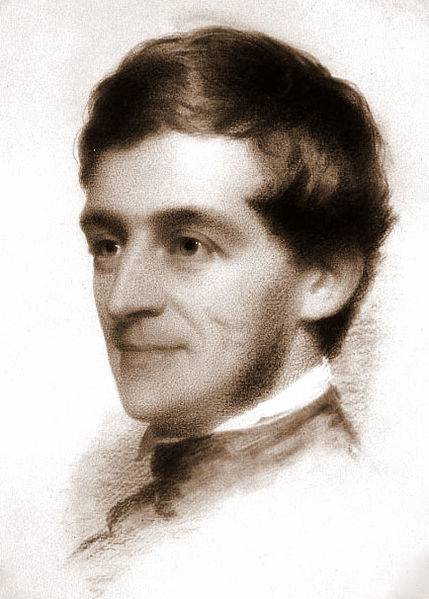
 Born in Boston in 1803, Ralph Waldo Emerson was the son of a Unitarian minister. At the young age of 14, he went to Harvard College, where he earned the title of Class Poet. Emerson's early years were not carefree, however. Several of his loved ones, including his first wife, died of tuberculosis.
Emerson taught school for a time and then became the junior pastor of a church. However, his unconventional beliefs soon pulled him away from the ministry and into the more flexible role of teacher and lecturer. In 1838, he gave a highly controversial graduation address at Harvard Divinity School. His nontraditional views about Christianity so shocked and offended some members of the school that he was not invited back to speak at Harvard for 30 years.
Emerson's lectures formed the basis for his published works. In 1836, he anonymously published Nature, a long essay that established the foundations of transcendentalism. His second book, published in 1841, included the now-famous essay "Self-Reliance." With positive reviews from abroad, this book launched Emerson as an internationally famous writer. He continued to write and lecture until he developed memory problems in his later years. He died in 1882 after falling ill with pneumonia.
Question
What aspects of Emerson's ideas about spirituality might have seemed highly unconventional and troubling to the leaders of Harvard Divinity School?
