You have probably read—and written—many essays that follow a familiar, predictable structure. The first paragraph of an analytical or persuasive essay usually presents the thesis statement. The body paragraphs then provide examples and evidence. Finally, the conclusion restates the thesis and sums up the argument, often ending with a call to action.
Emerson's literary essays are different. As you have seen, he presents many complex, related ideas instead of just one main claim. He also concerns himself with a kind of truth that can't be proven or illustrated in straightforward ways. These two features of Emerson's writing, in less skilled hands, might produce essays that no one can follow or understand. However, Emerson structures his writing carefully to provide support for his ideas—he just doesn't use conventional forms or structures.
Read the passage below from Emerson's long essay "Nature". As you read, look for clues that reveal the structure Emerson has created for his ideas.
A nobler want of man is served by nature, namely, the love of Beauty.
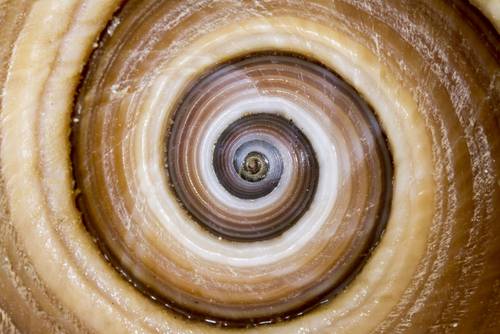
The ancient Greeks called the world {kosmos}, beauty. Such is the constitution of all things, or such the plastic power of the human eye, that the primary forms, as the sky, the mountain, the tree, the animal, give us a delight in and for themselves; a pleasure arising from outline, color, motion, and grouping. This seems partly owing to the eye itself. The eye is the best of artists. By the mutual action of its structure and of the laws of light, perspective is produced, which integrates every mass of objects, of what character soever, into a well colored and shaded globe, so that where the particular objects are mean and unaffecting, the landscape which they compose, is round and symmetrical. And as the eye is the best composer, so light is the first of painters. There is no object so foul that intense light will not make beautiful. And the stimulus it affords to the sense, and a sort of infinitude which it hath, like space and time, make all matter gay. Even the corpse has its own beauty. But besides this general grace diffused over nature, almost all the individual forms are agreeable to the eye, as is proved by our endless imitations of some of them, as the acorn, the grape, the pine-cone, the wheat-ear, the egg, the wings and forms of most birds, the lion's claw, the serpent, the butterfly, sea-shells, flames, clouds, buds, leaves, and the forms of many trees, as the palm.
Now answer these questions about the passage.
| What purpose does Emerson say nature serves for humanity? | He says that natural objects and landscapes, by their very nature, fulfill our need for beauty. |
| What explanation does Emerson provide to support this statement? | Emerson explains that the human eye naturally sees objects in a way that makes them pleasing to the mind. He compares the eye to a composer and light to a painter: Light makes things beautiful, and the eye perceives them in a way that allows us to experience the beauty. |
| What two topics divide the longer paragraph into two parts? | the role of the eye and the role of light in "composing" beautiful scenes |
