Ratios and proportions have uses that reach far beyond finding the sides of similar figures on a worksheet. Take a look at these examples of how you might use ratios and proportions on a regular basis—perhaps without even realizing it! First, think of an answer for the question on each slide. Then click the Answer button to compare your answer to ours.
|
How could ratios and proportions help you use this tape measure to complete a project at home?
Measurement conversion is one very common use of ratios and proportions. You may need to convert inches to feet or centimeters to meters. If you know how to use proportions to solve problems, you can make these conversions much more quickly and accurately.
How could ratios and proportions help you find the best deal on an item at the grocery store?
Most grocery items are produced by several different brands, and these items may even be packaged in different sizes or quantities. You can use ratios and proportions to figure out which brand is the best deal for your money.
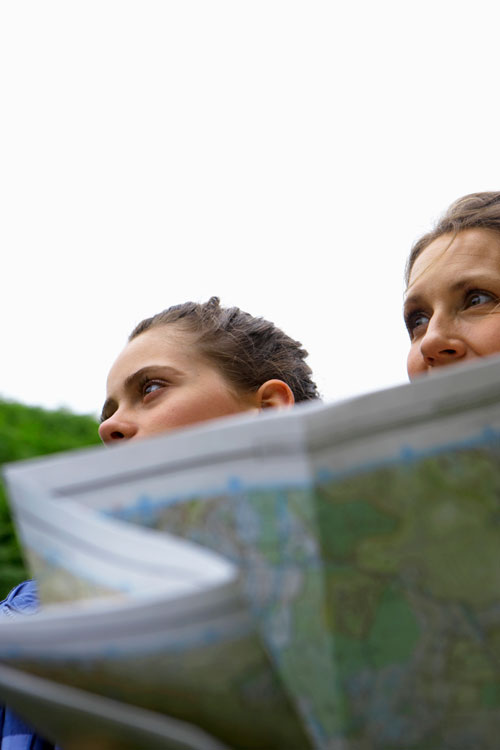
Do you use ratios and proportions when reading a map?
If you want to know how far you will need to travel—to estimate how long a trip will take—you can use the ratios provided in the map's key. For example, each inch on your map might represent 100 miles. If you measure 3.5 inches between your start and end points on the map, you can figure that you'll have to drive 350 miles.
|
 |