The First President
Who was the man who became our first president?
Goal:
Goal:
GEORGE WASHINGTON
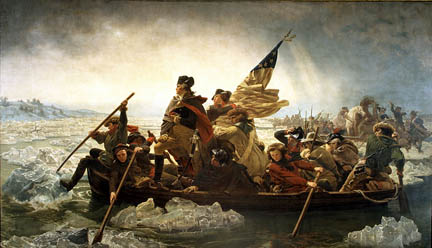 Many years ago, much of the land was wilderness. Wild beasts roamed, and swift Native hunters tracked them through grass and swamp lands. In autumn, the Native people would travel to the shore of a great river to fish. There, they would catch oysters and eat them. The empty oyster shells piled up and up, until at last they formed an oyster shell hill. Many years later on this hill, a little boy was born in a great house made all of red brick. Around this house so much land had been cleared that the wilderness lay far in the distance. In its place was a plantation where slaves tended fields of grain and tobacco. The little boy was named George and he soon learned that his whole family were fed and dressed by the crops that their slaves grew in those fields.
George was not a prince, though some would say he lived a bit like one. He dressed in fine clothes and had lovely toys to play with. He was taught all of the lessons a little prince might learn, like reading and writing, and even dancing. As soon as George was old enough to reach the stirrups, his father gave him a bold pony, and he learned quickly how to ride. At first, the pony would buck and rear, but George did not show that he was afraid. Instead, he hung onto the mane and sat firmly in the saddle. So it was that soon George was the finest rider from far and wide and people began to hear stories of a young man who rode well, studied hard, and took seriously the lessons of his father.
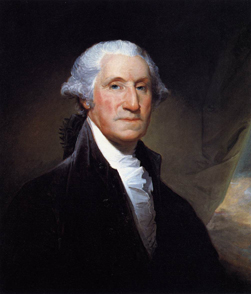 One day, George was riding home from his school in town, and he met two handsome young men standing at the gates of his plantation, ready to greet him. These were his two half- brothers, much older than he, who had returned home from far across the sea. George felt shy at first, for he had secretly been a lonely child in his great house with only his baby sister to talk with. He desired nothing more than that these two great men would be proud of him. His oldest brother was an officer, and George longed to be just like him, for in his heart, George believed himself to be a great leader. He was now tall and strong and rode his horse better than any child of his age. Indeed, he beat them all in races and games, and it was said that he was so strong that he could throw a coin across the wide river until it would land steadily on the other side!
George’s desire to lead was so strong that he wrote down all the rules he believed a true gentleman should know. He wrote: "In the presence of others sing not to yourself nor drum with your fingers nor feet," and "Give not your advice without being asked," and "Undertake not what you cannot perform, but be careful to keep your promise." This one George especially loved, for he thought perhaps there was nothing he could not do. "When the day comes," George thought to himself, "I will be ready. Ready to lead. Ready to fight for those who cannot."
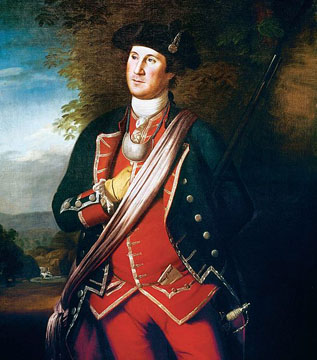 George decided that the time had come to explore the wilderness around him and meet the Native peoples who lived there. He said goodbye to his family and traveled into the woods and hills that lay far from his home. Here he came to know the ways of the Native Americans and the other people he met. George grew to deeply love the countryside around him and all those that dwelled within it.
It was in this way that news of this man spread. Here was a man, people said, that cared for them like their own, who they believed to be as a father to them all. When the time came, after many hardships and battles, the people of this land gathered together and called upon George to lead them. They asked him to be their "king," for that is what they had always known. But George said "No, call me instead your president, and I will lead, only if it is your will."