Money, Money, Money
Banks and the Stock Market
Goal:
Goal:
Study the tabs below to learn what role banks, debt, and the stock market played in causing the Great Depression.
Banks
Borrowing Money
Stock Market
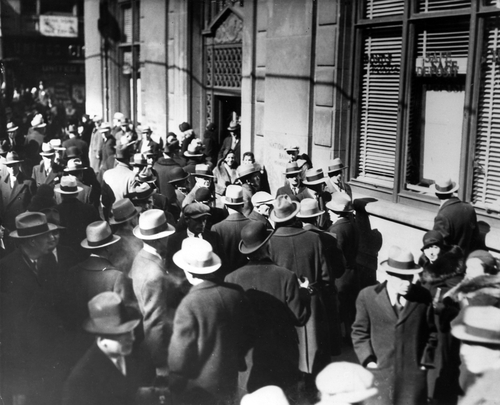
During the Great Depression, over 9,000 banks failed. This meant that once a bank closed its doors, the money people had in the bank was gone. How did this happen? In almost every instance of a bank failure, the poor decisions made by the bank's managers led to the fall. These banks invested their customer's money unwisely. Then stocks decreased, and people were suddenly unable to pay back bank loans. Once the stock market crashed, many people panicked and pulled all their money out of banks. This combination of events meant that banks were short on cash.
Local banks then tried to borrow money from the Federal Reserve Bank. These Federal Reserve Bank branches were set up to help local banks in each region. Banks could get a loan from the Federal Reserve Bank that they would have to pay back later with interest. But the Federal Reserve increased interest rates, and many banks were either denied loans because they weren't valued enough, or they wouldn't be able to pay back the loan with the increased interest. Nothing was left for the local banks to do but close their doors. This meant that many people lost their entire savings.
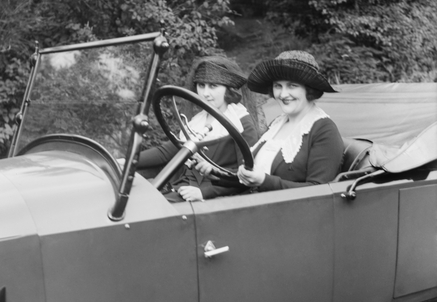
People borrowed money from banks and lenders to pay for goods, like homes, automobiles, refrigerators, and other newly invented products. But people were borrowing more money than they could pay back with interest. As economic conditions became worse, people began losing their jobs. This made it difficult, if not impossible, for them to pay back the money they had borrowed. In turn, banks and lenders lost the money, plus interest, that they had lent to customers.

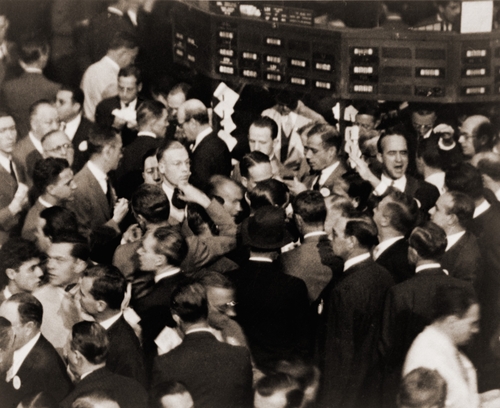
Before the crash that began the Great Depression, very few regulations governed the stock market. Investors were able to speculate and buy stocks on margin using borrowed money. Stock prices were high, but stocks were worth more than the value of the companies. Then companies began to produce less because people were buying less. As a result, people began selling off their stocks. Soon investors were forced to sell their stocks as well, and for much less than they had paid for them. In addition, investors also had to pay back the brokerage houses from which they had borrowed money to buy the stocks. Stock prices continued to fall, and eventually the stock market completely collapsed.