The Rhythms of Day and Night
How is life on the earth affected by the moon?
Goal:
Goal:
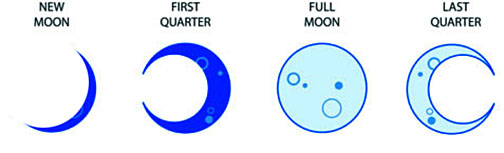 Animals are profoundly affected by the rhythms of day and night, phases of the moon, tidal rhythms, and seasonal rhythms. Our tides are a result of the moon's strong attractive force--the seas respond to the moon's pull. Twice a day, we have high tide. If you get a chance to go to the ocean, take some time to observe the tides.
 Butterflies, birds, and bees are active during the day, but at night, the butterflies fold their wings and cling to leaves or to trees. Birds clamp their toes onto branches or settle down for the night on the ground, and bumblebees climb into flowers.
On the other hand, mosquitoes begin to bite at night, moths become active, and bats emerge from their hiding places. Look for opportunities to observe some of these animals and their daily rhythms.
 The Palolo worm is affected by the moon. These worms swarm to the surface of the ocean when the moon is in its last quarter in October and November.
In Southern California, a small, silvery fish called the grunion comes ashore to lay its eggs in moist sand from March through August during a few nights following the full or new moon. On these nights, when the high tide has reached its highest point and has begun to ebb, thousands of grunions swim in on top of a wave.
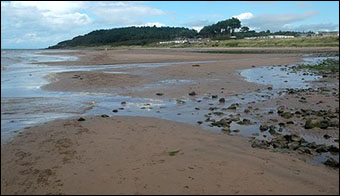
The tides affect oysters, mussels, and clams as well. They open their shells for feeding when the water covers them at high tide, and close down when the tide is low. The above photo to the left shows a beach at low tide.