Pennsylvania Architecture
What are some of the most famous architectural designs in Pennsylvania?
Goal:
Goal:
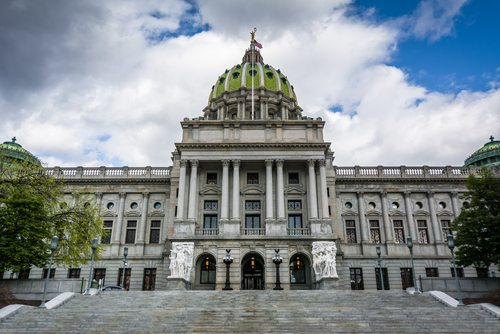
Pennsylvania has some unique architecture. One example is the Pennsylvania State Capitol building in Harrisburg. Its architectural style is American Renaissance. President Theodore Roosevelt said it was "the most handsomest building he ever saw" at its dedication in 1906.
Explore more of Pennsylvania's architecture by watching this video about Philadelphia.
 The Independence Visitor Center is brand-new. It's not even two years old, and it's already welcomed its 2 millionth visitor. Any center that is built from now on will use this one as a model.
And it's a wonderful orientation. It's a wow in itself. Some people go because you can shop there, eat there, see movies there, all of that sort of thing. But other people want to know, well, where do I start? And this answers the question. You start here.
Painted by William Birch and his son Thomas, this collection brings alive the romance of early Philadelphia.
[MUSIC PLAYING]
This is Independence National Historical Park, here in the heart of Philadelphia, Pennsylvania. It's an important park for many reasons, most notably because of the building behind me, which was originally called the State House, but we know it better today as Independence Hall. It was here in 1776 that we declared our independence from England. And again in 1787, the delegates meeting here, with George Washington as the helm of this group, wrote our Constitution.
Independence Hall is not a church. It's not a mosque. It's not a synagogue. We don't have a state religion. But if there's a holy place that people come to that's not affiliated with any real religion, it's Independence Hall, because again, people realize that something very special happened, in that the birth of the United States, but more so the birth of ideas, the ideas that people can be free, which are really not American ideals, but they're human ideals that calls to people from all over the world.
We're also the home to the Liberty Bell, which for about 93 years rang in the tower of Independence Hall, and then cracked and never rang again, but nevertheless has become an international symbol of freedom attained and freedom not yet achieved. If you walk through the park, you'll find a number of spectacular buildings that really talk about life in the 18th century and a few actually from the 19th century, as we were beginning this country. Carpenters' Hall-- it's famous not only because of the Carpenters' Company, but perhaps more so because it was the site of the First Continental Congress that met here in Philadelphia and offered what people call the olive branch or the peace offering to the king of England. But it was too late by then. The king declared that the colonies were in open rebellion, so the Second Continental Congress met up here at Independence Hall and said, let's just declare independence.
But if you walk down toward Carpenters' Hall, you also pass some spectacular architecture. You go past the Second Bank of the United States. It looks like the Parthenon. It's a virtual copy by a man named Strickland.
There's also the First Bank of the United States. Why? Because we were the center, in Philadelphia, of the early federal banking system. And the economic power of the country really started around this area, in terms of the banking industry.
Tours through Independence Hall run on a regular schedule and are free with a ticket from the Independence Visitor Center. Park rangers are excellent at bringing to life the formation of this great country.
Ladies and gentlemen, welcome to Independence Hall.
But the building itself is historically significant for so many reasons. It is the building where the Declaration of Independence was signed. It is also the building where both of our constitutions were signed as well.
So in 1787, in the very room where the Declaration of Independence was signed, a different group of risk-takers came here to Independence Hall. Many of them realized that our nation had come to a crossroads. Were people going to really start to think of themselves as a nation, or nothing more than a collection of independent-minded 13 former colonies?
It would not come easy. The Constitutional Convention met for nearly four months. They ended up creating the Constitution, the one that we still ultimately are following to this very day.
Along the Schuylkill River, Philadelphia's Fairmount Park, the largest landscaped city park in the world-- 8,900 acres, a year-round green escape with over 100 miles of trails for hikers and bikers.
Rowing is really big here, sculling, and can be done by men and women, any day, no matter what the weather. As soon as dawn cracks, there are people rowing on that river. And it's just part of what you expect to see on that river. Everybody here wants to be on the water in some way.
[MUSIC PLAYING]
 |

Take out your activity page and decide what symbol you want to use for a place of architectural interest. Add your symbol to your map key and write "architectural interest" next to it. 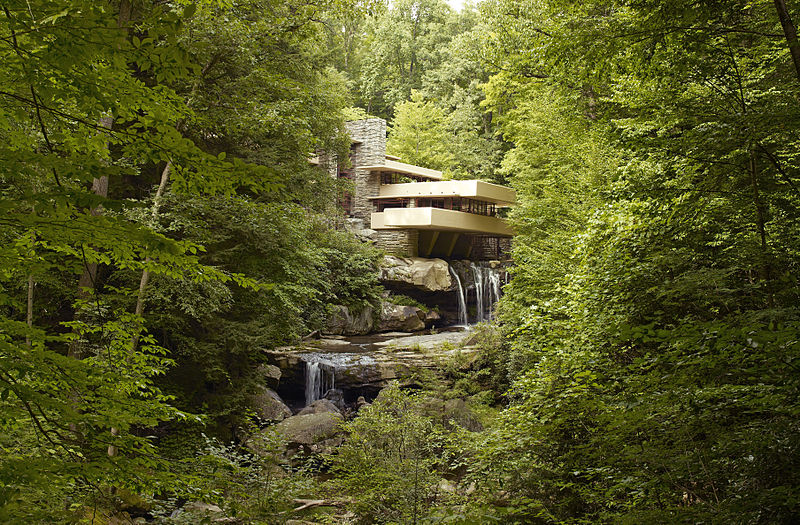
Fallingwater is a famous house that was built over a waterfall in the Allegheny Mountains. This is called "organic architecture" because it incorporates nature into the design. The architect who built this house is Frank Lloyd Wright. He was the famous American architect in the lesson's introduction video. 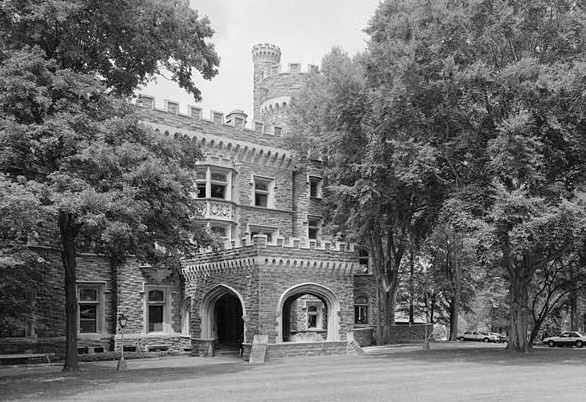
Grey Tower is in Philadelphia. The castle's architecture earned it the recognition of a National Historic Landmark in 1985. 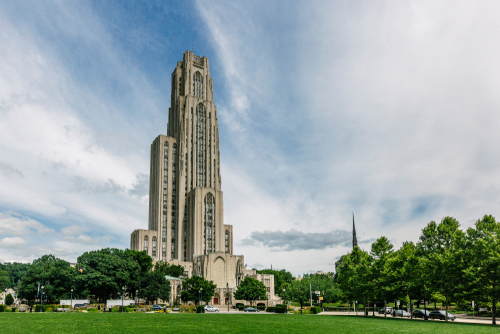
Cathedral of Learning is a famous Pittsburgh skyscraper. It is on the University of Pittsburgh campus. 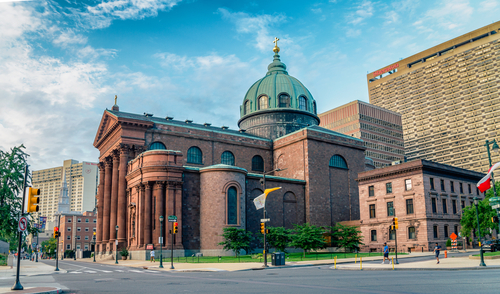
This is the Cathedral Basilica of Saints Peter and Paul. It is the largest Pennsylvanian Catholic church, and it is a U.S. historic place. 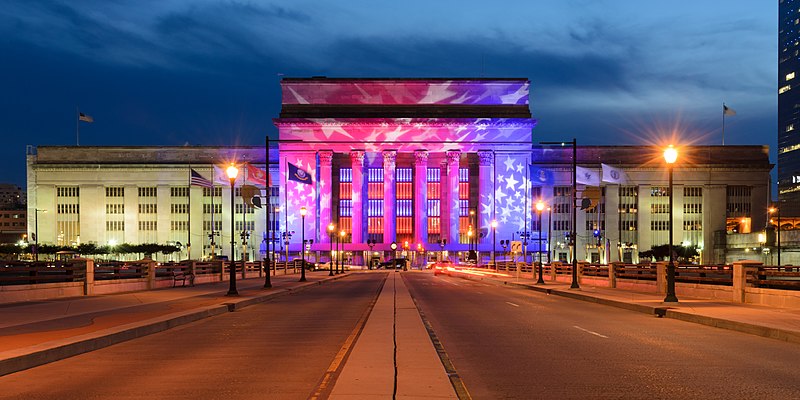
King of Hearts, CC BY-SA 3.0, via Wikimedia Commons This is the 30th Street Station in Philadelphia. It isn't an ordinary station, though. It has skylights, Art Deco, columns, and a terra-cotta plaque. 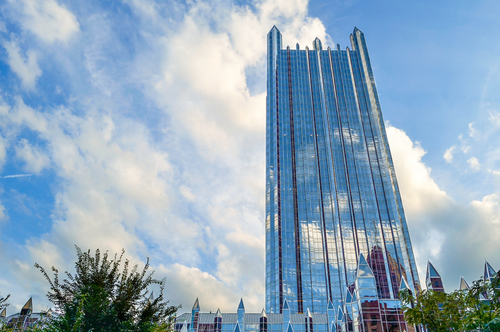
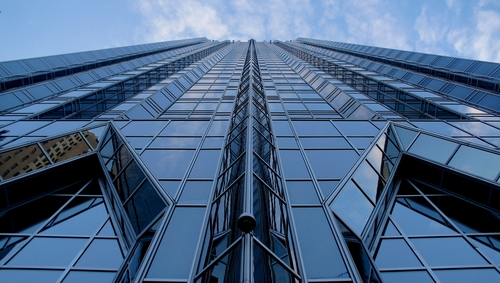
The PPG Place is located in downtown Pittsburgh. These six buildings include 19,750 pieces of glass in their design. 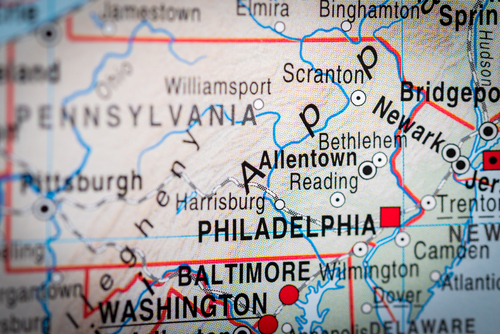
Pennsylvania has some amazing architecture to see. Choose your favorites and mark three to five of them on your Pennsylvania map. |
 |