The early 1800s were an exciting, if fundamentally unsettling, time in America. Not long before, England had supplied much of the content of American culture and identity. But now the country was on its own, free to invent itself as a nation and a people. Many writers saw this situation as a huge responsibility as well as a thrilling opportunity.
What historical events led to the development of American Romanticism? Read this essay describing the expansion and industrialization of America. Then, answer the questions beside the essay to make sure that you understand the historical context for this module.
 |
The Louisiana Purchase, arranged by Thomas Jefferson, doubled the size of the United States and included the port city of New Orleans. Why did Jefferson want New Orleans, in particular?
- Owning that particular city would represent a symbolic victory over France.
- The farmland around it was highly desirable and would attract more immigrants.
- The port in New Orleans gave the US control of the Mississippi River.
- Jefferson had traveled to New Orleans often as a boy and longed to live there.
If the United States included New Orleans, farmers and merchants could transport their products down the Mississippi and use the ports there to ship goods to more territories within and outside the country.
If the United States included New Orleans, farmers and merchants could transport their products down the Mississippi and use the ports there to ship goods to more territories within and outside the country.
If the United States included New Orleans, farmers and merchants could transport their products down the Mississippi and use the ports there to ship goods to more territories within and outside the country.
If the United States included New Orleans, farmers and merchants could transport their products down the Mississippi and use the ports there to ship goods to more territories within and outside the country.
What question related to westward expansion caused the greatest conflict within the US government?
- Would slavery be permitted in the new western states?
- How soon should the new territories be divided up into states?
- Who would represent the new western territories in Congress?
- How would the new land be deeded to citizens who wanted it?
Southern states argued that the balance of slave-holding to non-slave-holding states should be maintained, fearing that if too many states joined the anti-slavery North, they would lose the right to use enslaved people to keep their economy growing.
Southern states argued that the balance of slave-holding to non-slave-holding states should be maintained, fearing that if too many states joined the anti-slavery North, they would lose the right to use enslaved people to keep their economy growing.
Southern states argued that the balance of slave-holding to non-slave-holding states should be maintained, fearing that if too many states joined the anti-slavery North, they would lose the right to use enslaved people to keep their economy growing.
Southern states argued that the balance of slave-holding to non-slave-holding states should be maintained, fearing that if too many states joined the anti-slavery North, they would lose the right to use enslaved people to keep their economy growing.
Which industry developed as a result of the invention of the steam engine?
- cotton textiles
- steel production
- lumberjacking
- coal mining
The steam engines that powered train locomotives and factory machines required large amounts of coal to operate.
The steam engines that powered train locomotives and factory machines required large amounts of coal to operate.
The steam engines that powered train locomotives and factory machines required large amounts of coal to operate.
The steam engines that powered train locomotives and factory machines required large amounts of coal to operate.
Which phrase describes the policy established by John Quincy Adams that stated the United States had a "divine" right to claim all the land to the west of the original thirteen colonies?
- rightful passage
- manifest destiny
- justified settlement
- domestic security
Adams, like many other leaders of the time, believed that the United States was "destined" to cover and control the "new" continent.
Adams, like many other leaders of the time, believed that the United States was "destined" to cover and control the "new" continent.
Adams, like many other leaders of the time, believed that the United States was "destined" to cover and control the "new" continent.
Adams, like many other leaders of the time, believed that the United States was "destined" to cover and control the "new" continent.
What problems were caused by the industrialization of America?
- greater hostility with Native Americans
- conflicts between enslaved people and enslavers
- poor health amid unsafe working conditions
- less investment in agricultural projects
As industrialists and investors worked together to build and supply factories that would make their fortunes, little thought was given to the welfare of the workers who would power the factories.
As industrialists and investors worked together to build and supply factories that would make their fortunes, little thought was given to the welfare of the workers who would power the factories.
As industrialists and investors worked together to build and supply factories that would make their fortunes, little thought was given to the welfare of the workers who would power the factories.
As industrialists and investors worked together to build and supply factories that would make their fortunes, little thought was given to the welfare of the workers who would power the factories.
What law made it more difficult for enslaved people to escape from the Southern to the Northern states?
- the Slave Retribution Act
- the Retain and Return Policy
- the Intolerable Act
- the Fugitive Slave Act
This act of Congress made escaped slaves "fugitives" from justice, which entitled enslavers to demand the return of escapees living in the Northern states.
This act of Congress made escaped slaves "fugitives" from justice, which entitled enslavers to demand the return of escapees living in the Northern states.
This act of Congress made escaped slaves "fugitives" from justice, which entitled enslavers to demand the return of escapees living in the Northern states.
This act of Congress made escaped slaves "fugitives" from justice, which entitled enslavers to demand the return of escapees living in the Northern states.
Which event drove pioneers farthest west?
- the Gold Rush
- the discovery of oil
- the Wagon Train Act
- the invention of the steam engine
The discovery of gold in California and other far western states sent prospectors scrambling west to gain quick wealth.
The discovery of gold in California and other far western states sent prospectors scrambling west to gain quick wealth.
The discovery of gold in California and other far western states sent prospectors scrambling west to gain quick wealth.
The discovery of gold in California and other far western states sent prospectors scrambling west to gain quick wealth.
Summary
 Questions answered correctly:
 Questions answered incorrectly:
Expansion and Conflict
With their independence from Britain secured, the citizens of the new United States began to consider their identity as a nation. If no longer British subjects, who were they? What did it mean to be simply American—without the word colonists attached? What should freedom look like under this new form of government? And what could be done with all that land that surrounded them?
The East Coast was already well-developed in terms of infrastructure, so the government turned its attention westward, hoping to add land that would help grow the country's wealth and population. The US government was particularly interested in gaining control of the port of New Orleans, which would secure access to the Mississippi River, allowing American farmers and merchants to transport their goods to larger markets both domestically and abroad. In a deal known as the Louisiana Purchase, Thomas Jefferson bought a large swath of land that included New Orleans and much of the Mississippi River valley. The purchase instantly doubled the size of the country and made westward expansion a much easier dream to realize.
As soon as pioneers began heading west, as many thousands did, conflicts developed regarding how these new territories would be governed. There was a bitter divide between Northern and Southern states over the issue of slavery. In 1808, the federal government abolished the importation of enslaved people from Africa. However, the population of slaves in the South remained stable or grew in size since enslavers claimed possession of all children of African descent born on their plantations. After the importation of enslaved people was banned by Congress, many Northern states abolished slavery altogether, while the practice became even more integral to the Southern agricultural economy.
Meanwhile, Americans produced inventions that made industry more profitable. After separating from Britain, the United States began producing the basic goods it had received from Britain before the Revolution, such as clothing, tools, and weapons. Americans built the first steam engine in 1698, and throughout the late 1700s, inventors like Thomas Newcomb and Abraham Darby refined the design of the steam engine to serve a greater variety of roles in transportation and manufacturing and to perform those tasks more efficiently. Because coal was the primary source of fuel used to power steam engines, the mining of coal became a separate and thriving industry.
By the start of the 1800s, the machines in American factories could produce just about any household items the country's citizens needed and did so in massive amounts. In 1807, Robert Fulton launched the first steam-powered boat, which made the transporting of goods along the country's waterways much easier and quicker. When the United States declared war on Britain in 1812, in response to attacks on American trade ships, the need for weapons and provisions to support the war effort created a boom in industrial production and the wealth that accompanied such growth. Private investors poured money into new factories, confident that government contracts to arm the military and improve transportation would make them rich.
New investment in industry meant new jobs, and thousands of rural Americans left their farms and moved to large cities to work in factories. Though the early 1800s were profitable and progressive times for the country, the lives of workers were less fulfilling. Factory owners focused on productivity and profits had given very little thought to the kinds of working conditions needed to sustain production by maintaining a healthy workforce. Most workers found themselves in environments that were unhealthy and unsafe, resulting in exhaustion, sickness, and sometimes even death. For the first time in the country's history, people began to wonder about the human price of prosperity, and several labor reform movements took shape among Americans of conscience.
Construction on the first westward-leading railroad began in 1828. In 1845, to encourage its citizens to move west, the United States government adopted a policy known as Manifest Destiny. The phrase itself was first used to rally national support for claiming ownership of disputed land that is now part of Texas, which in the early 1800s was claimed by both the United States and Mexico. The US policy of Manifest Destiny was based on the belief that it was the "destiny" of the United States to secure all land to its west to accommodate its expanding population. (Since more and more people wanted to come to America because of the freedom and opportunities it offered, the country would need more land to hold them all.) Gradually the idea took on religious overtones, with Americans claiming that God favored the Anglo-Saxon race and that it was His will that the nation control the continent.
Americans' belief in manifest destiny led to the development of nationalism, the belief that the interests of the nation should be placed ahead of the interest of the states and particularly ahead of the interest of other countries or peoples. Nationalism essentially gave the federal government license to act in any manner that promoted American expansion—since expansion was considered good for the country. In 1830, the Indian Removal Act authorized the relocation of Native American tribes west of the Mississippi River. Later, President James K. Polk invoked nationalism as he placed his federal army along the Mexican border south of the territory of Texas, provoking the Mexican government into a war that resulted in further westward expansion.
While nationalism helped to build an American identity, it made some Americans uncomfortable about the nation's domestic policies, especially as they related to slavery. As more states were carved out of newly acquired territory, Northern states pushed the U. S. government to disallow slavery in the new states. The Southern states pushed back, insisting, for political reasons, that the government maintain a balance between slavery and non-slavery states. Throughout the country's history, some enslaved people had managed to escape from plantations in the South and travel north to states that had abolished the practice of slavery. Many used the system known as the Underground Railroad, which was not an actual railroad, but a network of abolitionists, religious leaders, and escaped slaves who provided assistance and shelter to those fleeing to the northern states and Canada. The Underground Railroad was so named because of the terminology used to describe its leaders (conductors) and safe houses (stations). Harriet Tubman, the most famous conductor, was herself an escaped slave. Tubman used the Underground Railroad to return to the South approximately nineteen times and free more than three hundred enslaved persons.
Though escape attempts were primarily unsuccessful for the majority of slaves, Southern enslavers were fearful of losing their "property" and angered by the defiance that the Railroad represented. In 1850, they persuaded the federal government to pass the Fugitive Slave Act, which required northern states to return escapees to their enslavers.
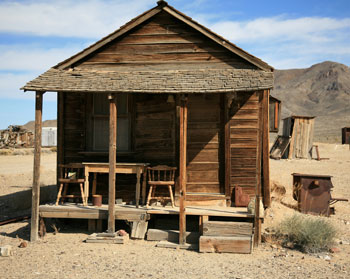
By the mid-1800s, a railroad stretched westward across the country, and industrial production was booming. Then, in 1848, gold was discovered on the West Coast, and the California Gold Rush brought Americans across the continent by the thousands, most seeking instant wealth. Few actually found very much gold, but many stayed out west and made a life there. Towns and cities followed, and the infrastructure to support them. Well before 1900, the United States' expansion westward was complete.
