Farming changed human history. The birth of farming is called by two names: the Neolithic Revolution (because it happened during the Neolithic period) and the Agricultural Revolution. The word neolithic doesn't have anything to do with agriculture--it refers to the second Stone Age in human history.
| Word Roots | ||
| Neo = new | Lithic = pertaining to stone | Neolithic = New Stone Age |
Another revolutionary Neolithic development happened about 9,000 years ago, shortly after farming: the domestication of animals. People began to keep goats, pigs, cattle, sheep, and other animals in fenced-in yards, feeding them grains and using their milk, hair, skins, wool, and meat for food and clothing. Animal dung was used to fertilize grain fields and also burned as fuel for cooking and heating. But animal domestication was not equal around the world. It was lopsided in favor of the continent of Eurasia. Watch this slideshow to see how different parts of the world suffered from a lack of native domestic animals.
|
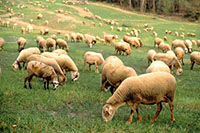
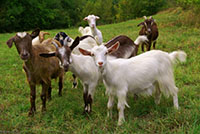
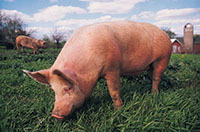
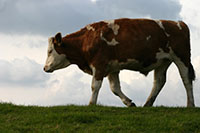
Only fourteen mammals have ever been domesticated by humans. These include goats, pigs, sheep, cattle, horses, donkeys, camels, water buffalo, llamas, and yaks. The “big four” of domesticated mammals—the ones most relied on by humans—are goats, pigs, sheep, and cattle.
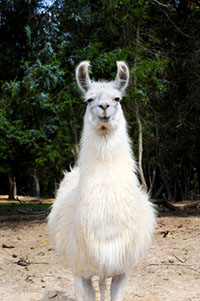
The “big four” animals are all native to Eurasia. They were not found in Africa, Australia, or the Americas. The Americas, in fact, had only one large native mammal that could be domesticated--the llama.
This meant that people living outside Eurasia did not get the same rich array of meat, milk, furs, wool, and other animal products that people in Europe and Asia had. People in Eurasia had a huge head start on people from other continents because Eurasians had the best domesticated grains and animals, which provided them with food surpluses and very good nutrition.
|
 |


Question
How were domesticated animals used in the earliest farming communities?
