Some literary works can be understood only in their historical context. To appreciate such works fully, the reader must know the time, place, and circumstances in which the writer lived. The selections below are both primary sources, or firsthand accounts, about Phillis Wheatley and her poetry. This first one is Phillis's own preface to her 1773 book of poems, Poems on Various Subjects, Religious and Moral.
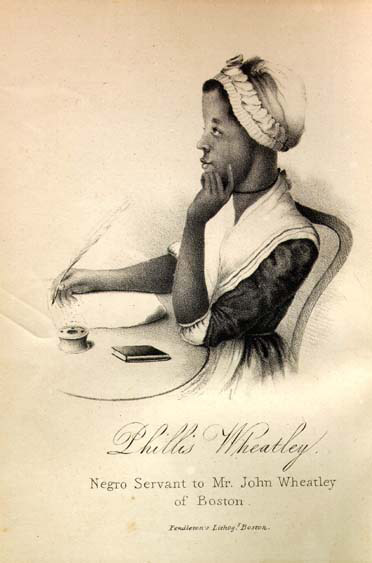 PREFACE
The following poems were written originally for the amusement of the Author, as they were the products of her leisure moments. She had no intention ever to have published them; nor would they now have made their appearance, but at the importunity of many of her best and most generous friends; to whom she considers herself under the greatest obligations.
As her attempts in poetry are now sent into the World, it is hoped the Critic will not severely censure their defects; and will presume they have too much merit to be cast aside with contempt, as worthless and trifling effusions.
As to the disadvantages she has labored under, with regard to learning, nothing needs to be offered, as her Master's letter in the following page will sufficiently show the difficulties in this respect she had to encounter.
With all their imperfections, the poems are now humbly submitted to the perusal of the public.
Consider what you know about Wheatley's life and circumstances. Why do you think she used such a formal yet humble tone in her preface?
Phyllis knew that most of her readers would have prejudiced attitudes toward an enslaved African American girl. Her use of formal language lends dignity and weight to her work, while her humble tone may have prevented White slave-holding society from resenting her obvious intelligence and talent.
Now, read a letter written by Phillis Wheatley's enslaver, John Wheatley, to be included in the published book.
PHILLIS was brought from Africa to America, in the year 1761, between seven and eight years of Age. Without any assistance from a school education, and by only what she was taught in the Family, she, in sixteen months time from her arrival, attained the English language, to which she was an utter stranger before, to such a degree, as to read any of the most difficult parts of the Sacred Writings, to the great astonishment of all who heard her.
As to her WRITING, her own curiosity led her to it; and this she learnt in so short a time, that in the year 1765, she wrote a letter to the Rev. Mr. OCCOM, the Indian Minister, while in England.
She has a great inclination to learn the Latin tongue, and has made some progress in it. This relation is given by her Master who bought her, and with whom she now lives.
JOHN WHEATLEY.
Boston, Nov. 14, 1772.
John Wheatley compliments and seems supportive of Phillis's intelligence and quickness. How does he treat the subject of her kidnapping and enslavement as a child?
John makes only a brief, matter-of-fact reference to Phillis's kidnapping and enslavement.
Question
Why was it necessary for the publisher to include the letter from John Wheatley in Phillis's book?
Question
What do these two introductions to Phillis Wheatley's poems tell you about attitudes toward slavery during Wheatley's time?
