Various forms of rebellion brewed in the American colonies for more than a decade before the Revolutionary War actually began. Then, in 1775, a single speech persuaded the Virginia House of Burgesses, the most powerful governing assembly in America, to take up arms against England. That speech was delivered by a fiery young lawyer and legislator named Patrick Henry—a man who had already faced accusations of treason.
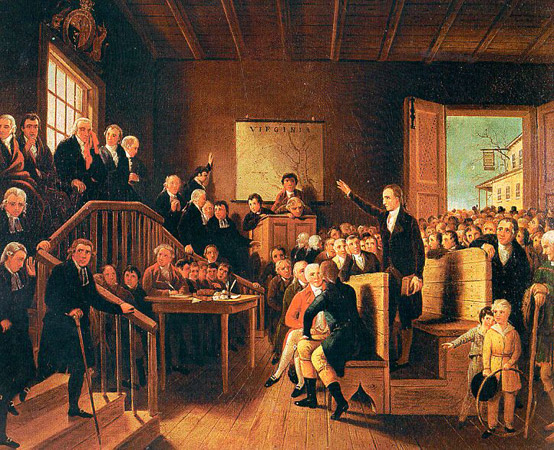
This famous painting shows Henry arguing one of his early cases, the Parson's Cause. At the time, Virginia Anglican clergy were paid in tobacco instead of money. After a poor harvest in 1758, tobacco prices skyrocketed, giving the clergy a huge raise. In response, the Virginia House of Burgesses passed legislation allowing tobacco debts to be paid in cash at the old tobacco price of two cents per pound. King George III of England vetoed the law, which greatly angered the legislators in the colonies. After the king's veto, a clergyman named Reverend Maury sued for back wages for himself and all other clergy whose pay had been affected.
Representing the colonists' side against Reverend Maury, Henry argued boldly that "a King, by disallowing Acts of this salutary nature, from being the father of his people, degenerated into a Tyrant and forfeits all right to his subjects' obedience." Although the jury ruled for Maury, they awarded him only one penny in damages. When they saw how willing the colonial government was to oppose the actions of King George, no other ministers dared to sue.
Question
Consider Henry's argument against King George's veto. How did it help set the stage for the colonists' later armed rebellion against England?
