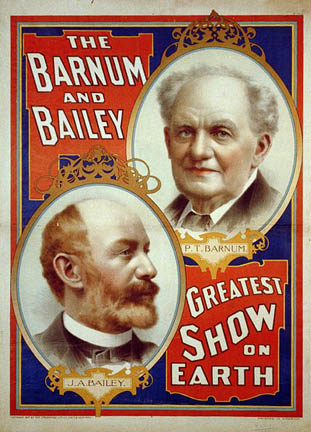
 Another important element of figurative language involves wild exaggeration. In literature this is called hyperbole. Why do people exaggerate? To make a point vivid in the reader's or listener's imagination. Consider the following examples of hyperbole from the first passage above:
he stared with all his eyes
shone like ten thousand diamonds
Even though both of these images are greatly exaggerated - we don't take them literally - they work well because they create a new image in our minds. Through this language the author is able to bring our imaginations right up near the dragonfly's eyes, helping us to see something we perhaps never stopped to think about or notice before. In this way a skillful writer can open up our minds to new perceptions and new ways of seeing the world.
Hyperbole is a common technique, one we encounter in our everyday life, especially in advertisements. Consider the following hyperboles:
The greatest show on Earth!
Double your pleasure, double your fun.
Mile-high stack of pancakes.
He is as strong as a rock.
This package weighs a ton!
I could eat a whole cow.
You're everything to me!
I tried a million times!
I practically died laughing.
Images of exotic places or lifestyles associated with cars, clothes, perfume, etc., that we see on TV and in magazines
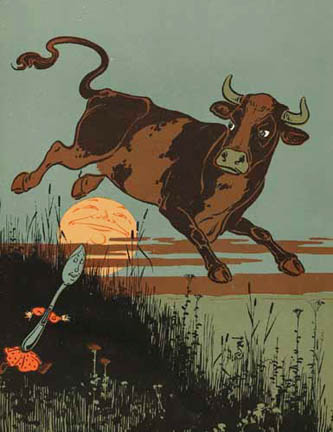 Sometimes, you'll even see the word "literally" used as a hyperbole! Even though the word means "not figuratively," it is more and more often being used figuratively as a sort of "intensifier," when the speaker or writer wants to indicate something like, "I am not kidding!"
Mom literally exploded with anger. (But she didn't really blow up!)
It was so hot I was literally melting. (But not really!).
Be careful with this one! Even though you'll probably see or hear it often, it's generally considered an improper use of the word literally. Find other figures of speech to say the same thing.
Mood and hyperbole are two examples of figurative language. The actual examples of figurative language are called figures of speech.
We use figurative language to get a point across with a stronger impact. Figurative language lets the reader see, hear, smell, taste and feel what's written.
Writing comes alive for the reader if figures of speech are used well. If you listen closely, you'll notice that people use figures of speech for emphasis when they talk. In addition to finding figurative language in poetry and literature, see if you notice it in the way politicians and sportscasters speak, or in the ways that advertisers get across their message.
