Once the climax of a story occurs, the action usually slows down. This part of the story, when a story's author shows how the main conflict was resolved, is called the falling action, and the falling action ends with the story's resolution. Typically, a story's falling action and resolution tie up all the loose ends. The characters’ lives return to the way they were before the story's conflict began, and the resolution explains how (if at all) the characters' lives are different as a result of the story's events.
In the Goldilocks story, the falling action and resolution might look something like this:
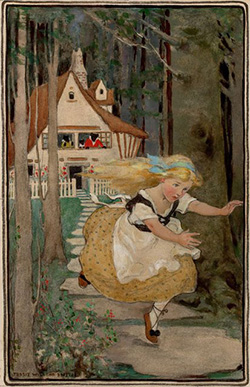 Goldilocks ran all the way back home, and she didn't look back once. With the intruder long gone, Mama Bear returned to the kitchen to make a new batch of porridge, as Papa Bear and Baby Bear gazed out the window and remarked on the beautiful spring weather. And Goldilocks, once safe in her own snug bed at home, promised herself never to trespass again.
In just these few sentences, all of the story’s conflicts--both major and minor--have been resolved. Goldilocks flees the cottage vowing never to repeat such terrible behavior, and the Bear family is able to resume their lovely breakfast. The weather is still bright and sunny, which suggests to the reader that life in the woods has returned to normal.
Do you remember the order in which the elements of plot occur? See if you can place these plot parts in the correct order.
|
exposition
falling action
climax
resolution
rising action
|
|
