The part of the story that readers find most exciting or tense is called the story's climax. The climax can be either emotional (thought based) or physical (action based), but it is usually the most memorable scene in the story. The climax often represents the moment when the conflict becomes something that must be solved, one way or another. From this moment, there’s no turning back, which is why the climax is more exciting than other parts of the story.
All of the events leading up to the climax are the story's rising action. The rising action includes all of the characters' actions and decisions that are intended to resolve the story's conflict--but fail to do so. Which of these parts of "Goldilocks and the Three Bears" is the story's climax? Which is the rising action? Click each picture to check your answer.
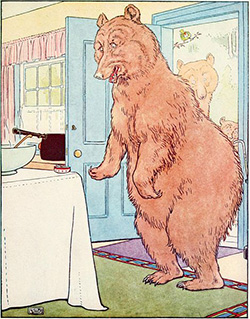 |
The bears return home, find their porridge half-eaten, and then find Goldilocks asleep in their bedroom. Frightened by the bears, Goldilocks shrieks, jumps up, and runs from the house. | These events represent the story's climax: Goldilocks is alone in the bears' house, where she does not belong, and the bears have returned to hold her accountable for trespassing. |
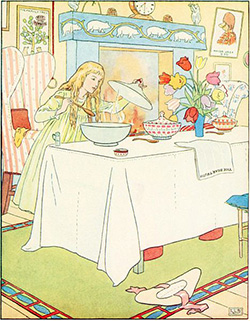 |
The porridge is too hot to eat, so the bears decide to go for a walk. While they're out, a girl named Goldilocks happens by the house and smells the porridge. She enters the bears' home, eats some of the porridge, and falls asleep in one of their beds. | These events represent the story's rising action: Goldilocks enters the bears' home uninvited and helps herself to things that are not hers. These actions are likely to lead to some sort of discovery or even a tense confrontation. |
Question
What is the difference between exposition and rising action?
