As a writer, you choose your words all the time. Some of these choices aren't terribly important. Others, however, are crucial to conveying the meaning you intend. So when is it good to be especially precise in your word choice? Click through the tabs below to see four ways that shades of meaning make a difference.
Degree
Positive
Association
Negative
Association
Tone
Degree refers to the relative amount or size of a thing that is being described. Word nuances can help you communicate exactly the degree you intend.
 That is a very big puppy.
That is a huge puppy.
That is a gargantuan puppy.
All three boldface terms mean about the same thing. To express amazement at the puppy's large size, however, gargantuan is probably the best word to choose.
If you want to give your reader a positive impression of something without saying, "This is good. I want you to like this," what do you do? Use nuanced word choice, of course!
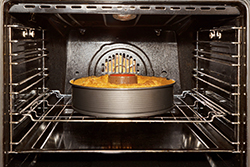 Chuck sniffed the air. From the kitchen wafted the aroma of Gran's famous fruitcake.
Smell and scent are both neutral words that the writer could have used in place of aroma. Why did the writer make this choice? Smell and scent can be good or bad. By choosing the word aroma, though, with its connotation of a pleasant smell, the writer suggests that Gran's fruitcake smells tasty.
You may want to encourage your reader to form a negative opinion about something or someone. Again, the power of nuance in word meaning can help you. Compare the sentences below. Which one gives you a bad feeling about Melinda?
 Melinda is the most talkative person in our grade.
Melinda is the chattiest person in our grade.
Melinda is the biggest blabbermouth in our grade.
Poor Melinda! Being talkative or chatty isn't necessarily a bad thing, but being a blabbermouth is!
Sometimes you'll want to use nuances of meaning to enhance the overall tone or feeling of a piece of writing. Let's say you're writing an adventure story set in India. Which of the following sentences would you use?
 Behind us in the dense jungle lurked the tiger, watching and waiting.
Behind us in the dense jungle stood the tiger, watching and waiting.
Notice how the use of lurked enhances the suspenseful feeling of the sentence.
