Another way to build dark tones with pen and ink, besides crosshatching is to use lines to draw texture patterns that are light or dark in tone. By repeating various kinds of short strokes or dots, the artist creates patterns that resemble the textures of the objects he sees, such as a brick wall surface, or tee foliage patterns, or many other kinds of rough or smooth surfaces.
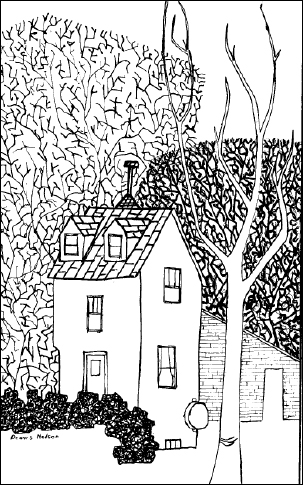
Study the pictures by Dennis Nelson below. Compare the differences between the dark shapes made with texture patterns in the bottom picture and the dark shapes made with cut paper in the top picture of the same scene. Answer the following questions on your lesson worksheet or on a separate piece of paper.
- Name which objects are the darkest tone.
- Name which objects are the lightest tone (pure white of the paper).
- Name which objects are a middle tone (between white and dark).
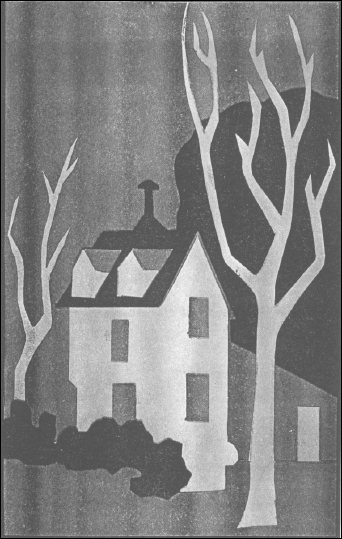
In the left picture, the dark and light shapes are cut out of dark or light paper so that the tones are solid, flat-black or solid, flat-white.
In the right picture, the artist used pen instead of cut paper. He could not make solid, filled-in black tones without getting a messy snarl of “scrubbed-over” lines. To make the dark tones with pen, he kept the lines clear and interesting by filling in the dark shapes with closely spaced pen lines that make dark texture patterns.
For the lighter tones, he has filled in the light objects with widely spaced lines that make lighter texture patterns like brick walls and roof shingles. These texture patterns are repeated across the whole scene to give an even, light tone.
