Color - Value
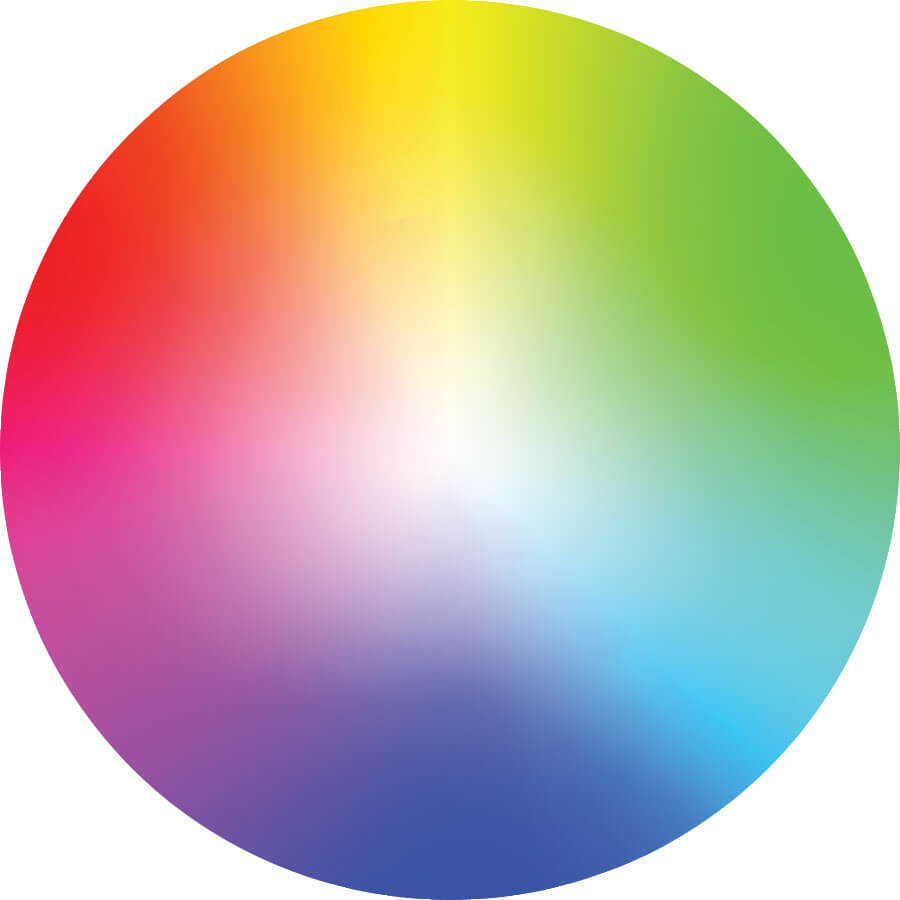
Fig 2.2. Color value.
Value refers to the lightness or darkness of a color, and intensity refers to the color's brightness or dullness. The 'normal' value of a color is seen on the color wheel. The value of a color can be changed (darkened or lightened) by adding black or white. The colors on the color wheel are as bright, or intense, as possible. When they are mixed with their complements (colors on the opposite side of the color wheel) the intensity decreases. The value and intensity of colors can create space because darker and duller colors appear farther away. In figure 2.2, the color values change from dark (outside) to light (center). This creates the impression that the middle of the circle is bulging forward.
Colors can play a very important role in an artwork. They can convey emotion, temperature, or carry symbolic meaning. For example, the color red is sometimes associated with emotions like anger or passion. It can also be associated with heat, as in fire. The color red can also have symbolic meaning, such as warning. This is why stop signs are red. Color can be extremely expressive and have a large impact on the way an artwork affects the viewer.
Reflection Question

Color can create moods. What moods do you associate with this painting?
What kinds of feelings do you associate with the colors used?
Header Art Image Courtesy of Wikimedia Commons.
