Loading...

How do editorial cartoonists use humor and exaggeration to stir a response?

You've probably heard the saying, "A picture is worth a thousand words." A good editorial cartoonist uses images in combination with words to making powerful, pointed comments on politics or current events. While a news reporter aims for a neutral tone, an editorial cartoonist aims for the opposite: an emotional impact. By nature, editorial cartoons are not balanced and sometimes are unfair to their subjects. Instead, they take a strong stand for or against someone or something. They may be biased, or prejudiced; on the other hand, they may aim to expose racists and bullies in the real world. Usually, an editorial cartoon will use some form of satire--humorous exaggeration--to criticize or ridicule a person, a group, or an idea.

View the slideshow for some examples of editorial cartoons from the past.

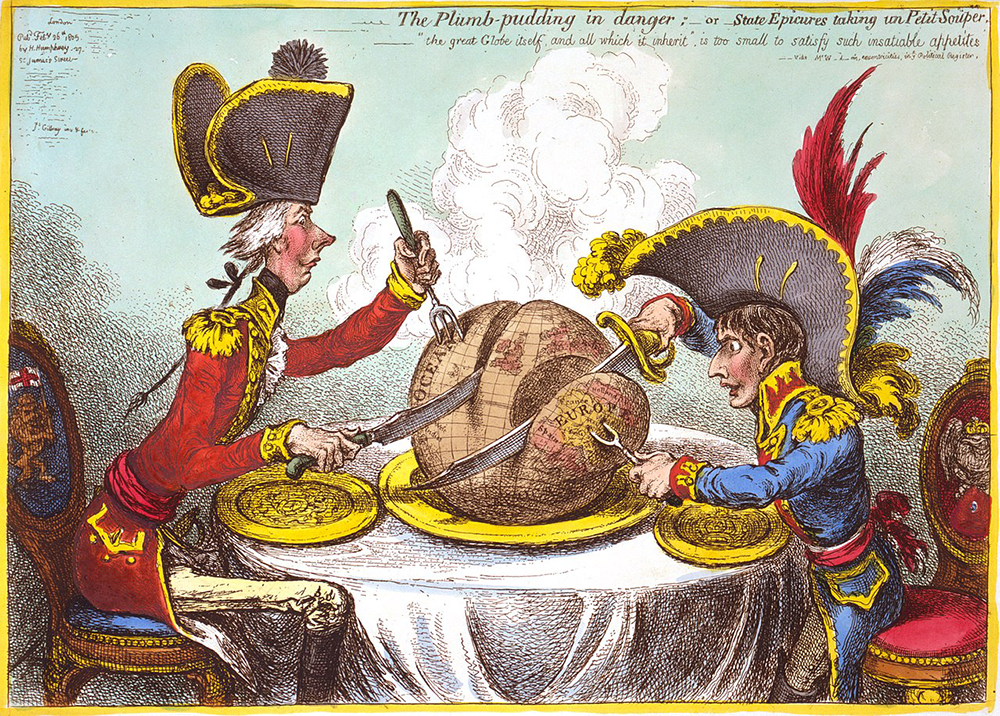
Britain and France Carving
Up the World

The world being carved up into spheres of influence between Pitt and Napoleon.

clicker Click image to enlarge.

This famous political cartoon from 1805 shows British prime minister William Pitt and French emperor and military leader Napoléon Bonaparte carving up the world between them. The cartoonist created this satire after Napoléon's gesture toward reconciliation with England in January of 1805.

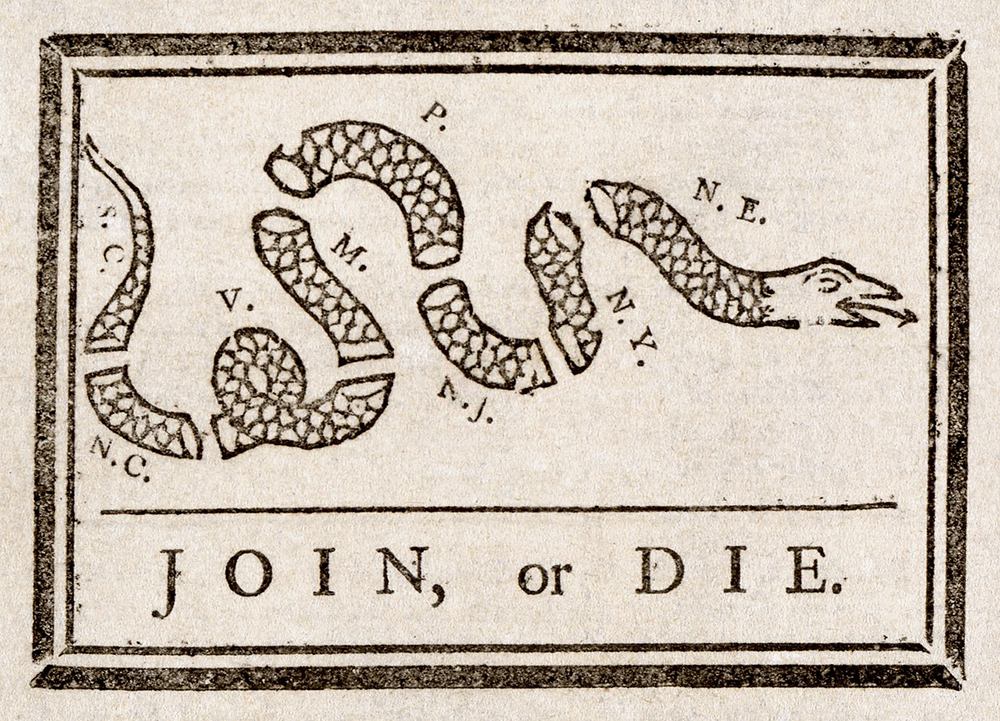
Join or Die

Benjamin Franklin's famous "Join, or Die" cartoon

clicker Click image to enlarge.

Benjamin Franklin's famous "Join, or Die" cartoon was one of the first American editorial cartoons. Published during the French and Indian War, it asserted that the colonies needed to join together with England to defeat the French and Indians. Franklin's cartoon later became a symbol of American unity and freedom during the Revolutionary War.

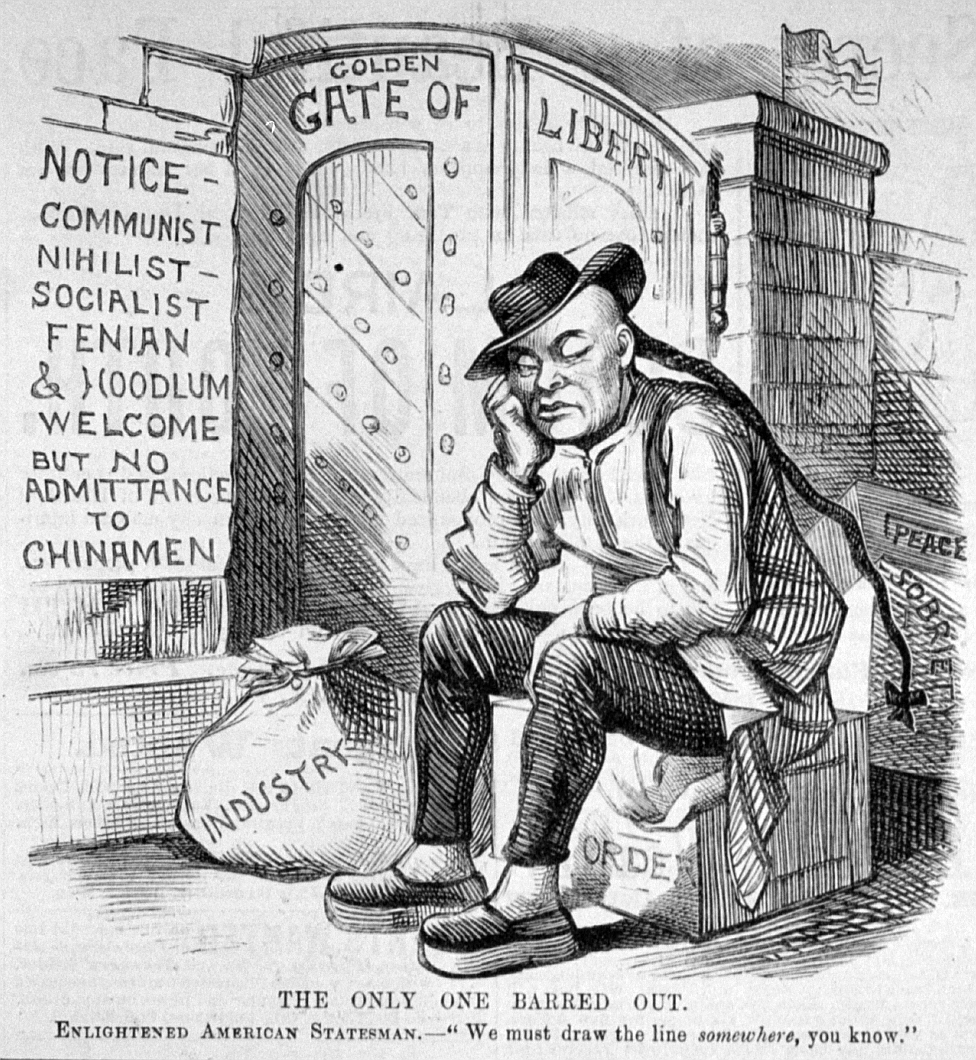
The Only One Barred Out

Editorial cartoon showing a Chinese man, surrounded by luggage labeled "Industry", "Order", "Sobriety", and "Peace", being excluded from entry to the "Golden Gate of Liberty". The sign next to the iron door reads, "Notice—Communist, Nihilist, Socialist, Fenian & Hoodlum welcome. But no admittance to Chinamen." At the bottom, the caption reads, "THE ONLY ONE BARRED OUT."

clicker Click image to enlarge.

In 1882, Congress passed the Chinese Exclusion Act, a law that prohibited immigration of Chinese laborers to the United States. This cartoon shows a harmless Chinese man barred from entry to the "Golden Gate of Liberty" while other, more doubtful characters--including "hoodlums"--are allowed in. Note the labels on the Chinese man's baggage and the sarcastic caption at the bottom.

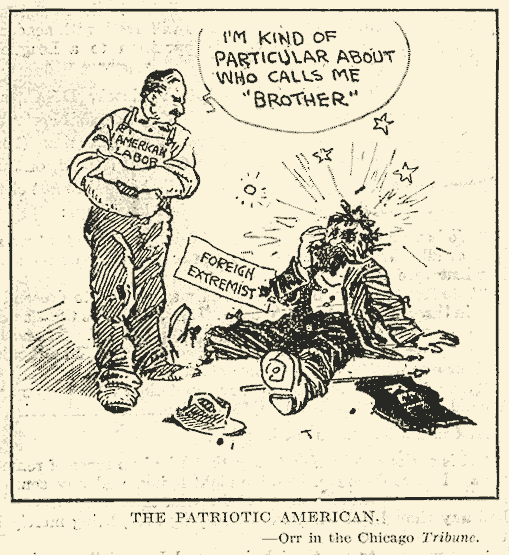
"I'm kind of particular about
who calls me "brother"

"I'm kind of particular about who calls me "brother"

clicker Click image to enlarge.

This 1919 cartoon from the Chicago Tribune mocks and threatens "foreign extremists" who try to claim solidarity with the American labor movement.

Question

How does knowledge of their historical contexts help you appreciate the messages and humor of the cartoons above?

Each cartoon is from an earlier time with very different political and social issues than those of the present day. Benjamin Franklin's "Join, or Die" cartoon was general enough to issue two different calls for unity in colonial America--first with and and then against Great Britain. However, "Britain and France Carving Up the World" mocks negotiations between England and France and the military ambitions of each country at a specific time in the early 1800s. Likewise, "The Only One Barred Out" makes sense only in the context of the Chinese Exclusion Act of 1882.