Line - A Fundamental part of all art
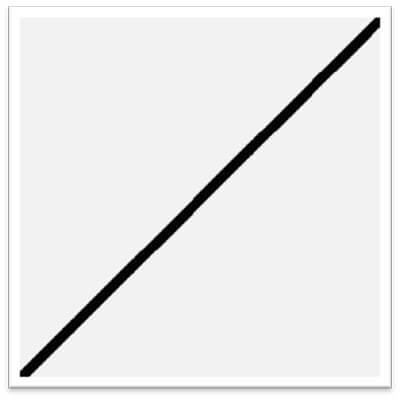
Fig 1.1. Line.
Image courtesy Daniel B.Chapman.
In the first three modules we will look at the elements of art: line, shape, form, color, space, and texture. The fourth, fifth, and sixth modules will provide an overview of the major principles of design. The elements of art are the basic components used to create a work of art. The principles of design are guidelines that artists might use to create certain effects in an artwork. Because the principles of design are only guidelines, artists can also choose to reject the principles.
The first formal element of art is line. You have probably studied lines in math classes, where they are most commonly described as a straight path through two points and on into infinity. In art, the definition of line is not so concrete or simple. Lines in art can be straight, curved or zigzags. Also unlike the lines described in math, lines in art can be thick or thin. They can be drawn or simply suggested. Descriptive lines are lines that are drawn, such as an outline of an object. Implied lines are lines that are suggested, but not necessarily drawn, in an artwork, such as the direction a figure in the artwork is looking. The edges of shapes are also implied lines.
Artists can use lines to draw the viewer's eye to various parts of an image. Consider the image of a line (figure 1.1). The single line in figure 1.1 draws the viewer's eye from the bottom to the top. Lines create the edges of spaces and are visual cues for the viewer in terms of both motion and space.
Header Art Image Courtesy of Wikimedia Commons.
