Examples of figurative language appear often in the opening paragraphs of “Rikki-tikki-tavi,” by Rudyard Kipling. As you read the opening section of the story, look for the kinds of figures of speech you've learned to identify in the this lesson--similes and metaphors.

Rikki Tikki Tavi
Narrator:
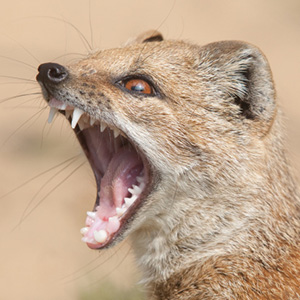
What would you do if you were walking along and a huge cobra leaped out and attacked you? If you answered, “Bite its neck and eat it,” you might have what it takes to be a mongoose. A small carnivorous mammal, the mongoose doesn’t look like much. However, thanks to its lightning reflexes, thick fur, and a special immunity to snake venom, mongooses top a very short list of animals that can go up against a cobra and walk away with lunch.
Among the most famous stories from Rudyard Kipling’s classic collection The Jungle Book is the tale of Rikki Tikki Tavi, a young mongoose who must protect a boy and his family from a deadly cobra assault. Like much of Kipling’s short fiction, it may seem like a simple story at first. But as you read, look for how Kipling creatively uses imagery and figurative language to make the action come alive, as in this scene where Rikki Tikki Tavi meets his first cobra.
Rikki Tikki Tavi Narrator:
“...from the thick grass at the foot of the bush there came a low hiss—a horrid cold sound that made Rikki-tikki jump back two clear feet. Then inch by inch out of the grass rose up the head and spread hood of Nag, the big black cobra, and he was five feet long from tongue to tail. When he had lifted one-third of himself clear of the ground, he stayed balancing to and fro exactly as a dandelion-tuft balances in the wind, and he looked at Rikki-tikki with the wicked snake's eyes that never change their expression, whatever the snake may be thinking of.”
 This is the story of the great war that Rikki-tikki-tavi fought single-handed, through the bathrooms of the big bungalow in Segowlee cantonment. Darzee, the tailor-bird, helped him, and Chuchundra, the musk-rat, who never comes out into the middle of the floor, but always creeps round by the wall, gave him advice; but Rikki-tikki did the real fighting.
He was a mongoose, rather like a little cat in his fur and his tail, but quite like a weasel in his head and his habits. His eyes and the end of his restless nose were pink; he could scratch himself anywhere he pleased, with any leg, front or back, that he chose to use; he could fluff up his tail till it looked like a bottle-brush, and his war-cry, as he scuttled through the long grass, was: “Rikk-tikk-tikki-tikki-tchk!'”
One day, a high summer flood washed him out of the burrow where he lived with his father and mother, and carried him, kicking and clucking, down a roadside ditch. He found a little wisp of grass floating there, and clung to it till he lost his senses. When he revived, he was lying in the hot sun on the middle of a garden path, very draggled indeed, and a small boy was saying: “Here's a dead mongoose. Let's have a funeral.”
Question
What does the author use figurative language to describe in this opening section?
