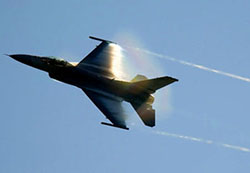
 Unbalanced forces can change the velocity of an object by causing it to speed up or slow down. If an unbalanced force acts on an object at rest, it causes the object to move. This is also a change in velocity. A change in an object’s velocity is called acceleration.
Picture the velocity of an object as a vector once again. If an unbalanced force comes along and acts on the object in the same direction that the object is moving, the object will speed up (the resultant velocity vector is longer). If the unbalanced force pushes the object in a different direction, the object will keep going the same speed, but the direction changes (the resultant velocity vector has a different length and direction). If the unbalanced force acts on the object in the opposite direction as it is going, the object slows down (the resultant vector is shorter). All of these are examples of acceleration. In physics, we don’t use the term deceleration when an object slows down. Any change in velocity is called acceleration. There can be either positive or negative acceleration, but it’s all acceleration.
To help you understand the above three examples, take a small toy car and act each one of them out, so you can really see what is going on.
Acceleration happens when an object:
- speeds up
- slows down
- changes direction
What happened to the toy car in each example. Click on the example to see what happens.
| An unbalanced force pushed the car in the same direction it was already moving. | the car sped up |
| An unbalanced force pushed the car in a different direction, but the same speed was kept. | the car changed direction |
| An unbalanced force pushed the car in the opposite direction it was going. | the car slowed down |
