You have learned that two-point perspective is created when horizontal lines run towards two different vanishing points. So how do you create three-point perspective? Click on the image below, and look closely at where the various lines go.
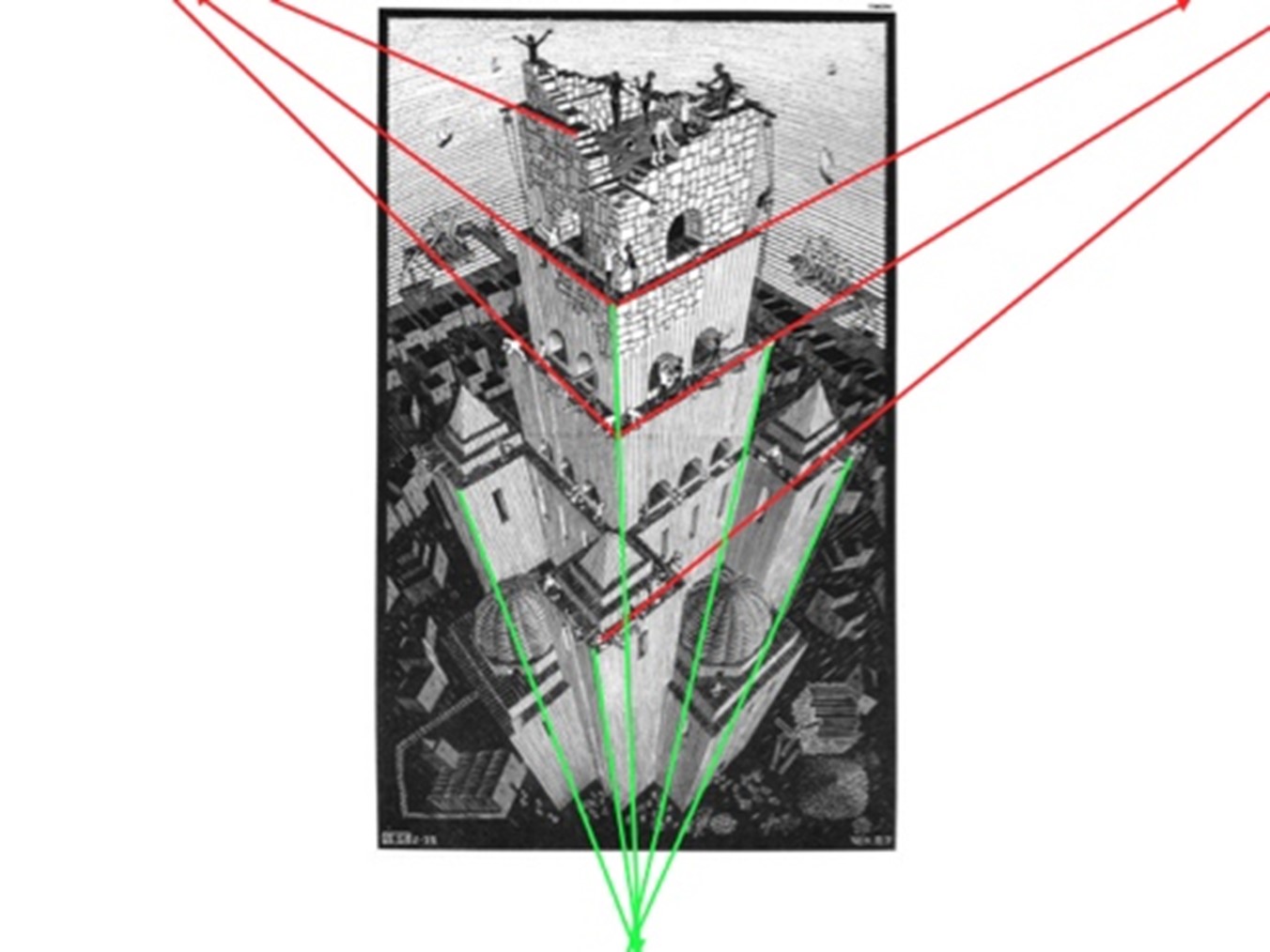
The use of a third vanishing point creates the illusion of an extreme perspective. It is typically used to create a bird's-eye view (looking down) or worm's-eye view (looking up) of an object or a structure. To create a bird's eye view, the vanishing point is placed at the bottom of the frame. To create a worm's eye view, the vanishing point is placed at the top.
Study the images below and think about how the artist used perspective. Can you tell which type of perspective they used? How does this choice of perspective impact the amount of space shown in the artwork? Is perspective the focus of the art, or is it used to make the work seem more realistic?
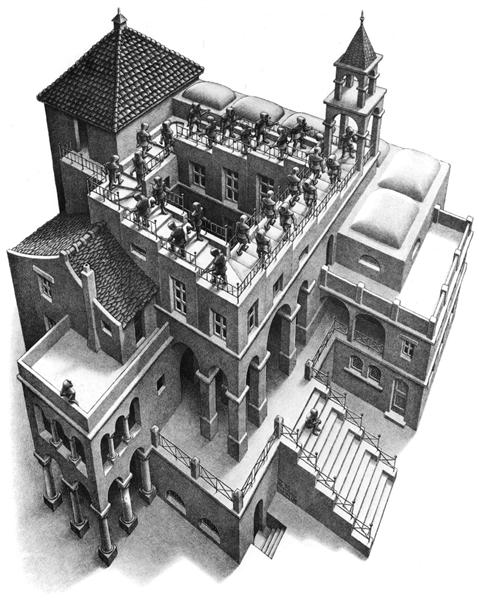
Ascending & Descending by M.C. Escher, 1960
This artwork shows a three-point perspective because it is portrayed from a bird's-eye view. This makes the space in the artwork seem somewhat condensed but also tells the viewer that the building is very tall.
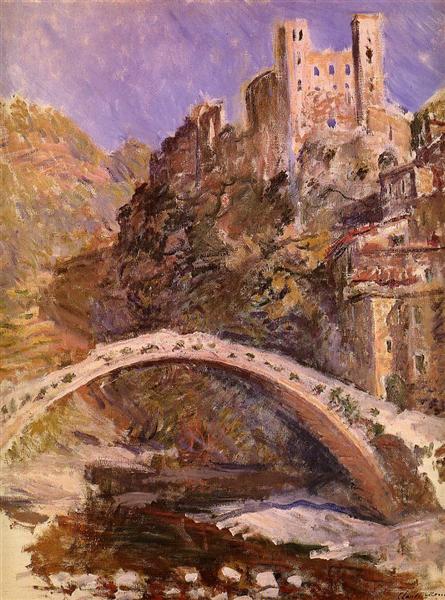
The Castle of Dolceacqua by Claude Monet, 1884
This is also an example of a three-point perspective from a worm's-eye view. However, the vertical lines are not as obviously angled because the point of view is at a greater distance from the subject. This tells the viewer that the subject is of great height, but having the subject positioned further back gives the viewer the ability to see it in the context of its surroundings.
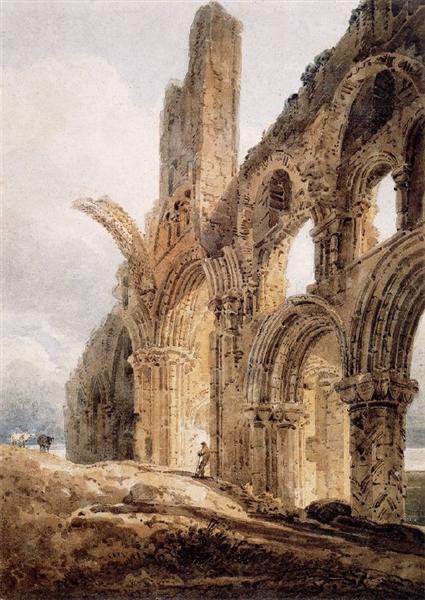
Lindisfarne by Thomas Girtin, 1798
This is also a three-point perspective from a worm's-eye view, but the viewer is placed closer to the main subject. This accentuates the extreme height of the structure.
Cards remaining:
Three-point perspective is usually used in artwork that features some kind of architecture, but it can be used in other ways too. For example, it can show that a subject is extremely tall or long and still fit the subject within the frame of the artwork. This use of three-point perspective is called foreshortening, which is when an object is optically compressed because of the viewer's perspective.
