This next poem is a little longer and more complicated than “Nicaraguita,” but it makes a similar point about where culture can be found. The poem is titled “Soccer Until Dusk,” and it was written by Peace Corps volunteer Mark Brazaitis, who lived and worked in Guatemala, in a town called Santa Cruz Verapaz.

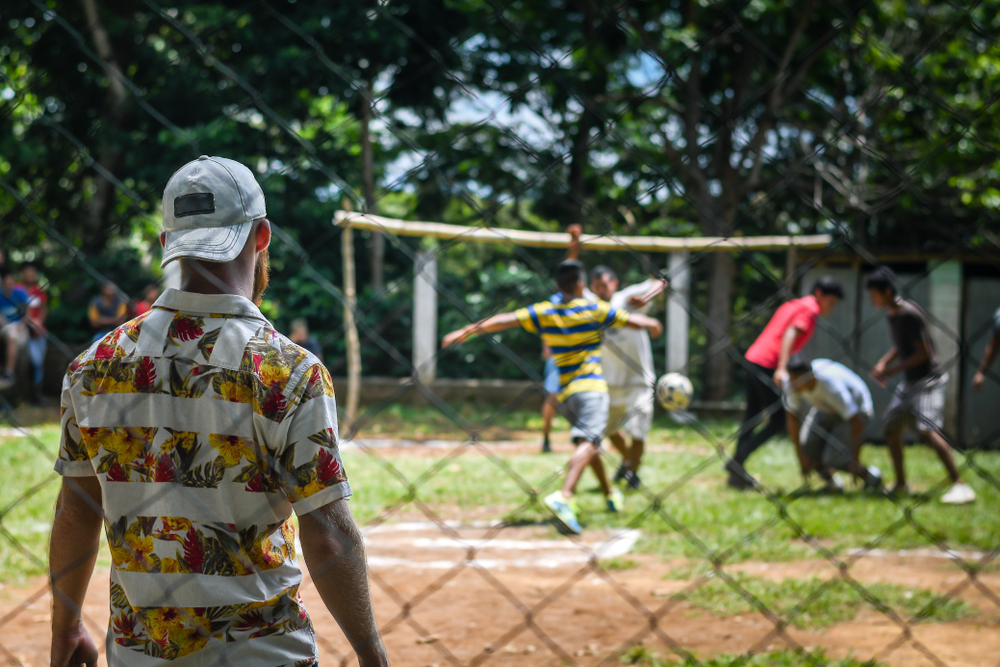
Read and listen to “Soccer Until Dusk,” looking for details that can help you understand the poem’s message or meaning. Then, read the poem again, paying close attention to what kinds of details appear in each stanza. Next, click the Begin button, and answer some questions that will help you check your understanding of the poem.
Soccer Until Dusk
My father laughs when I tell him
how in Santa Cruz Verapaz
men quit work at noon, and after lunch
play soccer until dusk.
My father is a reporter,
follows senators around,
sits in the White House press room;
the president calls him by name.
In 30 years, he has written thousands of stories,
small testaments to the lives of other men.
Before he divorced my mother,
before computers,
he would go afternoons into the den,
sit at his desk,
and type deep into the night.
I would fall asleep to the rhythmic thwack of keys,
my bedtime song.
From time to time he complained about working too hard,
spoke of wanting an alternative to 12-hour days.
In the months after the divorce, when our lives
seemed to have been sliced open like fruits,
spilling our secret juices,
he saw Gandhi and thought of giving everything,
house and car and savings, to my mother.
When I tell my father about the men playing soccer,
he follows his laugh with a stern look,
as if to ask whether I think kicking off work after half a day
and chasing a ball around a field
is any way a man should spend his life.
I don't argue; I never have.
Instead, I remember how I followed Pablo
and his father one afternoon to the stadium,
sat in the concrete stands as the men huddled,
picked sides.
I could have played; I'd been invited.
But soccer had never been my game,
so I watched as the men ran up and down the field,
their shirts off, their backs lit up by the sun,
and listened to their curses and shouts
as I would to a piece of exotic music,
strange sounds from another world.
Mark Brazaitis
The first sentence of this stanza explains who plays soccer until dusk. What is the other purpose of the first stanza?
- to help readers imagine the soccer game clearly
- to explain why the speaker was in Guatemala
- to introduce and describe the speaker’s father
In this stanza, we learn that the poem isn’t just about soccer, or even the men who play it.
In this stanza, we learn that the poem isn’t just about soccer, or even the men who play it.
In this stanza, we learn that the poem isn’t just about soccer, or even the men who play it.
What more do readers learn about the speaker’s father in this stanza?
- He spent nearly all his time working.
- He missed his family after his divorce.
- He loved to learn about other cultures.
The speaker describes his father in a way that makes him seem like a workaholic.
The speaker describes his father in a way that makes him seem like a workaholic.
The speaker describes his father in a way that makes him seem like a workaholic.
How does the speaker’s father react to the fact that many men in Guatemala stop work in the middle of the day and play soccer till dusk?
- He thinks it’s great.
- He disapproves.
- He doesn’t believe it.
The speaker’s father laughs and then gives his son “a stern look” that expresses his thoughts about such a custom―he questions if that is “any way a man should spend his life.”
The speaker’s father laughs and then gives his son “a stern look” that expresses his thoughts about such a custom―he questions if that is “any way a man should spend his life.”
The speaker’s father laughs and then gives his son “a stern look” that expresses his thoughts about such a custom―he questions if that is “any way a man should spend his life.”
What does the first line of this stanza tell readers about the speaker?
- He agrees with everything his father says.
- He doesn’t like to argue about anything.
- He doesn’t share his true feelings with his father.
After learning so much about the father and his way of interacting with this son, readers can infer that the speaker usually keeps his thoughts to himself, especially if they differ from his father’s point of view.
After learning so much about the father and his way of interacting with this son, readers can infer that the speaker usually keeps his thoughts to himself, especially if they differ from his father’s point of view.
After learning so much about the father and his way of interacting with this son, readers can infer that the speaker usually keeps his thoughts to himself, especially if they differ from his father’s point of view.
The poem’s last stanza describes what the speaker did instead of arguing with his father about the wisdom of playing soccer half the day instead of working. Which lines from the poem reveal most about how the speaker feels about playing soccer until dusk?
- Instead, I remember how I followed Pablo
- I could have played; I'd been invited.
- strange sounds from another world
The poem’s last line hints that the speaker feels very different from the men playing soccer―and not just because soccer “had never been [his] game.” He realizes that he was raised very differently than these men, in a culture that valued work more than just about anything.
The poem’s last line hints that the speaker feels very different from the men playing soccer―and not just because soccer “had never been [his] game.” He realizes that he was raised very differently than these men, in a culture that valued work more than just about anything.
The poem’s last line hints that the speaker feels very different from the men playing soccer―and not just because soccer “had never been [his] game.” He realizes that he was raised very differently than these men, in a culture that valued work more than just about anything.
Besides a popular form of entertainment, what part of Guatemalan culture does this poem describe?
- forms of greeting
- customs and values
- religious beliefs
The men who play soccer until dusk seem to value social interaction, exercise, and fun as much as they do hard work.
The men who play soccer until dusk seem to value social interaction, exercise, and fun as much as they do hard work.
The men who play soccer until dusk seem to value social interaction, exercise, and fun as much as they do hard work.
Which phrase best describes the speaker in this poem?
- a fascinated outsider
- a judgmental observer
- a gleeful participant
The speaker was raised in a culture that places much less value on social interaction, individual health, and emotional well-being. He finds the culture of Guatemala “exotic,” or very different from this own. He is intrigued, but feels his difference deeply.
The speaker was raised in a culture that places much less value on social interaction, individual health, and emotional well-being. He finds the culture of Guatemala “exotic,” or very different from this own. He is intrigued, but feels his difference deeply.
The speaker was raised in a culture that places much less value on social interaction, individual health, and emotional well-being. He finds the culture of Guatemala “exotic,” or very different from this own. He is intrigued, but feels his difference deeply.
Summary
Questions answered correctly:
Questions answered incorrectly:
