Clams, octopuses, and snails all are mollusks, but they are different from one another. Each belongs to a different class of mollusks. Click each tab to learn about the three classes of mollusks.
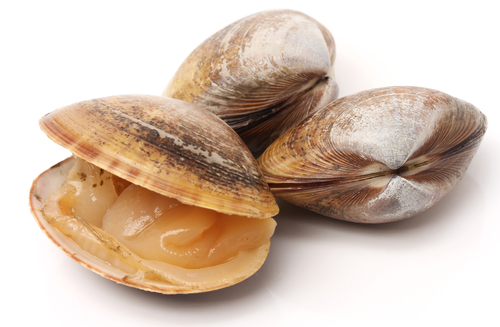
Bivalve mollusks--such as clams--have an external covering that is a two-part hinged shell covering and protecting the soft-bodied invertebrate. The two-part shell is made of calcium carbonate. Clams are under the water during high tide and become uncovered on the tide flats during low tide. To protect itself, a clam burrows down in the mud and sand using its foot.
Other bivalves are mussels, scallops, and oysters.
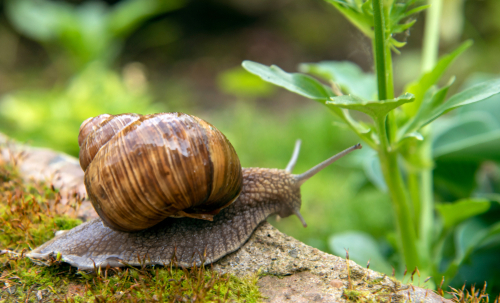
A gastropod is a class of mollusk that has a shell, called a gastropod, that is part of the body. The gastropod shell has several layers and is typically made of calcium carbonate, which is secreted by a part of the mollusk’s body known as the mantle.
An example of a gastropod is the snail. Snails live primarily in forests, fields, and wetlands but also in more disturbed habitats such as active gardens and fields, riverbanks, suburbs, and even cities.
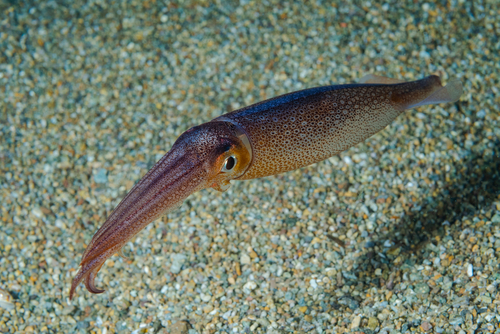
Cephalopods have soft, elongated bodies and large eyes. Cephalopods have a distinct head, bilateral symmetry, and a mantle. They also have eight arms, and two distinctive tentacles surround the mouth. They have a small, internal skeleton made of chiton. Squids and octopuses are examples of cephalopods.

Match the Mollusks
Can you identify the class of mollusk by its characteristics? Match the class of mollusk on the left with the defining characteristics on the right.
