
Review
In the previous lesson, you learned about singular definite articles in French. Do you remember what they are?

English has one definite article: the. But in French, there are more choices. What must you know to choose the correct definite article? You need to know
- The gender of the noun. Is it masculine or feminine? (le garçon/ la fille)
- The first letter of the noun. Does it start with a vowel? (l’ami/ l’amie) But that’s not all! There’s one more criterion to cover:
- Plurality. Is the noun singular or plural?
If the noun is singular, your choices are le, la, or l’. If the noun is plural, you’ll use les.
For example:
les garçons
les filles
les amis/ les amies
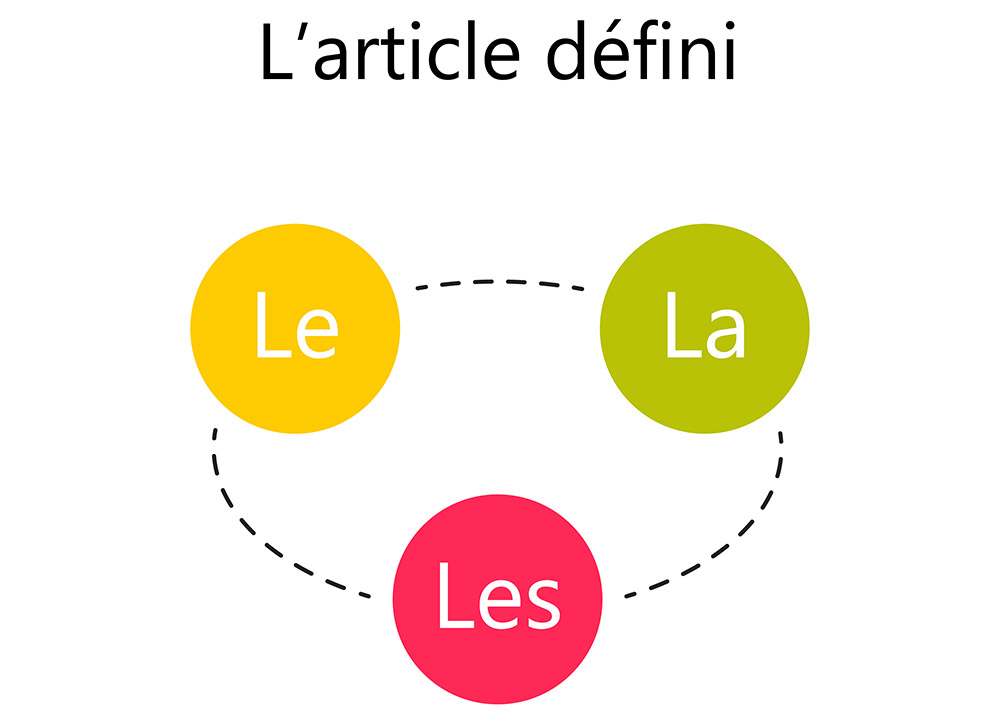
As with l’, it doesn’t matter whether the noun is masculine or feminine. If the noun is plural, you use les. Listen to the audio and look at the following tables to see all of the French definite articles in action.
| Masculine Singular | Masculine Plural |
|---|---|
| Le or l’ | les |
| le garçon (the boy) | les garçons (the boys) |
| l’ami (a male friend) | les amis (the male friends) |
| Feminine Singular | Feminine Plural |
|---|---|
| La or l’ | les |
| la fille (the girl) | les filles (the girls) |
| l’amie (a female friend) | les amies (the female friends) |
Question
Which definite article should you use for plural nouns?
les
