All good experiments begin with a hypothesis. The hypothesis gives direction to the experiment and is crucial again at the end of an experiment when you are ready to draw conclusions. A conclusion is a statement that summarizes the results of your experiment. The data that you collect in your experiment might support your original hypothesis. Then again, the results of your experiment might lead you to conclude that your hypothesis was wrong! This does not mean your experiment was a failure! Experiments can never prove a hypothesis correct. All experiments can do is provide information. Information that does not support a hypothesis is still information.
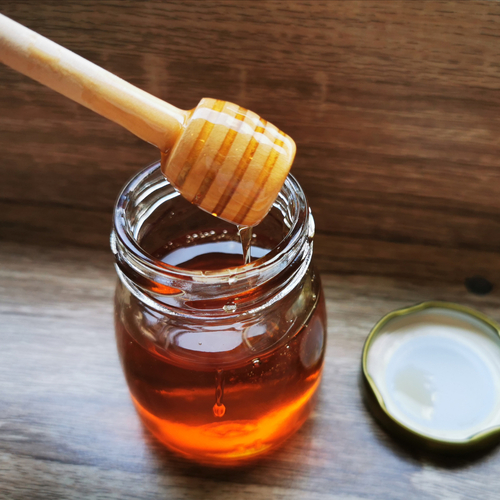
For example, if you think that high temperatures cause honey to flow more slowly, you could design an experiment to test the viscosity (the flow) of honey at different temperatures. The more viscous the honey is, the less it will flow. During your experiment, you find that honey takes 5 seconds to flow 15 centimeters at room temperature, 2 seconds to flow 15 centimeters at 50° C, and 10 seconds to flow 15 centimeters at 0° C.
What conclusion can you draw? Compare the results you obtained to your original hypothesis. You thought that high temperatures would cause honey to flow more slowly. Your results do not support your hypothesis. Your conclusion would be that high temperatures cause honey to flow more quickly. Use the flashcard activity below to practice making conclusions. Read the information about an experiment on the front of the card, and draw a conclusion. Check your answer on the back.
Hypothesis: If presented biscuit A and biscuit B, then dogs like brand A biscuits better than brand B.
Experiment: Visit a pet store and offer every dog that comes in one biscuit of each type. Record the number of dogs that choose brand A over brand B.
Results: Five dogs chose brand A biscuits, and 11 dogs chose brand B.
Conclusion: Dogs like brand B dog biscuits better than brand A.
Hypothesis: If you put a hot dog in salt, then you can mummify (dry out and preserve) it.
Experiment: Take a hot dog and put it in a plastic container. Cover the hot dog in table salt. Cover the container with a lid, then put it on the counter. Check it every day for two weeks.
Results: On day 13, the hot dog does not have any water left.
Conclusion: You can mummify a hot dog using salt!
Hypothesis: If you put a small ice cube and a large ice cube in the same-temperature room, then the smaller ice cube will melt faster than the larger ice cube.
Experiment: You make two ice cubes, one that has 2-inch sides and one with 1-inch sides. You set the ice cubes on the counter out of direct sunlight, and time how long it takes for each cube to melt.
Results: It takes the smaller ice cube 15 minutes to melt, and it takes the larger ice cube 40 minutes to melt.
Conclusion: Smaller ice cubes will melt faster than larger ice cubes.
Cards remaining:
