Click through this slideshow to learn about Christmas traditions in Spanish-speaking countries.
Chile
Children anxiously await the arrival of the Viejito Pascuero (as Santa Claus is known in Chile). Chileans also attend the misa del gallo (literally “rooster’s mass”), a midnight mass offered on Christmas Eve.
Since Christmas falls in the hot summer in Chile, families often gather together for outdoor fun and sports, from surfing to rock climbing!
Guatemala
The blend of ancient Mayan culture with Spanish Christianity has created unique Christmas traditions in Guatemala, as in Mexico. Las Posadas (religious processions) pass through the streets in the nine days before Christmas, accompanied by drums and fireworks. Figures of Mary and Joseph are carried to selected houses, where a carol is sung asking for lodging.
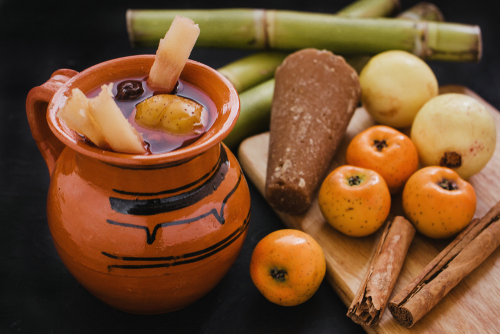
Once the procession is over, it's time to feast! Street vendors sell a traditional fruit drink called ponche de frutas, made of bananas, papayas, pineapples, and apples.
Spain
In Spain, the 28th of December is El Día de los Inocentes (Innocents’ Day), something like a Spanish version of April Fool’s Day, when you can expect people to play unexpected pranks on you.
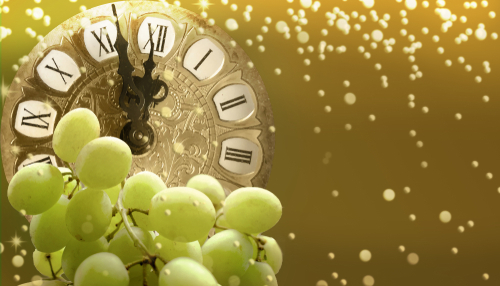
Spaniards celebrate New Year’s Eve (Nochevieja) by eating 12 grapes as the clock strikes 12, a tradition known as las uvas de la suerte.
Bolivia
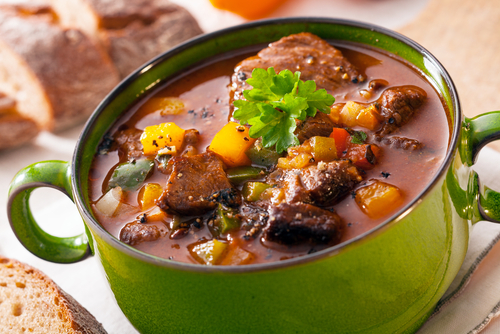
In Bolivia, people eat picada on December 24th, a tradition since the 19th century. This sweet and spicy meat and veggie soup is traditionally enjoyed after la misa de gallo and before late night processions in which participants parade a figure of baby Jesus through the streets of town.
Paraguay
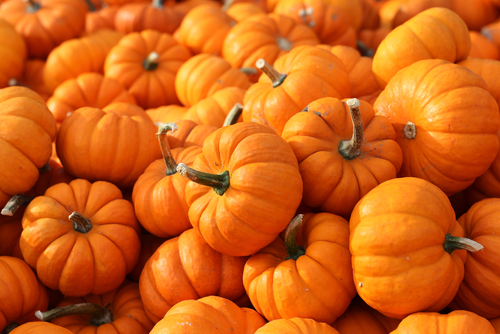
In Paraguay, chicken or turkey is served up on Christmas Eve with kivevé, a traditional meal prepared from pumpkin (calabaza).
Nicaragua
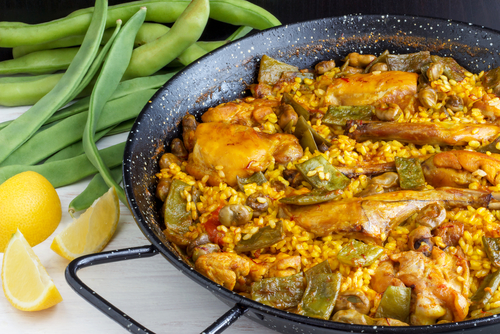
If you’re in Nicaragua around Christmas, don’t be surprised to see paella (a Valencian-style rice dish) on the dinner table. This Nicaraguan version of paella is a traditional meal in Central America on Christmas Eve.
Argentina
Argentines plan a special meal for the evening of December 24th, on which everyone brings a different dish to contribute to the Christmas dinner. It’s also common to see live nativity scenes in churches around Argentina.
Let’s summarize the information that we have just read.
Can you choose the correct answer to the following questions?
Do you know?
What is El Día de los Inocentes?
Sorry, this day doesn't exist.
¡Muy bien!
Which country does the Viejito Pascuero visit on Christmas day?
¡Muy bien!
Sorry, the Viejito Pascuero is from Chile.
What do they eat on New Year’s Eve in Spain?
Sorry, this is a tradition in Italy, not Spain.
¡Muy bien!
When do Bolivians eat their famous picada?
¡Muy bien!
Sorry, they eat it on Christmas Eve.
What is kivevé made of?
¡Muy bien!
Sorry, review the slideshow!
Where would you eat paella at Christmastime?
Sorry, the traditional Christmas dish in Paraguay is kivevé.
¡Muy bien!
You got # out of # correct. Click the Retry button for another attempt.
You got a perfect score. Great job!
Text
Guided Notes
Tutor
Video
How To
Meet your new study partner! With our powerful Student Tools, your online learning experience just got more accessible,
personalized, and thought-provoking than ever before!
Do you feel like you learn better when you watch videos? You’re not alone!
Research shows instructional videos can make learners more engaged and active in online classes,
when compared to text-only lessons.
Student Tools lets you turn some lesson pages into videos instantly! Just click the Student Tools tab and select Video.
Remember, video instruction is not available on every lesson page.
Go back to the lesson page any time by closing the Student Tools window.
Sometimes when you learn, it can feel like you’re just not getting it. Maybe you don’t really know what all the words on
the page mean, or you have to read a paragraph two or three times to understand what it’s about.
If this happens to you, just click the Student Tools tab and choose “Text.” This will automatically
simplify the instruction, making it easier to understand and remember.
Go back to the lesson page any time by closing the Student Tools window.
The science is in, and taking notes is one of the best ways to reinforce your learning.
Notes work even better when you write them by hand, since you’re more likely to put complex new ideas
in your own words and remember them longer.
You can quickly and easily access guided notes, as well as key lesson vocabulary,
by clicking Student Tools > Notes. Choose a PDF or Word Doc,
and fill them out online -- or even better-- print them out and take notes by hand!
Go back to the lesson page any time by closing the Student Tools window.
Imagine a teacher you can contact anytime, who is happy to answer all your questions and
knows pretty much everything in the world about the subject you need help with.
Say, “Hello!” to your Tutor! Click on Student Tools > Tutor, and ask any question about your class.
Your Tutor is super smart! You can ask the Tutor to explain things more clearly, make connections
between ideas, or even give you custom quizzes and feedback. You can click the links under References to learn more.
Go back to the lesson page any time by closing the Student Tools window.
Student Tools lets you create your own Flashcard decks to help you study. To get started, click Student Tools >
Flashcards. Press Add New Set and give it a title.
Now, decide what will be on the front and back of your first card. It can be a term and definition, a challenging question,
or even a funny phrase that helps you remember something. Click Add Card to Set to make a new Flashcard.
You can delete sets or cards by clicking the trash can icon. When you’re done, click Save Cards to Set.
Now you can Review your deck. Read the front of the card, and think of the answer. Even better, say your answer out loud! Then, click the card to flip it over.
Depending on how you did, you can either keep that card in the deck to study again by clicking Next or Previous, or if you got it right, click remove.
Remember to review your flashcards often, space out study sessions, and keep practicing until you know them all!
Go back to the lesson page any time by closing the Student Tools window.