
Do you know?
Now that you have learned about the different kinds of perspective, let's look at why perspective is important to art. Study the artworks below and answer the following questions:
- Does the artist use perspective?
- If they do, which kind are they using?
- Does the artwork show deep or shallow space?
- Would you have used a different type of perspective if you were the artist?
- If the artwork doesn't use perspective, do you think it should?
- How does the lack of perspective impact the artwork?
After answering the questions in your head, click on each image to look more closely at the artwork and study the caption provided.
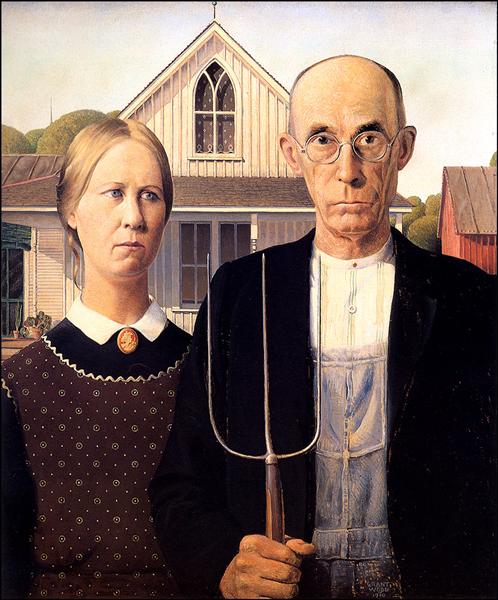
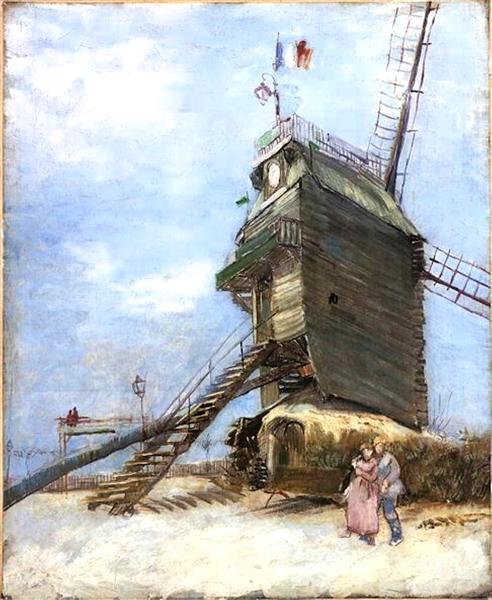

As you have learned, a deep perspective is not necessary for every artwork. Because deep perspective creates space and broadens the viewpoint of the subject, it is best used to portray a large space or to communicate just how huge a subject is. To communicate how a subject is feeling, it is better to use a closer viewpoint and suggest less space.
Look at the artwork below. The title of this artwork is Spring in Town, and it was created by Grant Wood. Does this artwork make you think of spring? Does it seem like it is in town? Does it feel like something is missing? This image is cropped from the true artwork.
Now, click on the image to flip the card and see the full work. How does the use of more space and perspective help to tell a story? How do the other figures help to suggest springtime?
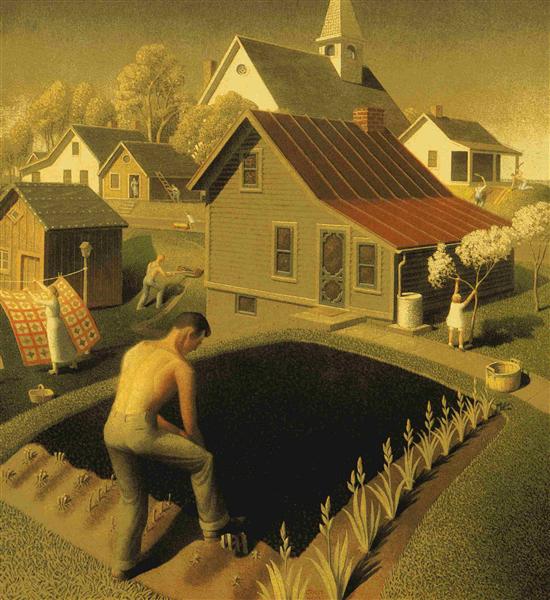
The inclusion of perspective and more space in the full artwork gives you more information. Instead of just a man planting seeds, you can now see a portion of the town and other people hard at work on their spring tasks. The larger perspective also draws the focus of the work from only the man in the foreground to the entire town.
Using perspective creates a realistic portrayal of height and depth. Perspective can be used to guide the viewer's eyes and can also aid in creating a focal point and suggesting deep or shallow space.
Lesson Connection!
Answer this question to see if you can remember what you learned in previous lessons.
Question
Which elements of art form the basis for perspective?
