Matter exists in four physical states: solid, liquid, gas, and plasma. A solid is matter in which the particles that make it up are packed in a rigid structure. A solid has a definite shape and volume. The particles that make it up are held together by strong attractive forces. A diamond is an example of a solid. A liquid is matter in which the particles that make it up are far enough apart that they can move around each other.
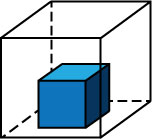
|
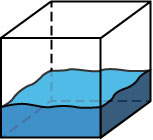
|
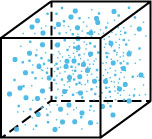
|
| Solid | Liquid | Gas |
| definite volume | Definite volume | Assumes the volume of container |
| definite shape | Assumes the shape of the container | Assumes the shape of container |
| Does not allow another solid to pass through it | Will allow a solid to pass through it easily | Will allow a solid to pass through it easily |
| Becomes a liquid when heated | Becomes a gas when heated | |
| When cooled becomes a solid | Becomes a liquid when cooled | |
| Example: Wood | Example: Juice | Example: Oxygen |
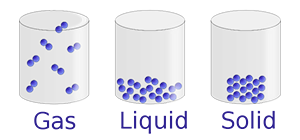 Plasma is a state of matter that is composed of high-energy positively and negatively charged particles. Stars, lightning flashes, and fluorescent lighting contain plasma.
The blue spheres at the left represent the particles that make up a solid, liquid, and a gas.
Liquid
What is an example of a liquid?
Water, juice, and milk are examples of liquids.
