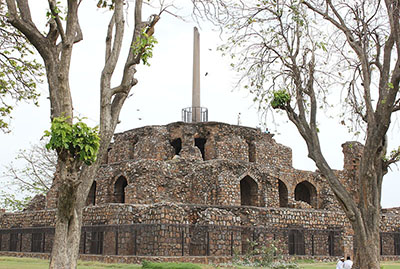
 Ashoka was the son of emperor Bindusara. Ashoka had several older siblings that were more likely to inherit the throne then he was. From an early age, however, he was known for his fierce hunting and battle skills. He was sent to military school where he strengthened his skills. According to Buddhist texts, Ashoka killed several of his siblings so that he could be the rightful heir to the throne.
Ashoka was know for his extreme brutality in his early years as emperor. It is said that he would make his advisers go through tests of loyalty and he had over 500 men killed that failed that test. It is also said that he had torture chambers for criminals and anyone that crossed him. It was the brutality that drove him to continue conquering more land. Ashoka wanted to conquer Kalinga, which was near the Bay of Bengal. The war was extremely bloody and over 100,000 men were killed. Buddhist texts describe Ashoka walking around the battle field once the war was over and being overwhelmed by all of the dead bodies and blood. It was at that point that Ashoka converted to Buddhism, and in 260 BCE he made Buddhism the state religion. Ashoka is credited for the spread of Buddhism worldwide.
Ashoka ruled the Mauryan Empire for nearly forty years. After his death there was no emperor that could maintain such a vast empire the way he could, and fifty years after his death the Mauryan Empire came to an end. Although this was a time in history where few documented their reigns as King, Ashoka made sure that his wisdom would carry on. He had beautiful sculptures made of stone and teachings carved into pillars. He left behind the first language of India, Prakrit.
Food For Thought
What would have happened to Buddhism had Ashoka not converted and made it the state religion? Do you think it would have spread to the degree that it has today? There are an estimated 300 million Buddhists in the world today.
