Shortly after the death of Hammurabi, Babylon was invaded and taken over. Over time multiple empires rose and fell (you will learn more about this later). One of the last empires in the area of Babylon was the Chaldeans. Their leader Nebuchadnezzar took over the area of Babylon and rebuilt it to full strength. Because he rebuilt Babylon he is sometimes thought to have been Babylonian but Nebuchadnezzar was not originally Babylonian.
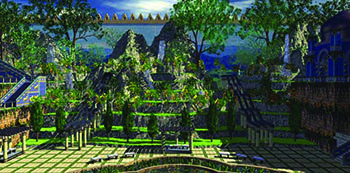
Nebuchadnezzar had the Hanging Gardens of Babylon built to please his favorite wife, a Persian princess who was lonesome for the green hills of her native land. The Hanging Gardens could be seen far across the plains, rising like a green and flowery hillside in a part of the world where there were very few natural hills. The gardens were built up in terraces, stacked one on top of another, as high as seventy-five feet. The gardens did not actually hang, but were overhanging the terraces, like roof gardens we might see in a city today. Water from the Euphrates River was pumped to the top by shifts of slaves working around the clock. The Hanging Gardens of Babylon became known as one of the Seven Wonders of the ancient world.
