Let’s Learn!
Did you know a shape can be partitioned in different ways?
Goal:
Goal:

Think About It!
Goal: Understand that a shape can be partitioned into a given number of equal parts in a variety of ways.
Both Madelyn and her cousin partitioned their bike lanes into 4 equal parts, but they did it in different ways. Madelyn used vertical lines, and her cousin used horizontal lines. Because both of their drawings made 4 equal parts, each bike lane represents \(\Large\frac{1}{4}\) of the total lanes.
Let’s look at how the same shape can be partitioned in different ways. Click through the tabs below to see how each shape can be partitioned.
Squares
Squares can be partitioned in a variety of ways. Just make sure each part is the same size as each of the others. Let’s partition these squares into 4 equal parts. Each equal part will represent \(\Large\frac{1}{4}\) of the square.

Vertical lines
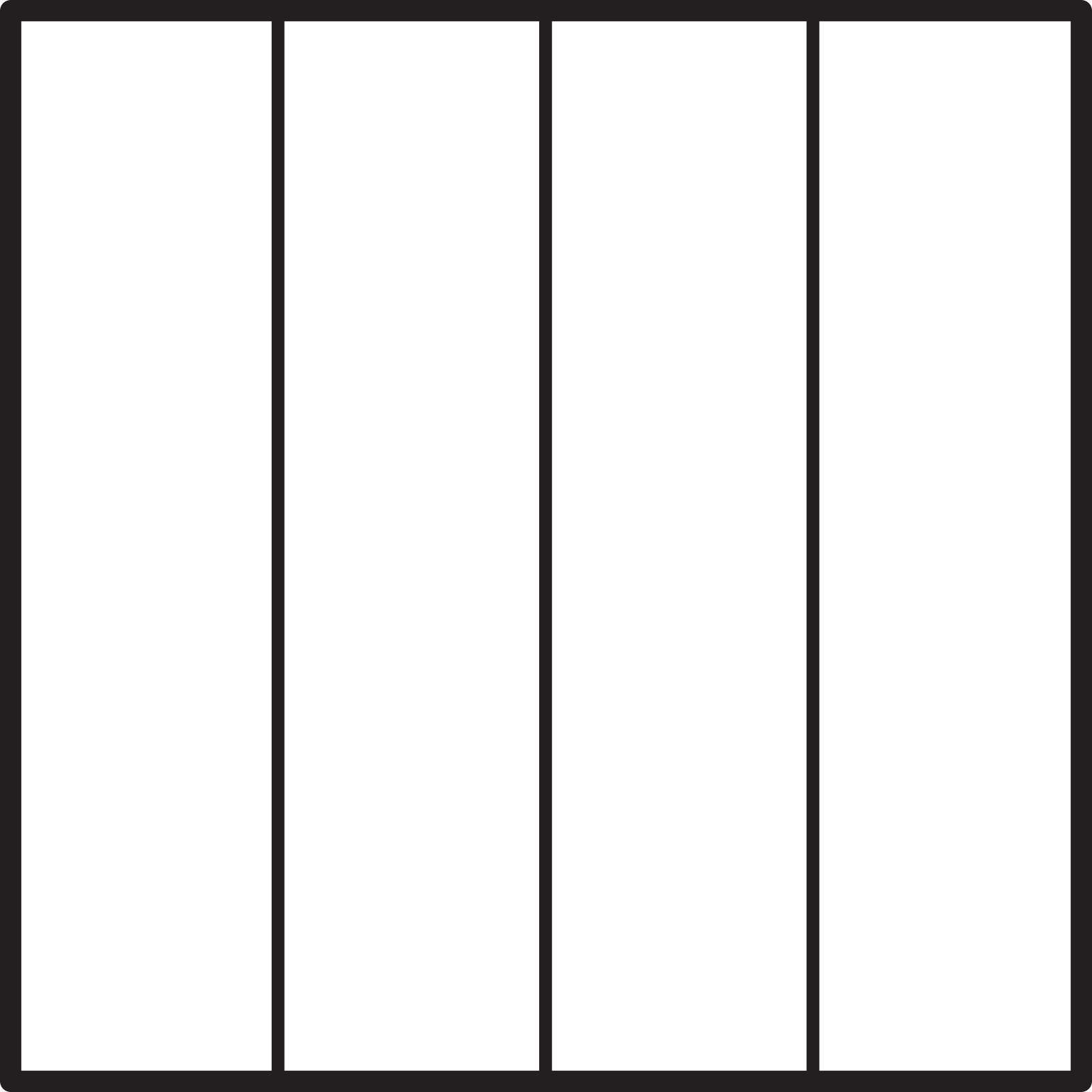
Vertical lines

Horizontal lines
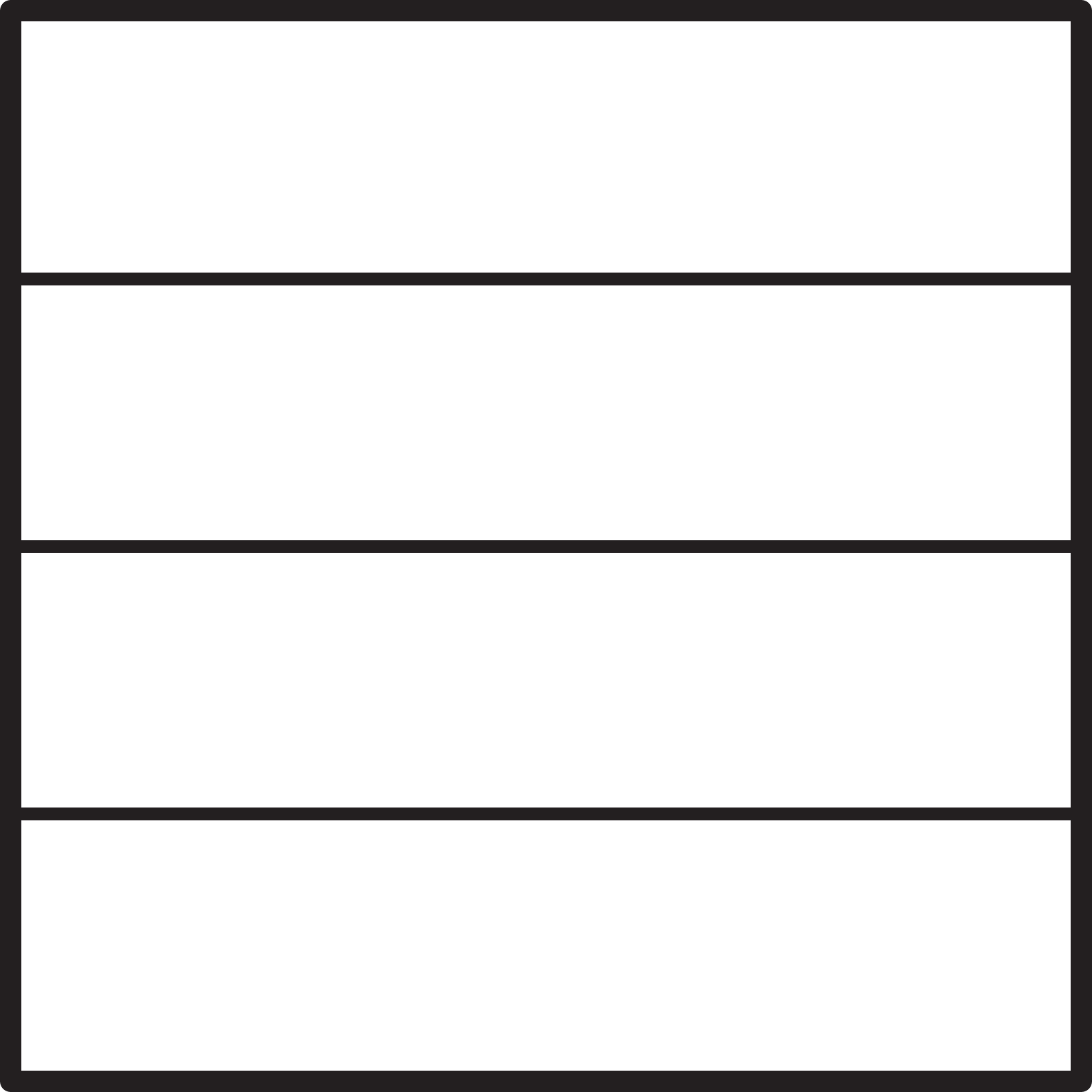
Horizontal lines

Vertical and horizontal lines
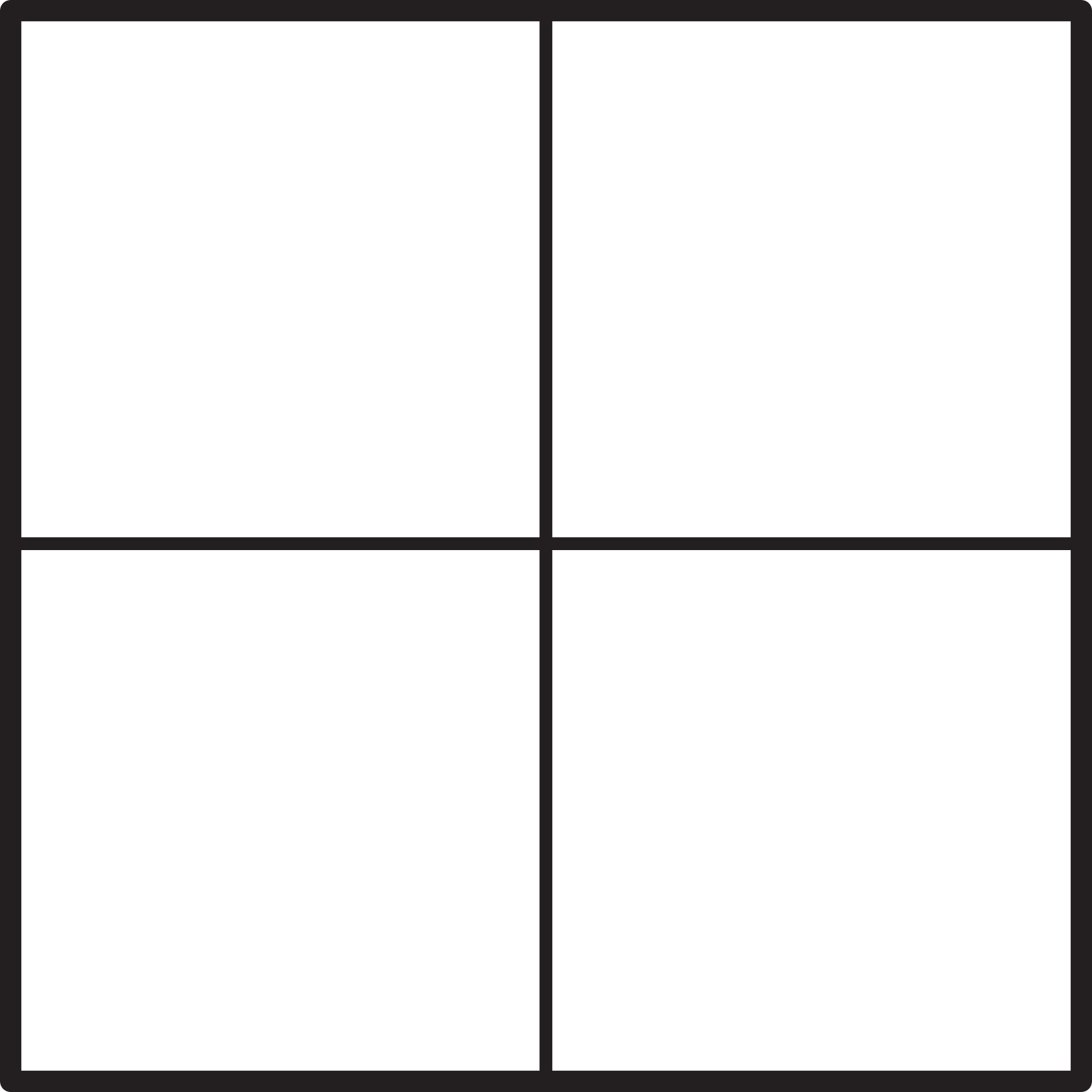
Vertical and horizontal lines

Diagonal lines

Diagonal lines
Rectangles
Rectangles can also be partitioned in a variety of ways. Just make sure each part is the same size as each of the others. Let’s partition these rectangles into 6 equal parts. Each equal part of the rectangle will represent \(\Large\frac{1}{6}\) of the rectangle.

Vertical lines
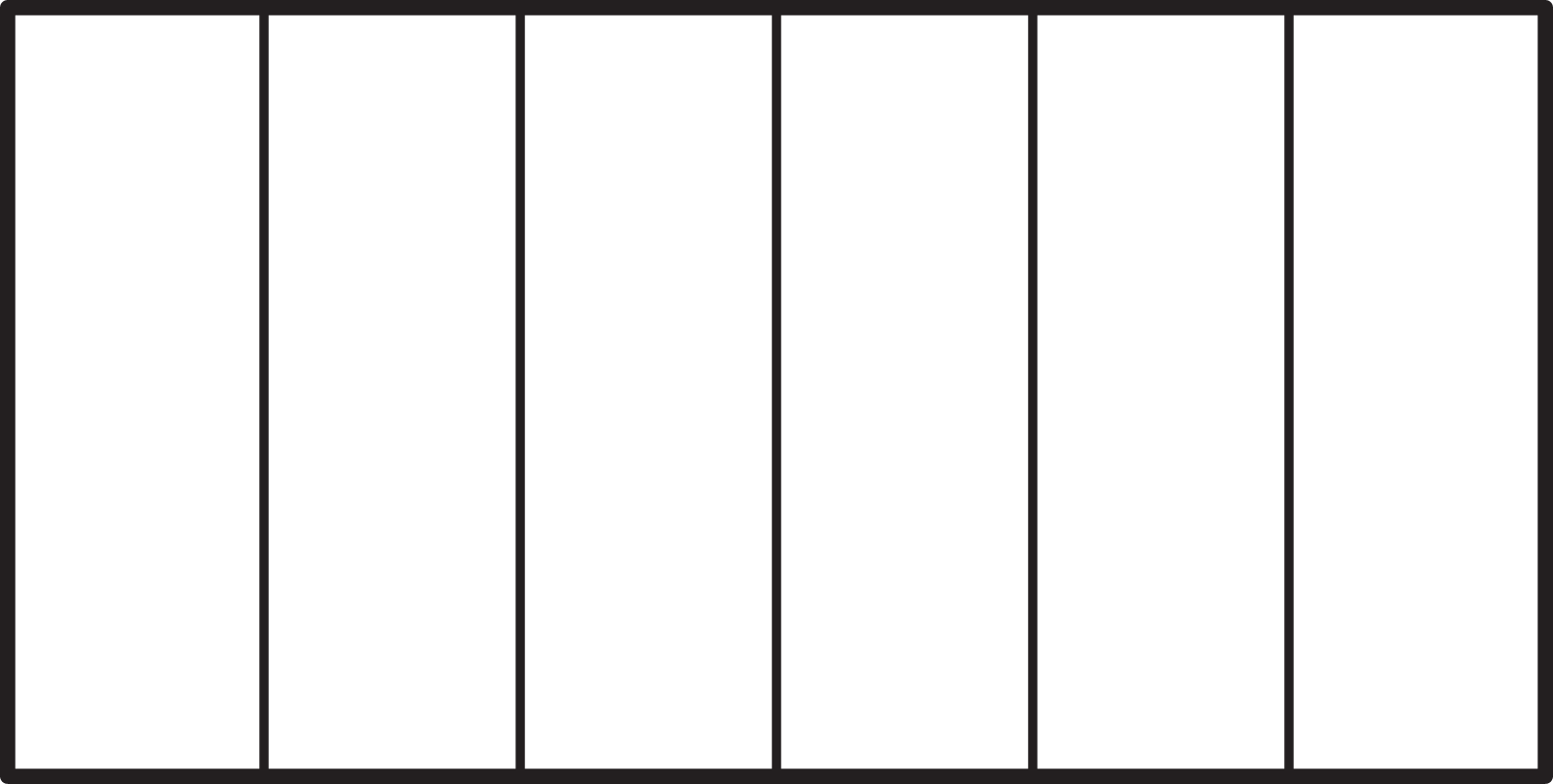
Vertical lines

Horizontal lines
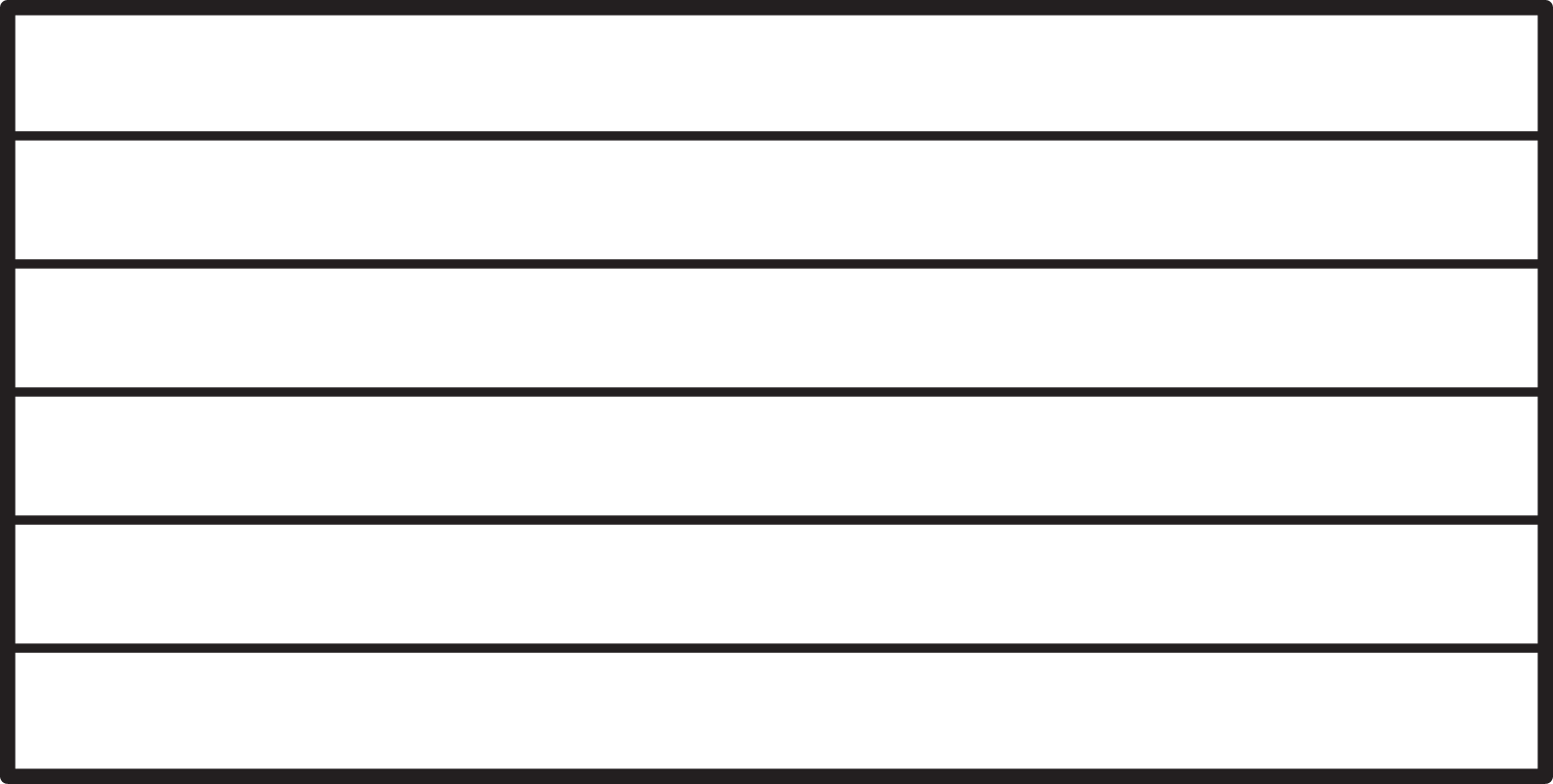
Horizontal lines
Vertical and Horizontal lines
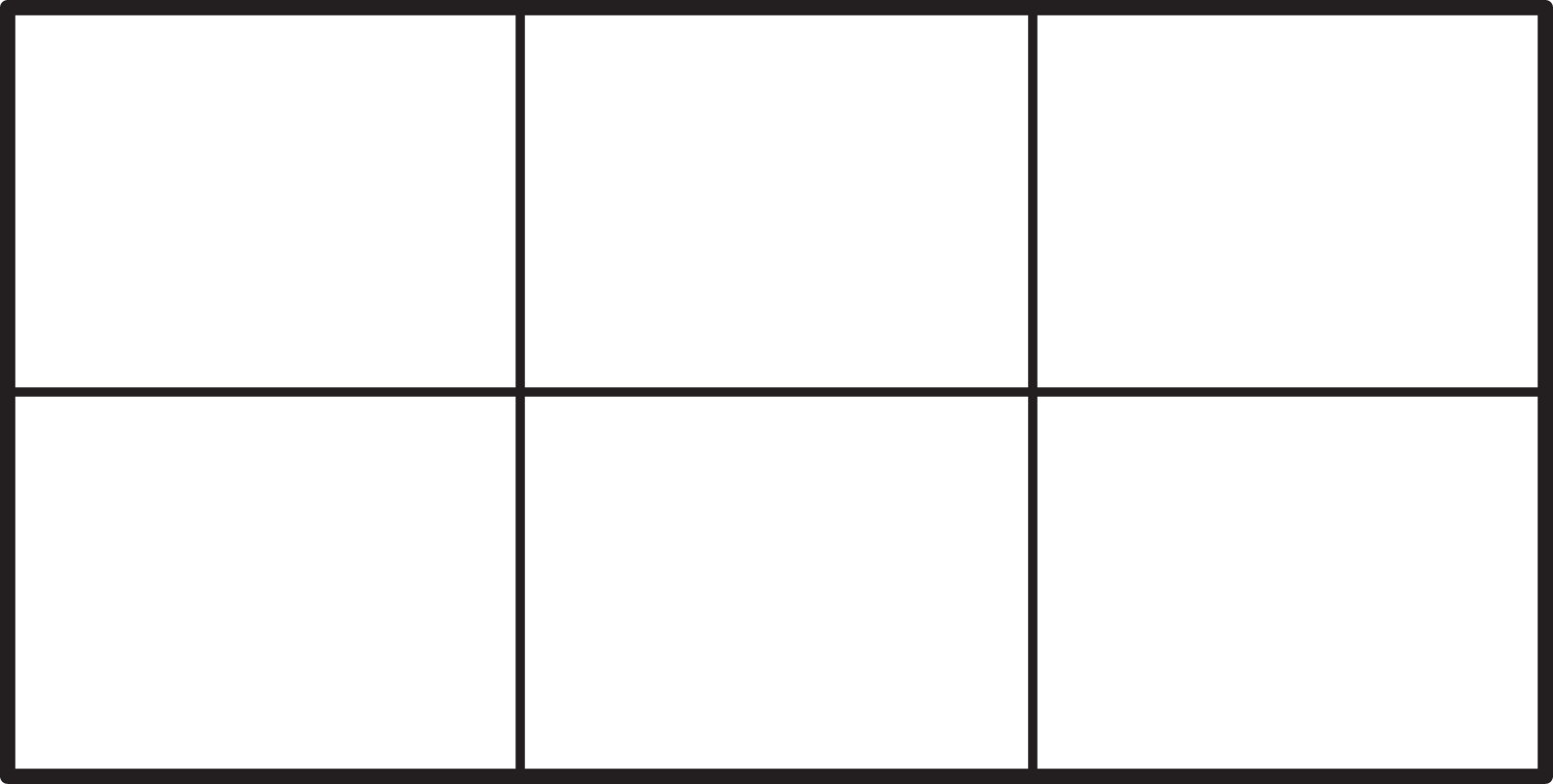
Vertical and Horizontal lines
Circles
When you partition circles, each line must pass through the middle of the circle. Here are a few examples of how circles can be partitioned.
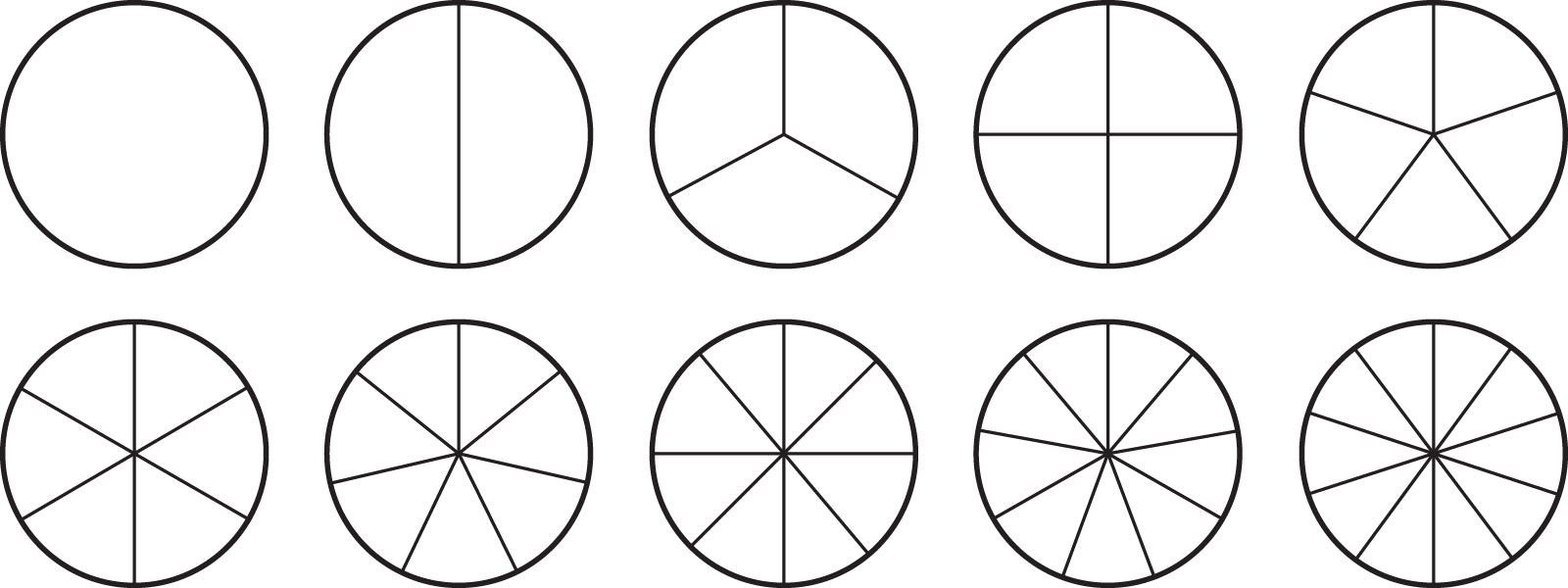 10 circles. A circle. A circle with partitioned into 2
equal parts with 1 line. A circle with partitioned into
3 equal parts. A circle with partitioned into 4 equal
parts. A circle with partitioned into 5 equal parts. A
circle with partitioned into 6 equal parts. A circle
with partitioned into 7 equal parts. A circle with
partitioned into 8 equal parts. A circle with
partitioned into 9 equal parts. A circle with
partitioned into 10 equal parts.
10 circles. A circle. A circle with partitioned into 2
equal parts with 1 line. A circle with partitioned into
3 equal parts. A circle with partitioned into 4 equal
parts. A circle with partitioned into 5 equal parts. A
circle with partitioned into 6 equal parts. A circle
with partitioned into 7 equal parts. A circle with
partitioned into 8 equal parts. A circle with
partitioned into 9 equal parts. A circle with
partitioned into 10 equal parts.
In each circle, all the parts of the circle are equal.
When you partition a circle, you cannot use more than 1 vertical and 1 horizontal line. If you try using more horizontal or vertical lines, you will not make equal parts. Look at the examples below.
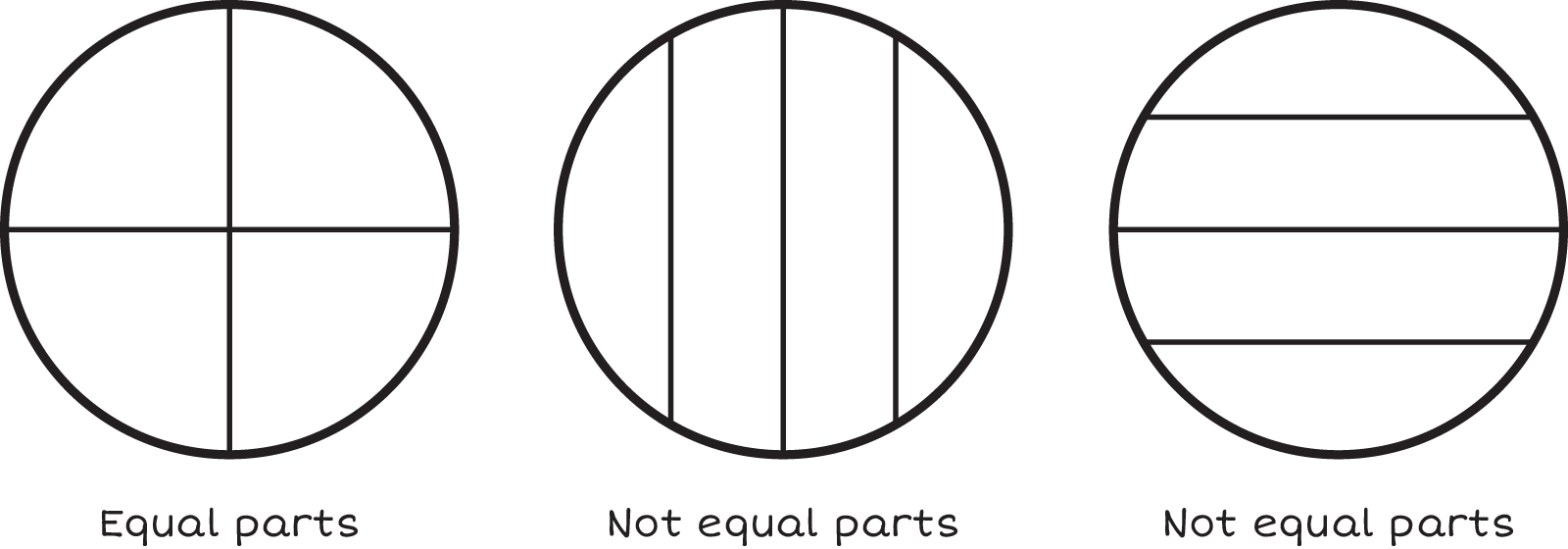 A circled partitioned with a vertical and horizontal
line dividing the circle into 4 equal parts. A circle
divided by 3 vertical lines without equal parts. A
circled partitioned horizontally without equal
parts.
A circled partitioned with a vertical and horizontal
line dividing the circle into 4 equal parts. A circle
divided by 3 vertical lines without equal parts. A
circled partitioned horizontally without equal
parts.