The Process
How does photosynthesis work?
Goal:
Goal:
All of the parts of the plant work together so that the plant can “do” photosynthesis. Each part of the plant plays an important role. Click through the tabs below to learn how the parts of the plant work together to complete the process of photosynthesis.

Chlorophyll is a green substance that traps the energy in the sunlight as the sunlight strikes the leaves. This chlorophyll is what gives leaves their green color. In green plants, chlorophyll is found in cell organelles called chloroplasts. The chloroplasts are food factories where sugars, glucose, are created.
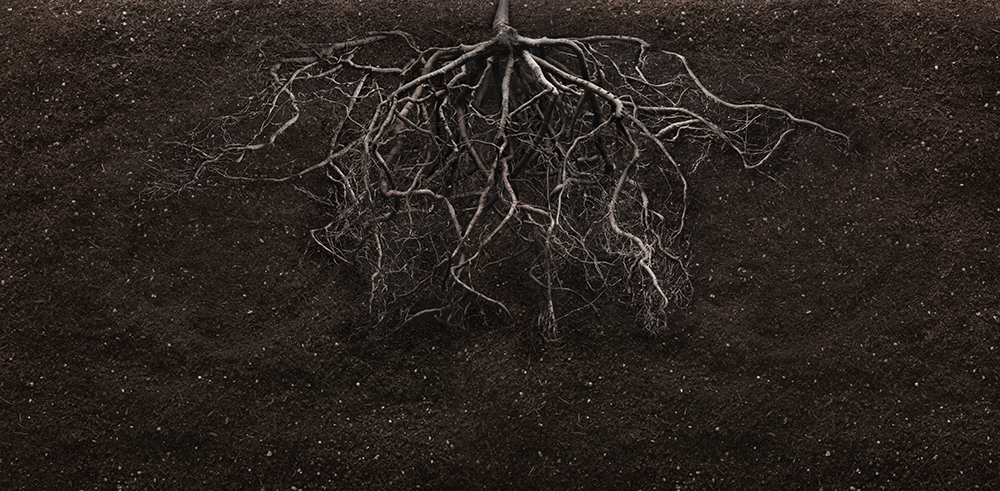
Water (H2O) moves from the roots, up through the stem, to the leaves. Since water is needed for the process of photosynthesis, this is an essential part of the process. The roots can also collect small amounts of carbon dioxide in the soil.
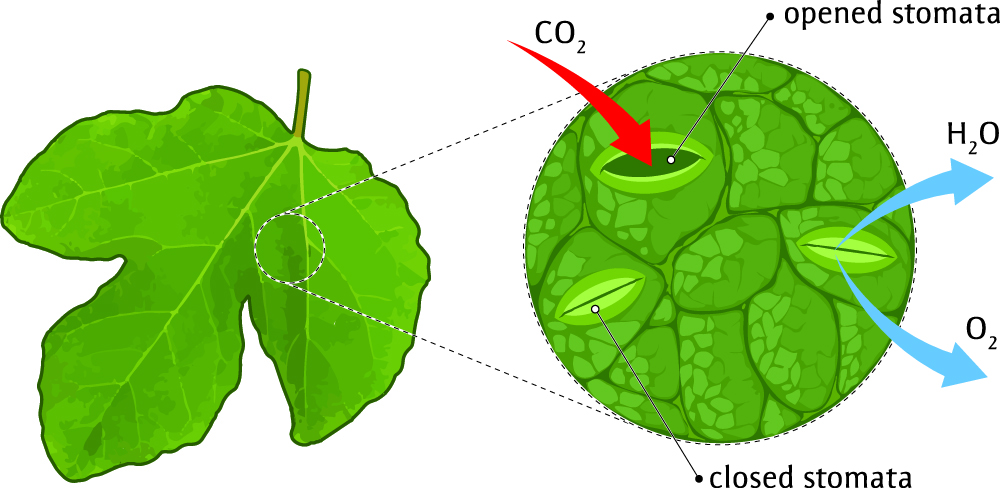
A diagram showing how a leaf breathes. On the left is a green leaf with a small section circled. On the right is a close-up view of that circled section, showing the leaf's surface up close. The close-up looks like a green puzzle. Some pieces of the puzzle are shaped like small mouths. These are tiny openings in the leaf called stomata. Some stomata are open, and some are closed like lips pressed together. The diagram labels these as "opened stomata" and "closed stomata." Arrows show what moves in and out of the open stomata. A red arrow labeled CO2 (carbon dioxide) points into an open stoma, showing the gas entering the leaf. Blue arrows labeled H2O (water) and O2 (oxygen) point out of the stomata, showing these gases leaving the leaf.
Stomata are tiny pores along a plant’s stem and leaves that allow for the movement of gases. Most of the carbon dioxide that plants take in, along with the oxygen that is released, flows through the stomata.