Measurements
Length, volume, mass, and temperature–how are they measured?
Goal:
Goal:
As you know, the metric system is used so scientists can easily communicate their findings with one another. If there were not common units, the data would be difficult to compare. Length, volume, mass, and temperature are all measurements that are recorded using the metric system. Click the tabs below to learn specifics about each measurement.
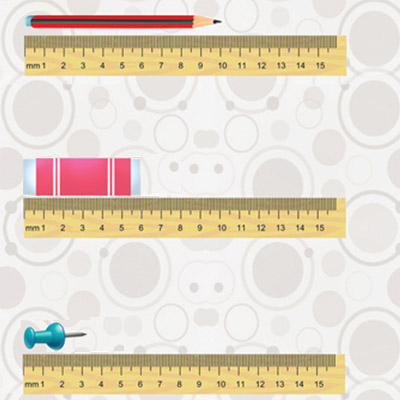 The basic unit of length in the metric system is a meter (m).
Very small items are most likely measured in centimeters (cm),
whereas very long objects are most likely measured in
kilometers (km). As you can see in the diagram, the end of the
object needs to be lined up with the “0” mark on the ruler or
meter stick in order to get accurate measurements.
The basic unit of length in the metric system is a meter (m).
Very small items are most likely measured in centimeters (cm),
whereas very long objects are most likely measured in
kilometers (km). As you can see in the diagram, the end of the
object needs to be lined up with the “0” mark on the ruler or
meter stick in order to get accurate measurements.
 Volume, the amount of space an object takes up, is measured in
two different ways depending on if the object is solid or
liquid. Liquid volume is measured in a
graduated cylinder (as shown), and the base unit is a
liter (l). The measurement should be read at the top of the
liquid when placed in the graduated cylinder.
Volume, the amount of space an object takes up, is measured in
two different ways depending on if the object is solid or
liquid. Liquid volume is measured in a
graduated cylinder (as shown), and the base unit is a
liter (l). The measurement should be read at the top of the
liquid when placed in the graduated cylinder.
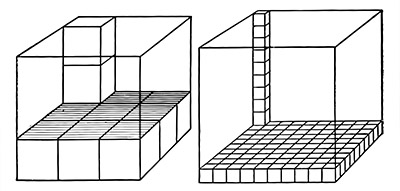 Solid volume is calculated by multiplying the length of the
object by the width and the height (volume = length x width x
height). The metric units for solid volume are cubic meters
(mᵌ).
Solid volume is calculated by multiplying the length of the
object by the width and the height (volume = length x width x
height). The metric units for solid volume are cubic meters
(mᵌ).
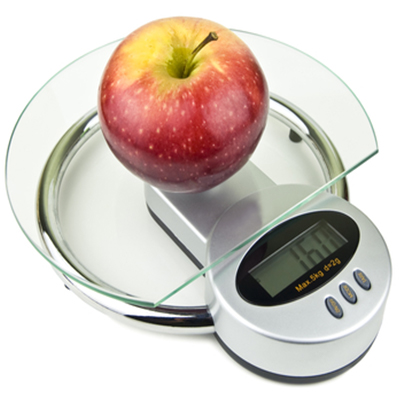 Recall that mass is the amount of matter in an object. Scales
are used to measure mass and the metric base unit is grams
(g). Since most labs contain electronic scales, this is a very
easy measurement to obtain. Simply place the object on the
scale and the mass is shown.
Recall that mass is the amount of matter in an object. Scales
are used to measure mass and the metric base unit is grams
(g). Since most labs contain electronic scales, this is a very
easy measurement to obtain. Simply place the object on the
scale and the mass is shown.
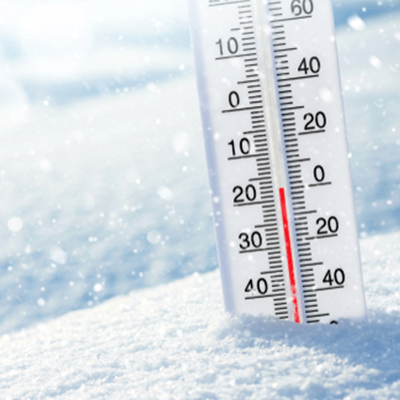 When you think of temperature, you probably think of it in
Fahrenheit. However, scientists use Celsius when measuring and
discussing temperature. In Celsius, the freezing temperature
is 0⁰ and the boiling temperature is 100⁰.
When you think of temperature, you probably think of it in
Fahrenheit. However, scientists use Celsius when measuring and
discussing temperature. In Celsius, the freezing temperature
is 0⁰ and the boiling temperature is 100⁰.
Test your knowledge on metric measurements by answering the questions below. Click each question to check your work.
If you wanted to measure the amount of matter inside your notebook, what piece of equipment and what units would be used?
Mass is measured in grams using a scale.
This box is 7 cm long, 4 cm wide, and 3 cm high. What is the volume of the box?
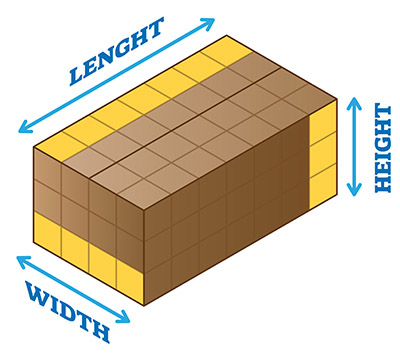
84 cmᵌ (7 cm x 4 cm x 3 cm = 84 cmᵌ)