Assess Yourself
How well do you understand the ideas in this lesson?
Goal:
Goal:

Show What You Know!
Do you understand everything you learned in this lesson? Answer these questions to find out! If you don't know an answer, take time to go back to the lesson.
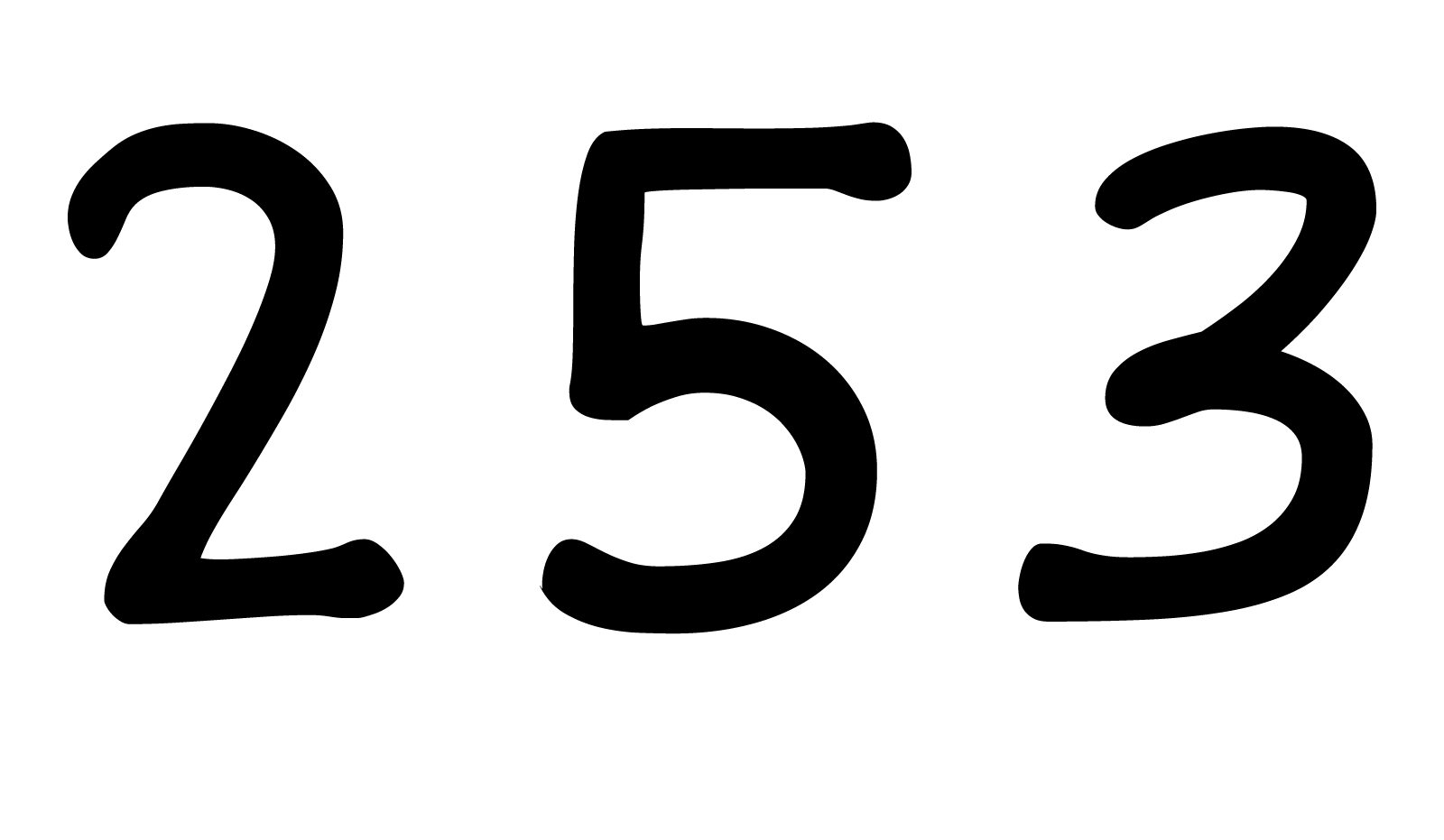
Which digit tells you how to round the number below to the tens place?
- 2
- 5
- 3
Try again! 2 is in the hundreds place to the left of the tens place. When we round, we look to the place value to the right.
Try again! The 5 is in the tens place, but we need to look to the place to the right to know how to round. We look at the 3 in the ones place, which tells us to round down.
That's correct! The 3 is in the place to the right of the tens place. The 3 tells us to round down.
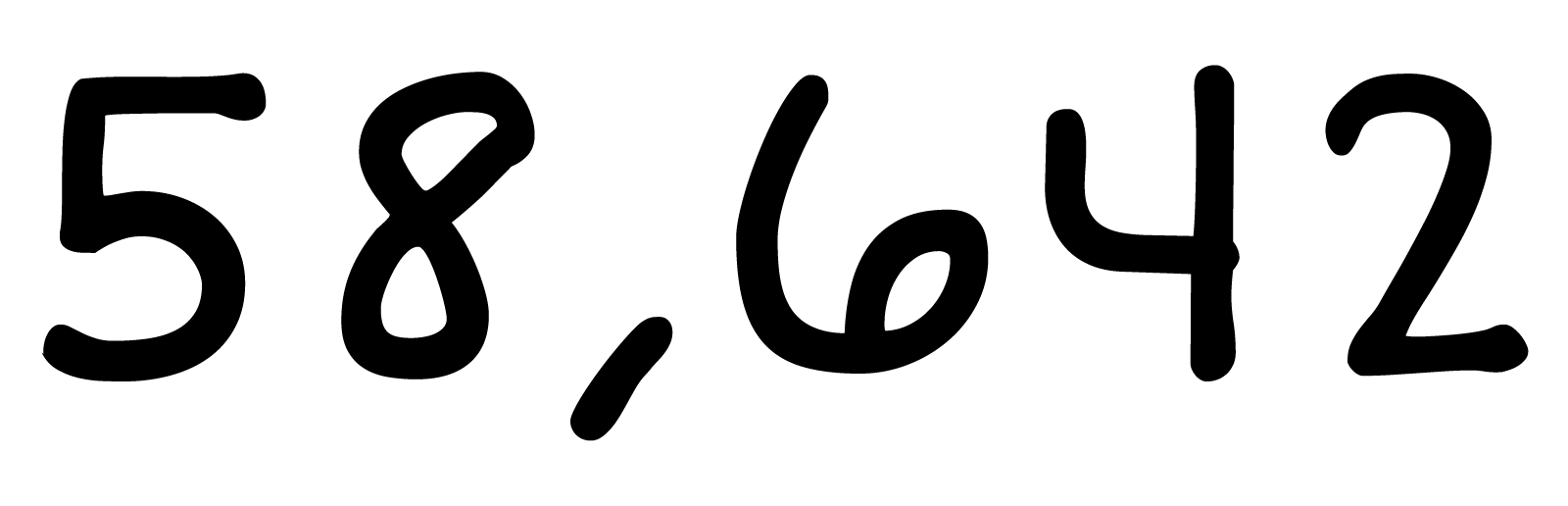
Which digit tells you how to round the number to the ten-thousands place?
- 8
- 6
- 4
- 5
Correct! The 8 is in the place to the right of the ten-thousands place, so it tells us how to round.
Try again! The digit to the right of the ten-thousands place will tell us how to round. That digit is 8.
Incorrect. The 4 is in the tens place. To round to the ten-thousands place, we look at the digit to the right. The thousands place has an 8. That digit tells us how to round.
Try again! The 5 is in the ten-thousands place. You need to find the digit that is to the right of the 5.
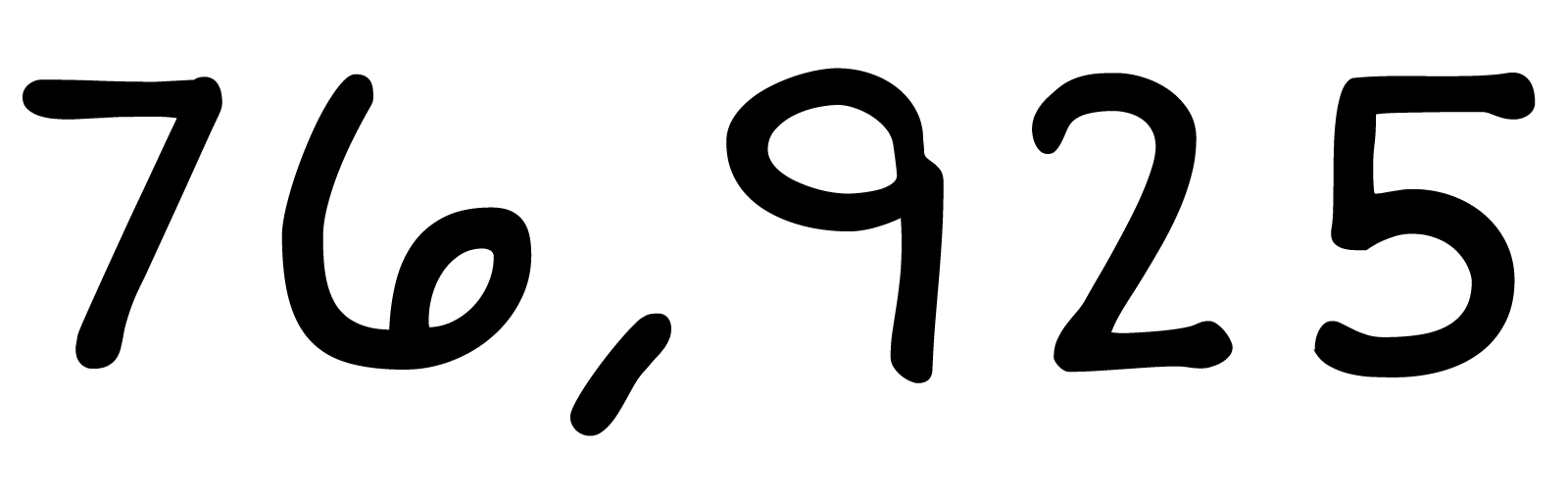
Which digit would you put in the place-value chart FIRST?
- 7
- 5
- 2
Incorrect. The first place to fill on the chart is the ones place. The 5 would go in the place-value chart first.
That's correct! We always start with the ones place when filling a place-value chart.
Incorrect. To fill a place-value chart, we always start with the ones place. 5 would be placed in the chart first.
Which place-value chart matches the number?
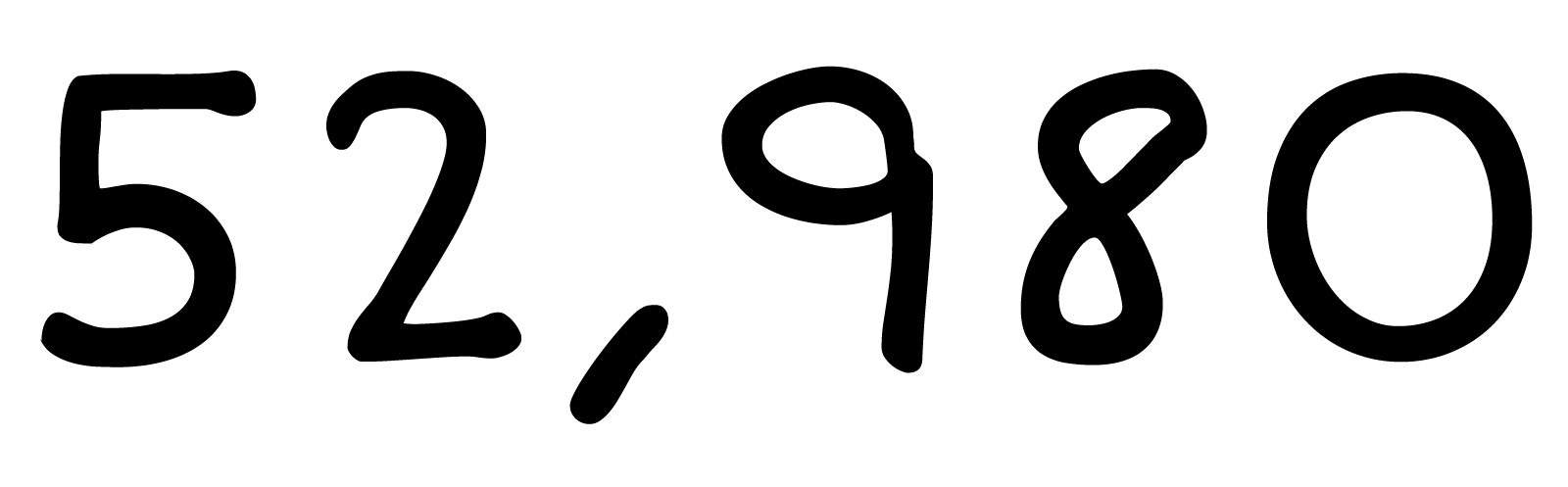




That's correct! The digits are in the correct place on the chart!
Incorrect. These digits are placed in the reverse order. The ones place begins with the 0 and then moves to the left.
Incorrect. This chart is missing the digit in the ten-thousands place. There should be a 5 in the ten-thousands place.
Try again! This chart is missing the 0 in the ones place, so everything is one place to the right of where it should be.
What digit is missing from the place-value chart?
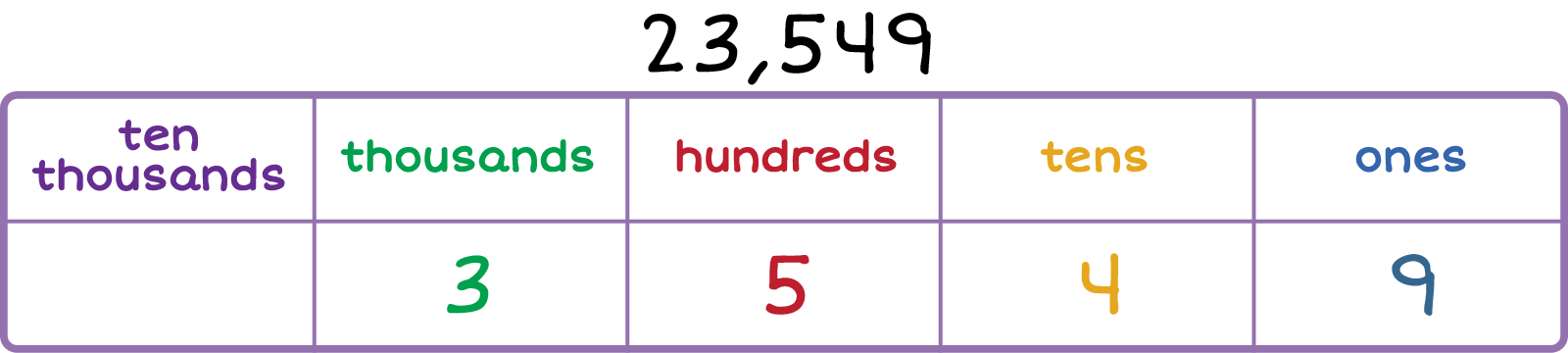
- 1
- 0
- 2
- 3
Incorrect. There would not be a 1 in the place-value chart because there is not a 1 in the number.
Incorrect. There is not a 0 in the number, so we will not find a 0 in the place-value chart.
Correct! The 2 in the ten-thousands place is missing.
Try again! The 3 is in the thousands place in the number and in the place-value chart.
What is 391 rounded to the nearest hundred?
- 400
- 300
- 390
- 381
That's correct! The 9 in the tens place tells us to round up to the next hundred.
Try again. Look to the right of the hundreds place. The 9 tells us to round up to 400.
Incorrect. This shows the number rounded to the nearest ten. To round to the hundreds place, look to the right of the hundreds place. The 9 tells us to round up to 400.
Try again! Look at the digit to the right of the digit in the hundreds place.
What is 72,083 rounded to the nearest thousand?
- 70,000
- 72,080
- 72,000
- 72,100
Incorrect. This number is rounded to the ten-thousands place. To round to the thousands place, look to the place to the right. Because there is a 0 in the hundreds place, that tells us to round down.
Incorrect. This number is rounded to the tens place. Round to the thousands place by looking to the right of that place. The 0 tells us to round down.
Correct! The place to the right of the thousands is the hundreds place. Because there is a zero in the hundreds place, we round down.
Try again! This is rounded to the nearest hundred. You need to round to the nearest thousand.
What is 28,571 rounded to the nearest ten thousand?
- 30,000
- 29,000
- 28,600
- 28,570
Correct! The digit to the right of the ten-thousands place is an 8. That tells us to round up.
Try again! This number is rounded to the thousands place rather than the ten-thousands place. The digit to the right of the ten-thousands place is an 8, so we round up.
Try again! This number is rounded to the hundreds place. To round to the ten-thousands place, look to the right of the 2. The 8 in the thousands place tells us to round up.
Try again! This is the number rounded to the nearest tens place. Look for the number that has been rounded to the nearest ten thousand.
It takes Zoe 35 minutes to get to the aquarium. It takes Daniel 52 minutes to get there. About how long does it take in total for both children to arrive at the aquarium? Round the numbers to the nearest ten to solve the problem.
- 87 minutes
- 80 minutes
- 90 minutes
- 17 minutes
Try again. First, round the numbers to the tens place. 35 rounds to 40, and 52 rounds to 50. Then, add them together to find the total. \({40 + 50 = 90}\).
Try again. To round these numbers to the tens place, 35 rounds up to 40, and 52 rounds down to 50. Add those two numbers to solve. \({40 + 50 = 90}\).
Correct! You rounded the numbers correctly and then added them together to solve.
Try again. This is the difference between the two numbers. Find the time it takes them both, by rounding.
Logan stayed at the aquarium for 265 minutes. Ava stayed at the aquarium for 186 minutes. About how much longer did Logan stay at the aquarium than Ava? Round the numbers to the hundreds place to solve.
- 100 minutes
- 200 minutes
- 0 minutes
- 500 minutes
Correct! When you round 265 up to 300 and 186 up to 200, then you can subtract \({300-200}\).
Try again. Both numbers will round up because the tens place has a 5 or higher. \({300-200 = 100}\).
Try again. 265 rounds up to 300. The 8 in 186 makes this number round up to 200. To find how much longer Logan stayed at the aquarium than Ava did, solve the subtraction problem \({300-200}\).
Try again. You rounded and added to find the total number of minutes they were both at the aquarium.
Summary
Questions answered correctly:
Questions answered incorrectly: