Case Study – Giant Leaf Frog
What is the giant leaf frog?
Goal:
Goal:
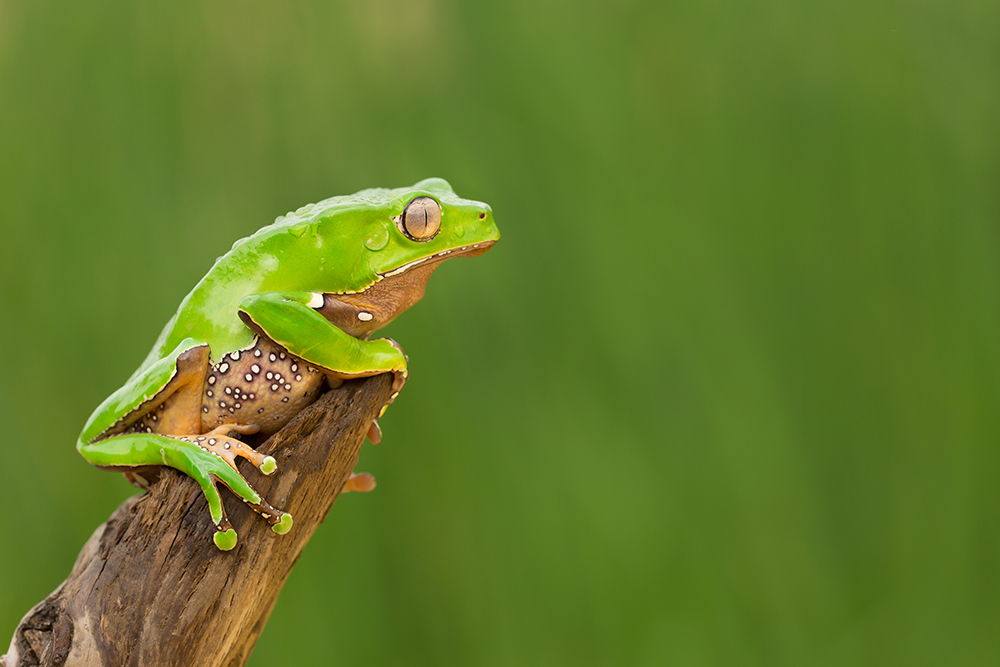
The giant leaf frog, also known as the giant monkey frog, is one of the many consumers that resides in the Amazon rainforest. Like most amphibians, it is sensitive to changes in its environment. They can grow up to six inches long and the females can lay up to 600 eggs! These frogs, along with every other organism found in the rainforest, are very important to the ecosystem. Giant leaf frogs are carnivores that mainly consume insects. They are also the prey of other larger animals such as birds and snakes. As we know, the removal of one species can lead to the destruction of the entire ecosystem!
Scientists are interested in this species of frog because of a waxy substance it produces. The substance may have valuable medicinal uses. Although their habitat is quite wet, this waxy substance is produced to further prevent their bodies from drying out.
Clearly, these giant leaf frogs are not only important to the rainforest ecosystem but can also greatly contribute to the health and wellness of human society with its medicinal impacts. Maintaining the life of the rainforests can benefit all organisms living there as well as the humans who do not.
Which of the following is true about the giant leaf frog?
- They are found in all rainforests around the world.
- They are omnivores, eating leaves and insects that come in their path.
- They produce a waxy coating that may have valuable medicinal uses.
- They are predators who consume insects, birds, and snakes.
Giant leaf frogs produce a waxy coating that may have valuable medicinal uses.
Giant leaf frogs produce a waxy coating that may have valuable medicinal uses.
Giant leaf frogs produce a waxy coating that may have valuable medicinal uses.
Giant leaf frogs produce a waxy coating that may have valuable medicinal uses.
Summary
Questions answered correctly:
Questions answered incorrectly: