Let’s Learn!
How do you partition a shape into equal parts?
Goal:
Goal:

Think About It!
Goal: Partition a shape into equal parts.
Caleb drew a rectangle and partitioned it into 18 equal parts to keep track of the racers’ times. Let’s look at how we can partition shapes into equal parts. Click through the tabs below to see how to partition shapes into equal parts.
Halves
To partition a shape into halves, or 2 equal parts, draw a straight line across the middle of the shape. You can use a vertical line, a horizontal line, and sometimes a diagonal line. Let’s partition these shapes into 2 equal parts.

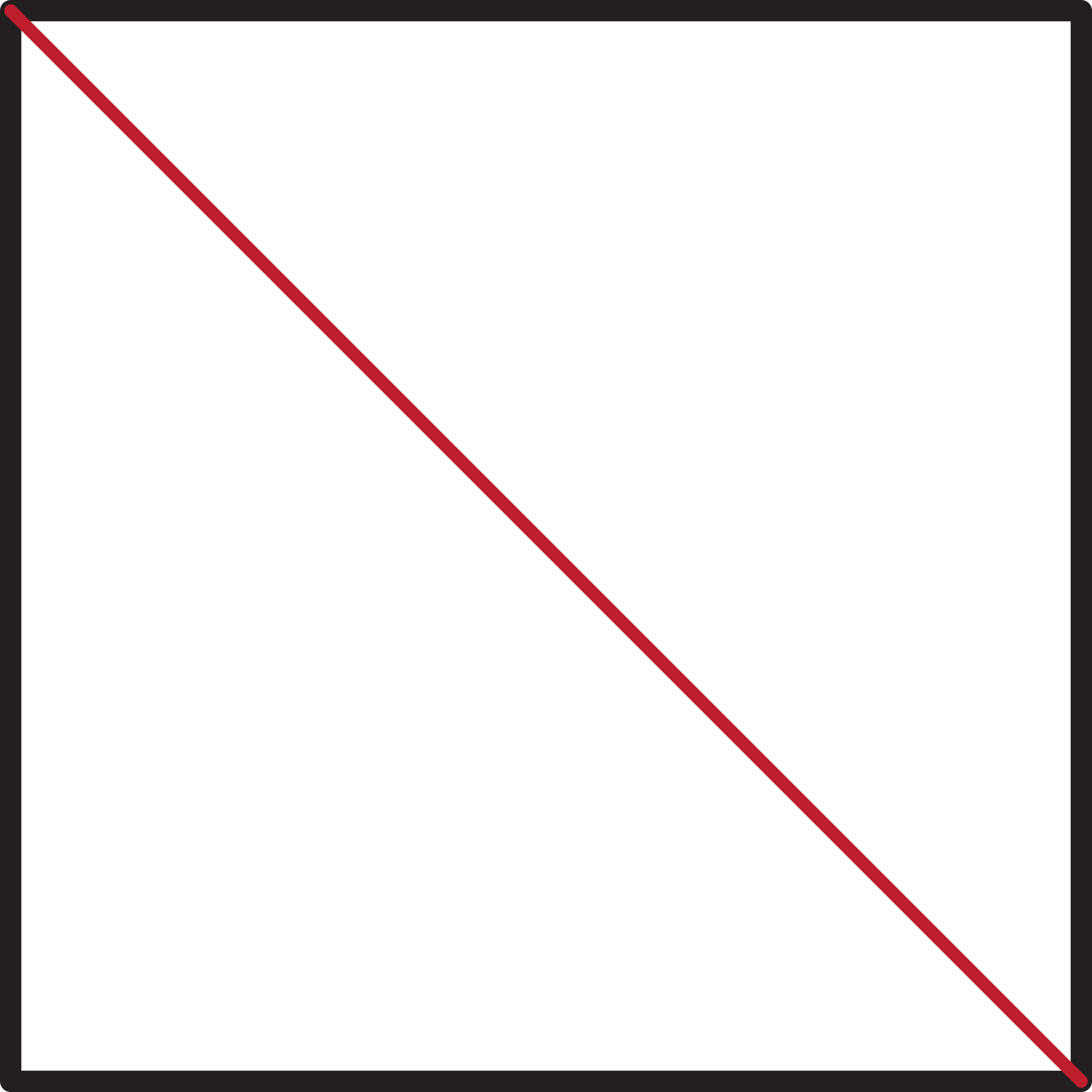
diagonal line


vertical line
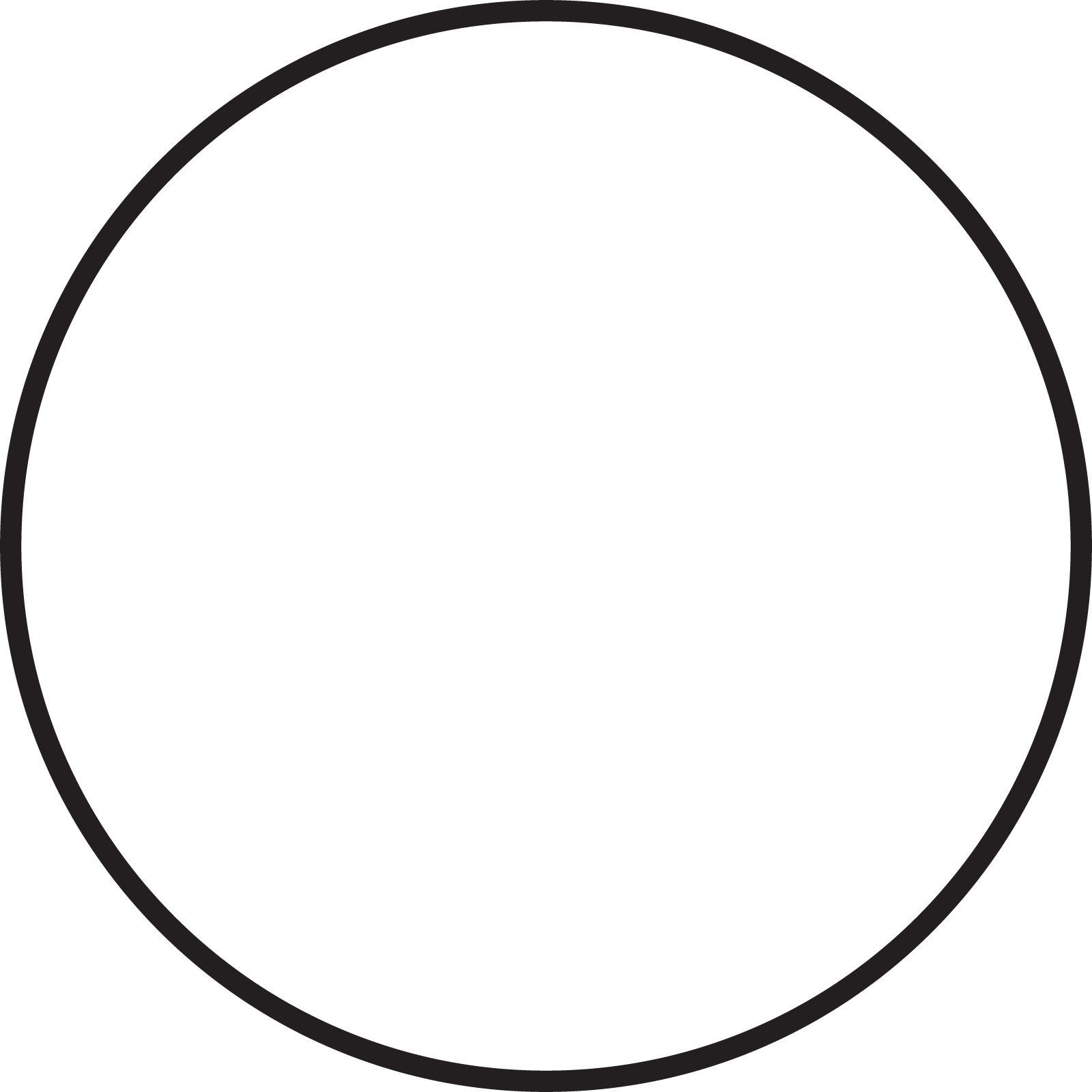
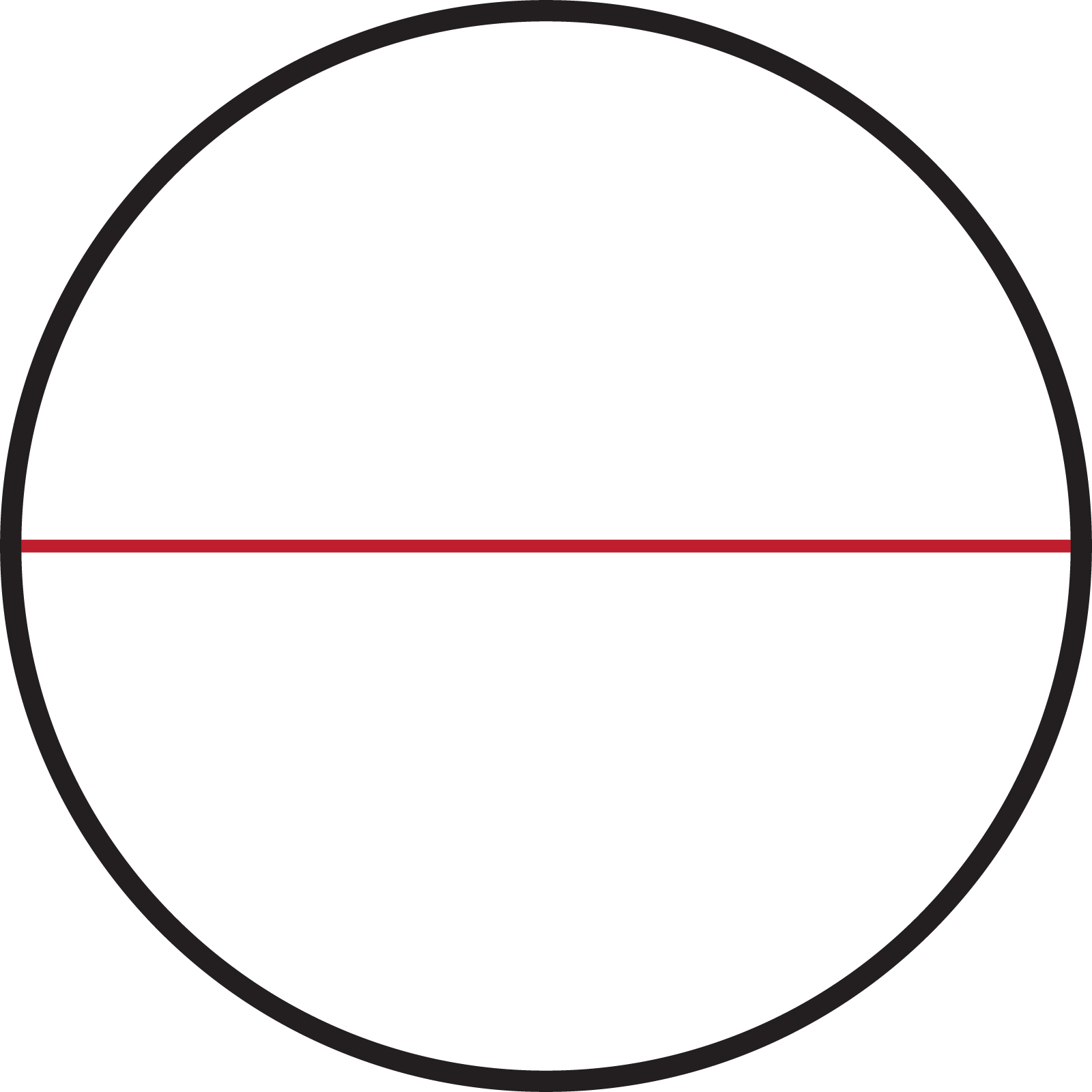
horizontal line
Thirds
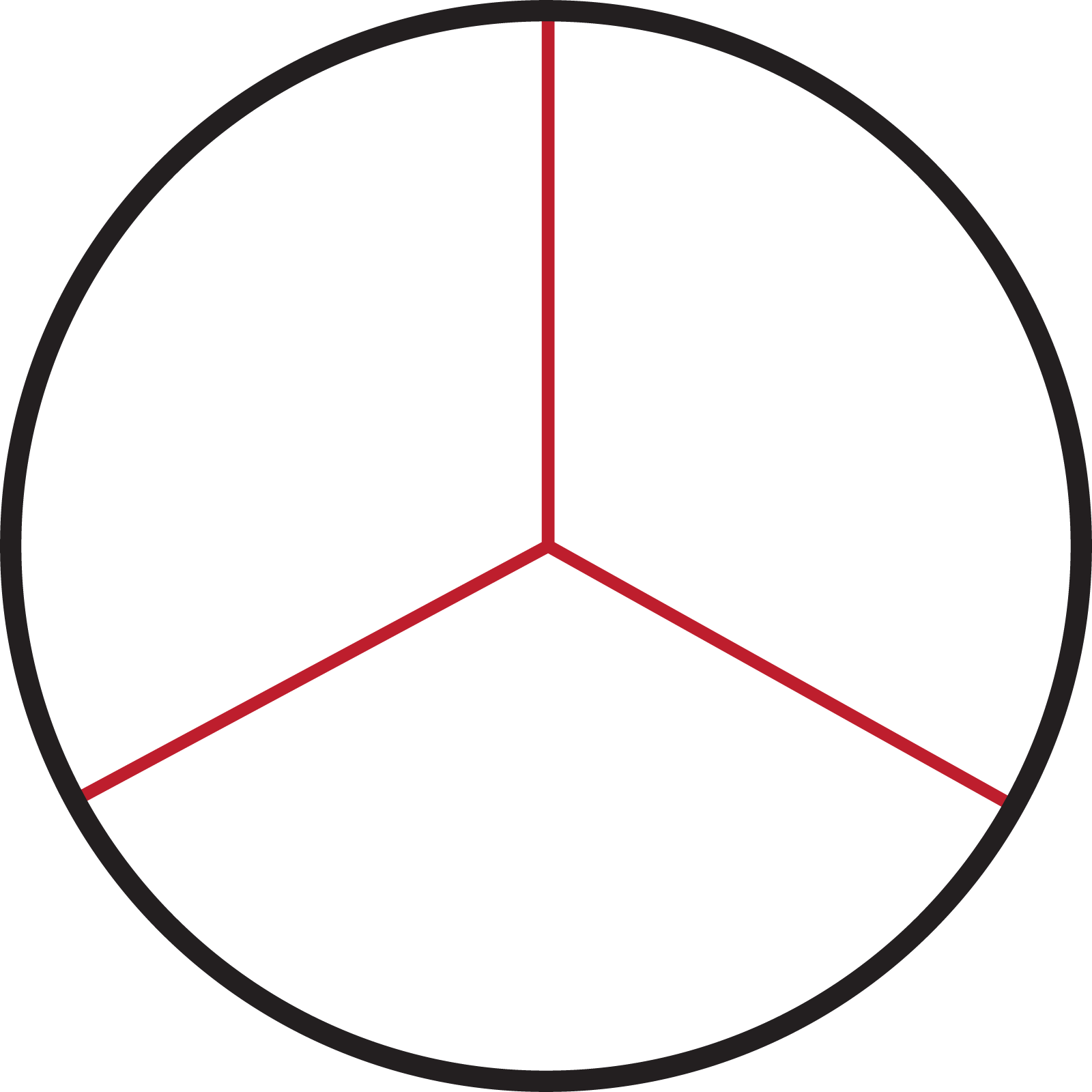
To partition a shape like a square or rectangle into thirds, or 3 equal parts, draw 2 straight lines across the shape, either vertically or horizontally. Remember to space your lines so that each part is equal in size. For a circle, draw 3 lines that meet in the center of the circle. Let’s partition some shapes into thirds.



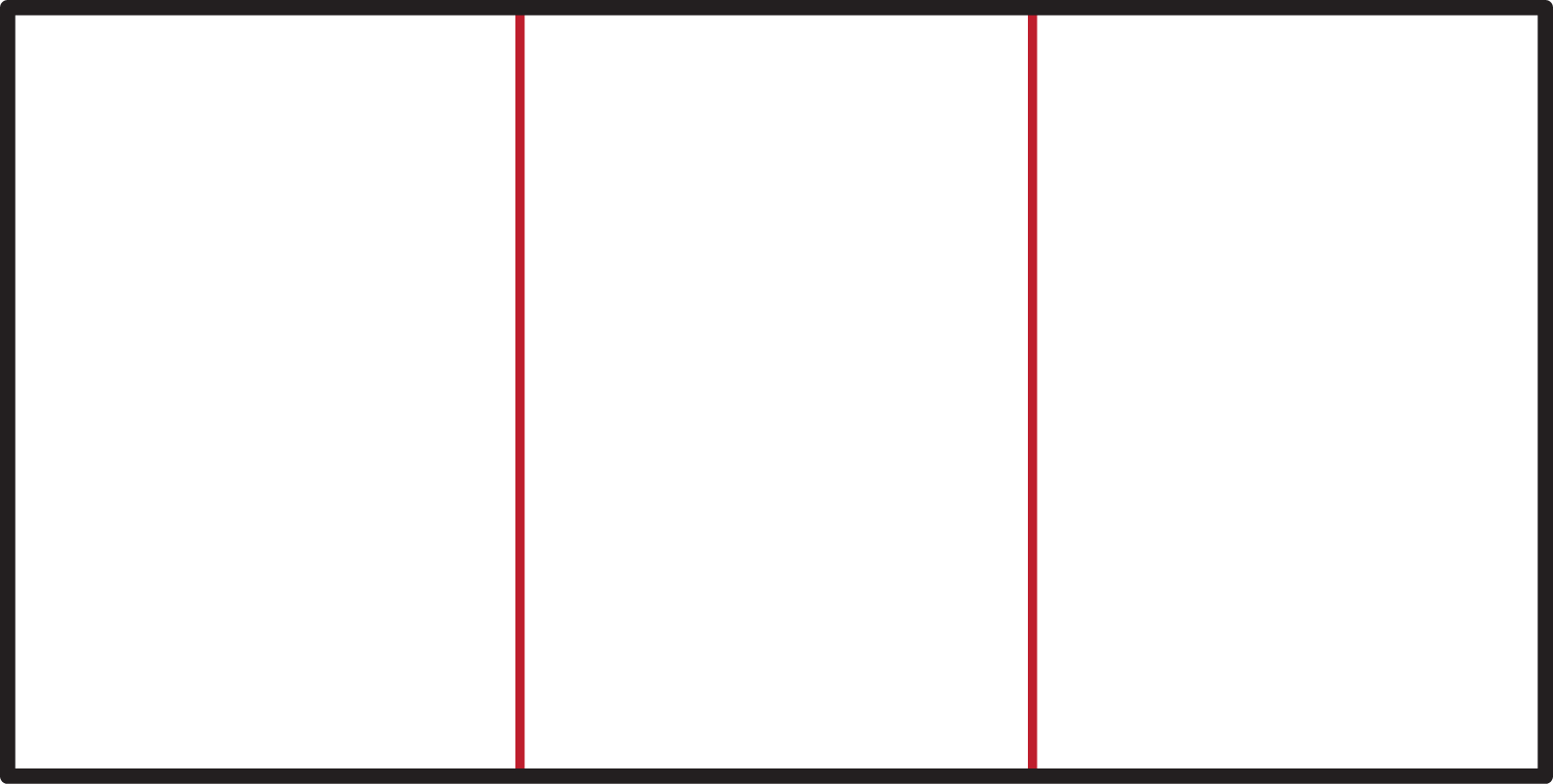

Fourths
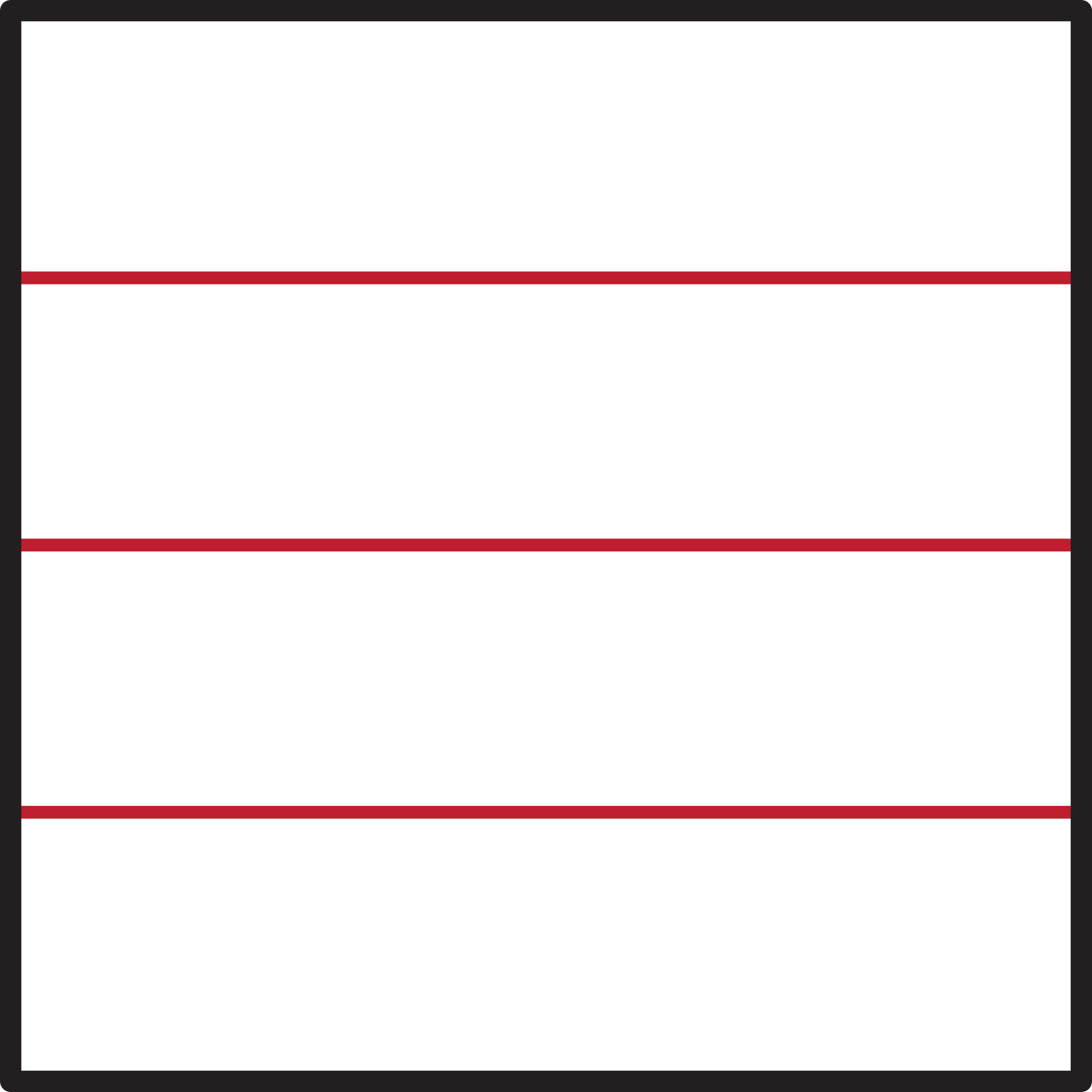
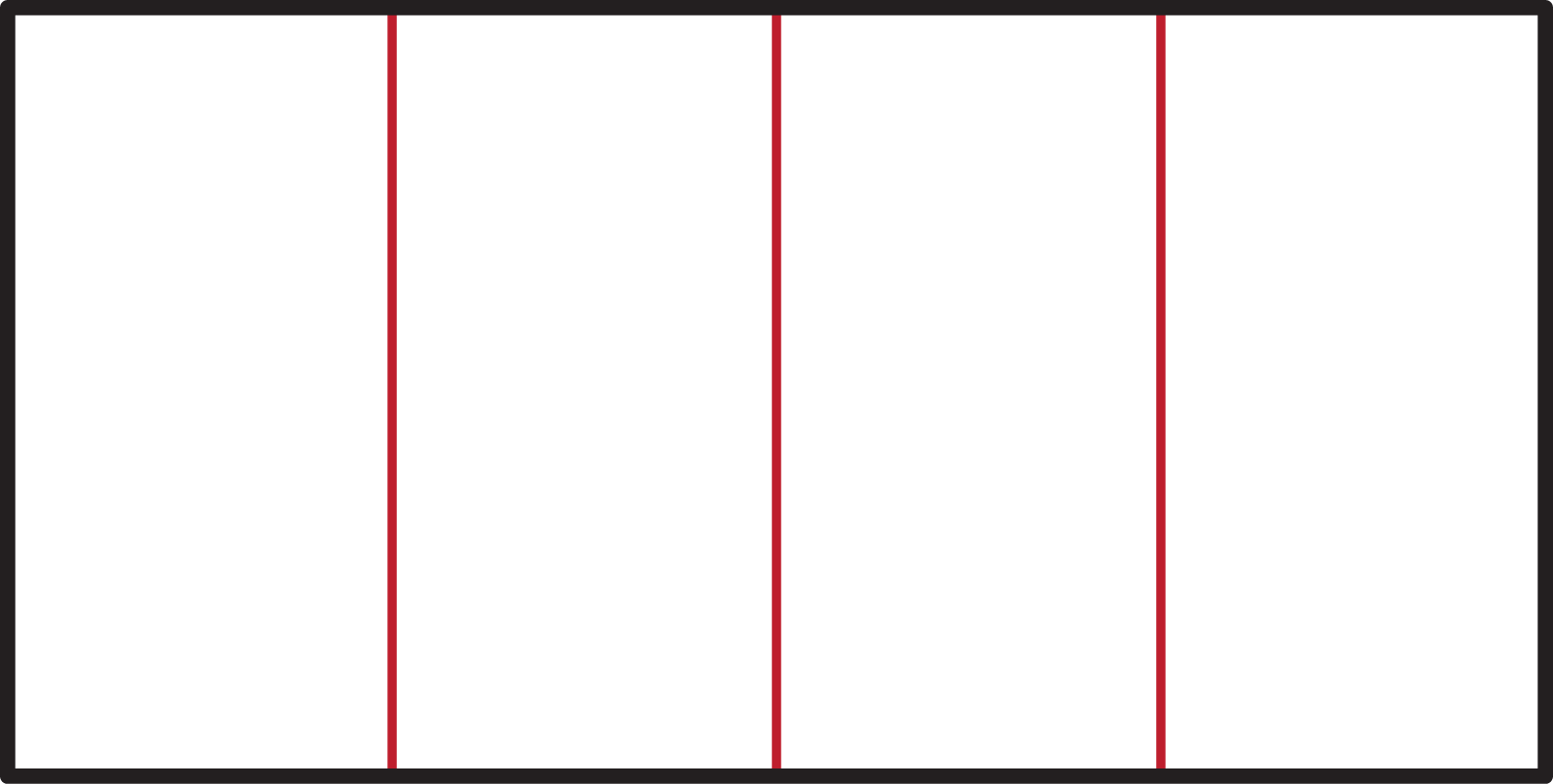
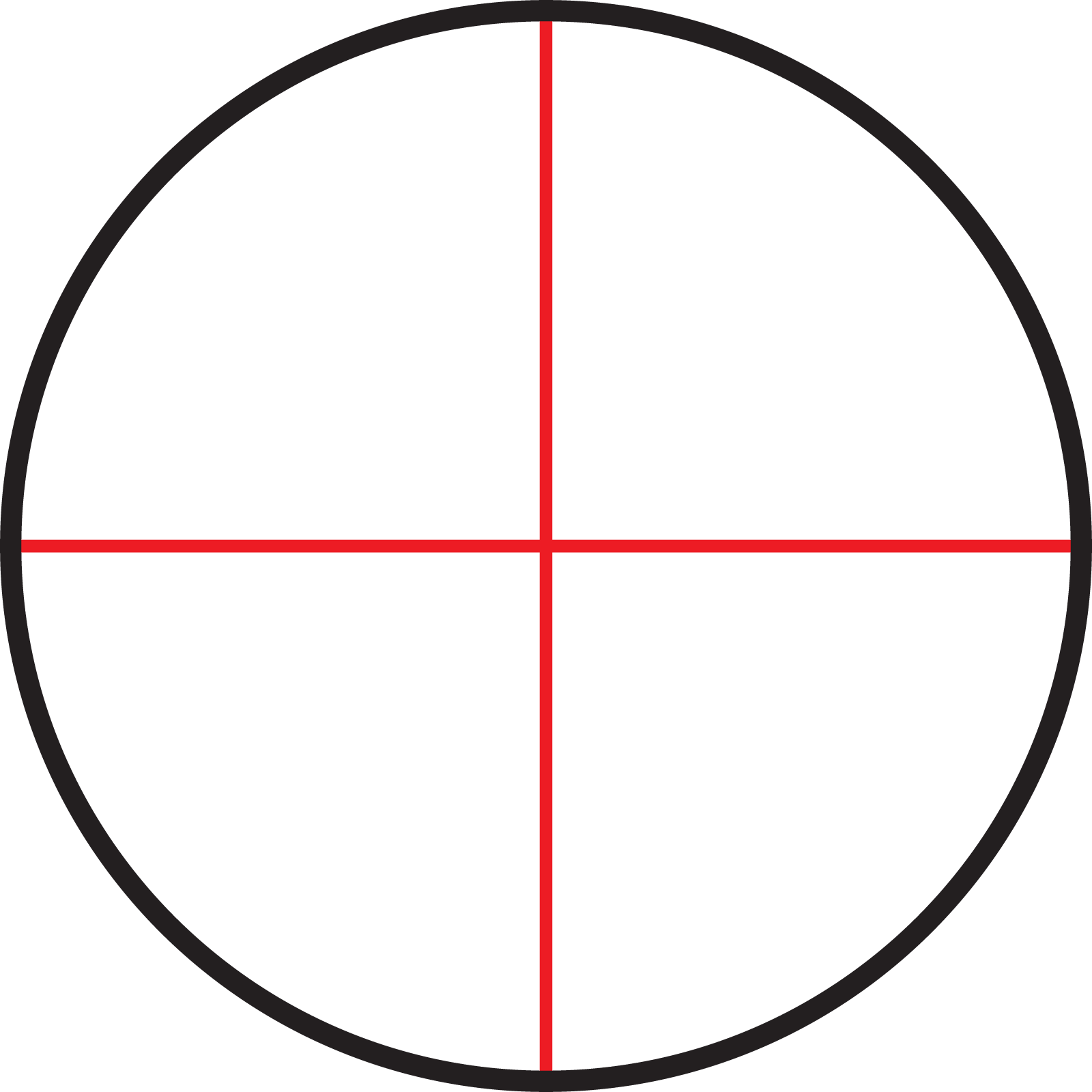
To partition a shape like a square or rectangle into fourths, or 4 equal parts, draw 3 straight lines across the shape, either vertically or horizontally. Remember to space your lines so that each part is equal in size. You can also draw 1 vertical line down the middle and 1 horizontal line across the middle to make 4 equal parts. This also works for circles. Let’s partition some shapes into fourths.


Squares and Rectangles
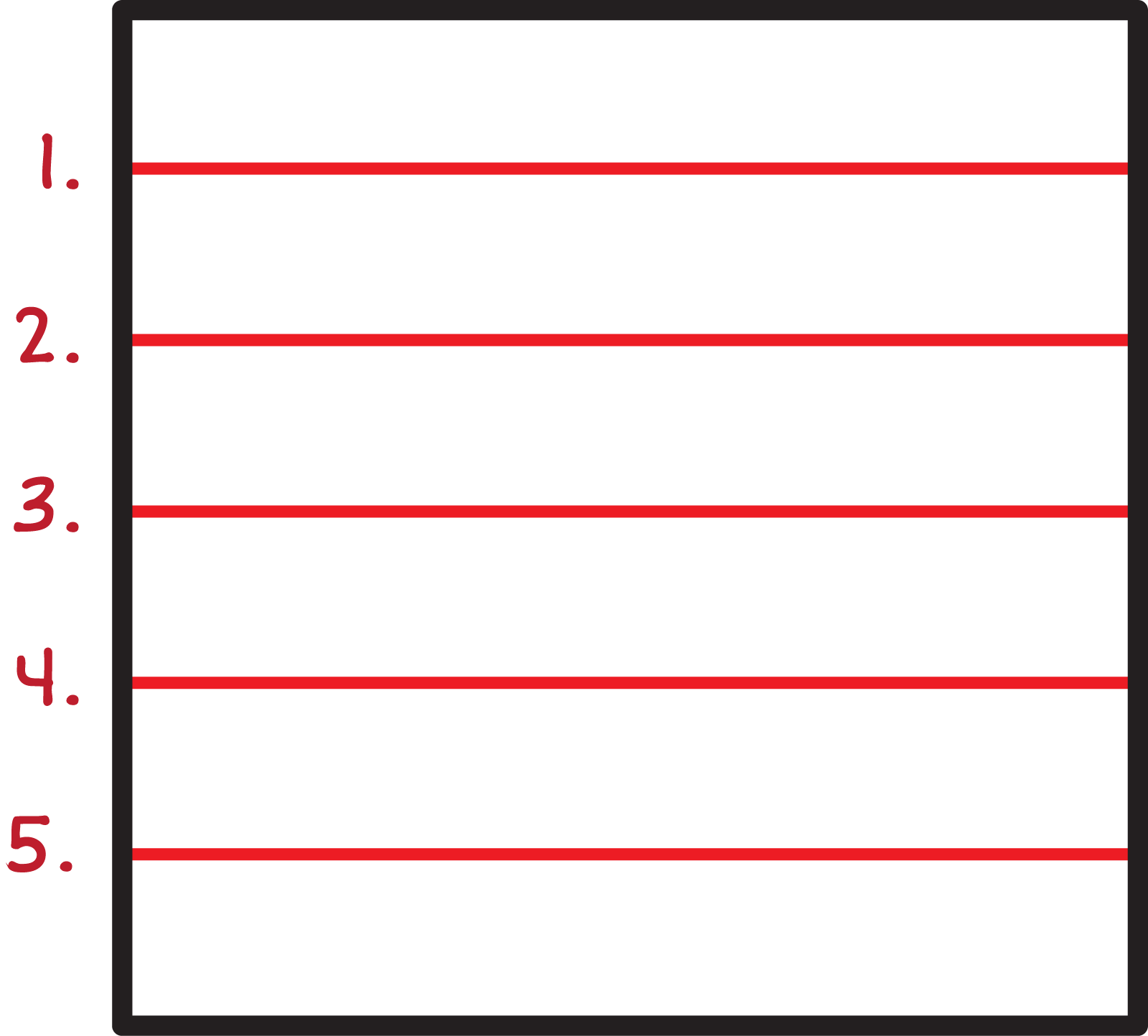
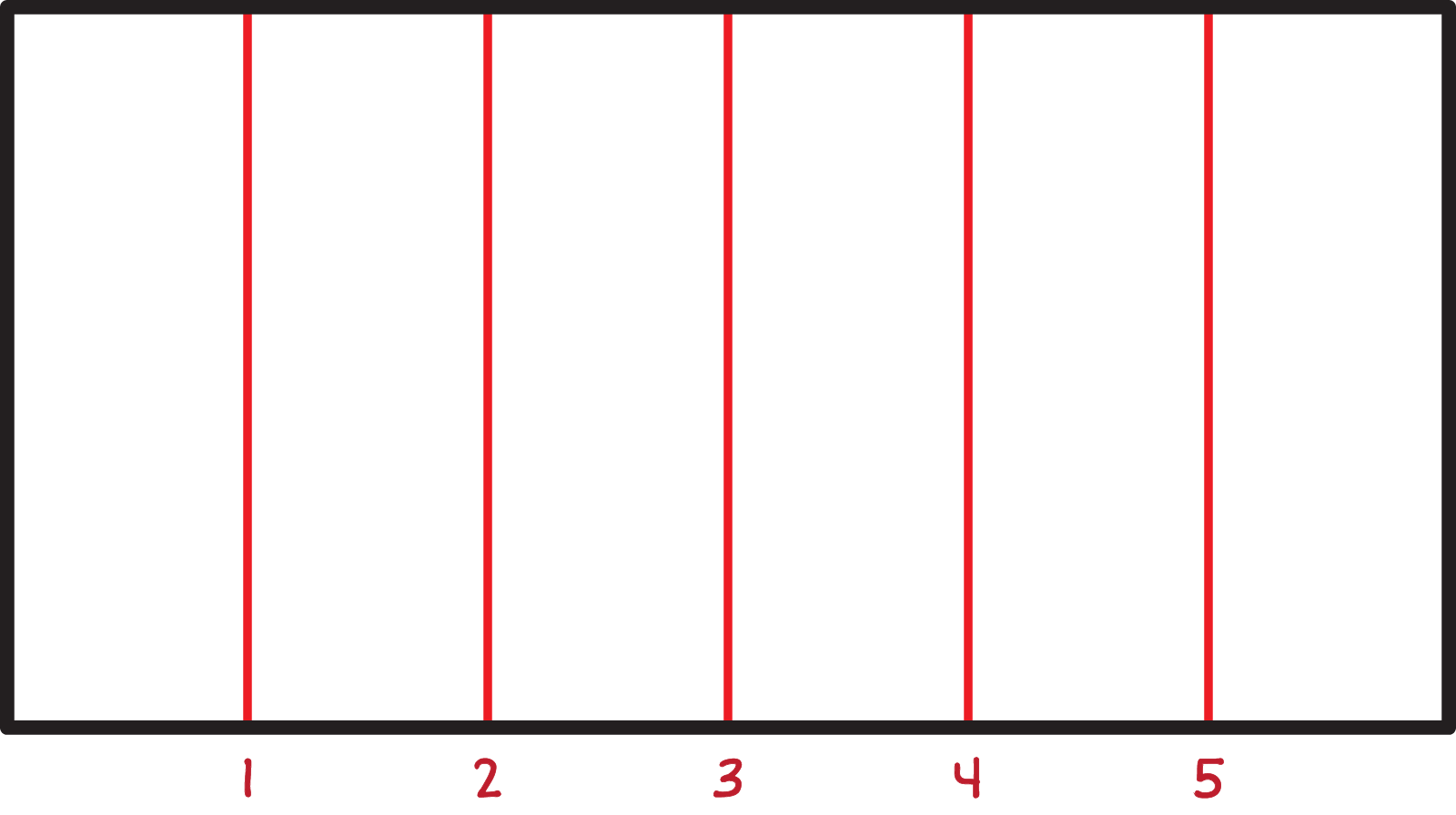
In general, when you need to partition a square or rectangle into a given number of equal parts, draw 1 less line than the number of equal parts. For example, if you need to partition a rectangle into 6 equal parts, draw 5 equally spaced lines. Below are a couple of examples.


Circles
When you partition a circle into equal parts, all the lines will meet in the center of the circle. When the number of equal parts is odd, you will draw the same number of lines as equal parts. For example, if you need 5 equal parts, you will draw 5 lines. When the number of equal parts is even, you can draw half as many lines that go from one side of the circle to the other that meet in the middle. For example, if you need 6 equal parts, you can draw 3 lines that go from one side of the circle to the other and cross in the middle. Below are a couple examples.
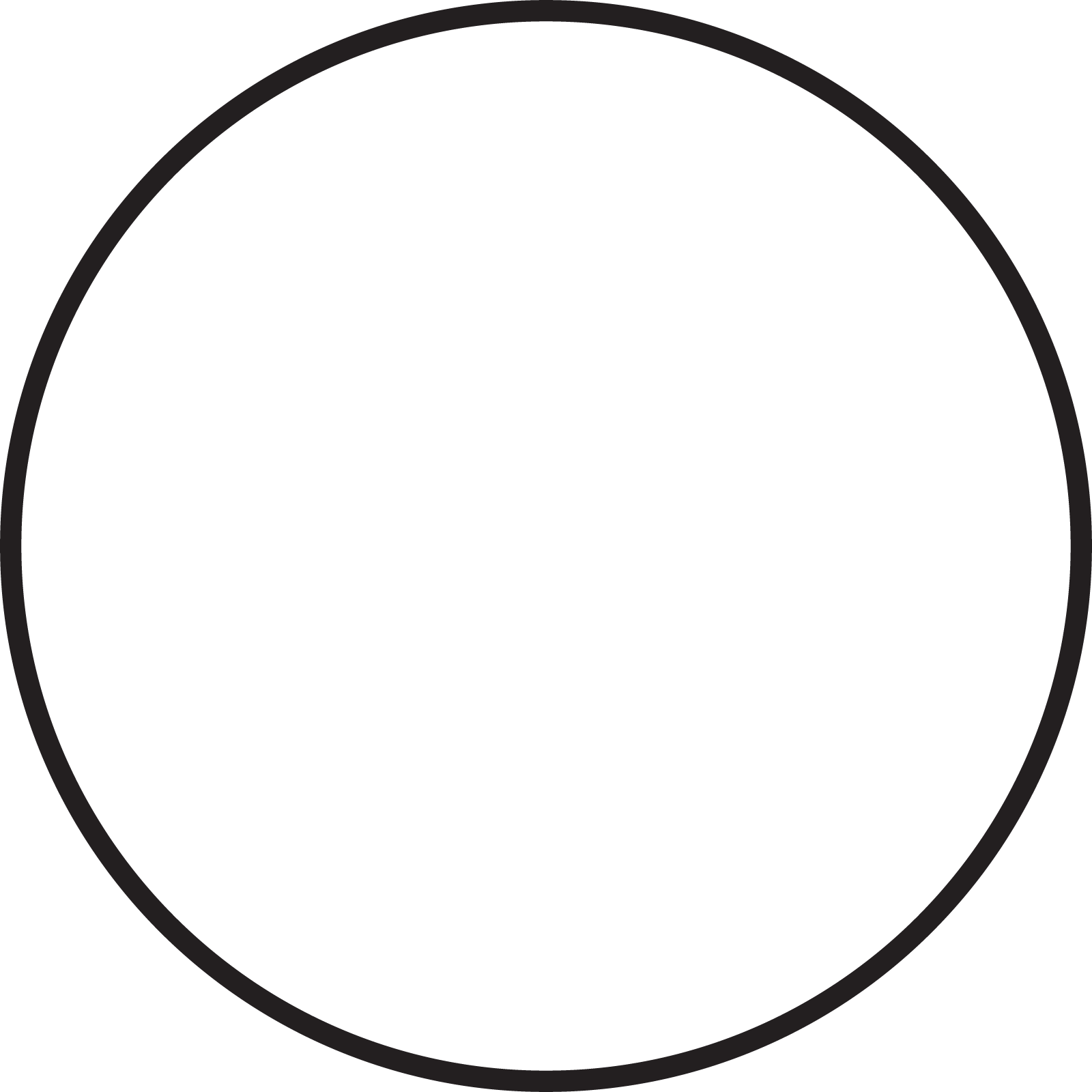
Partition the circle into 5 equal parts
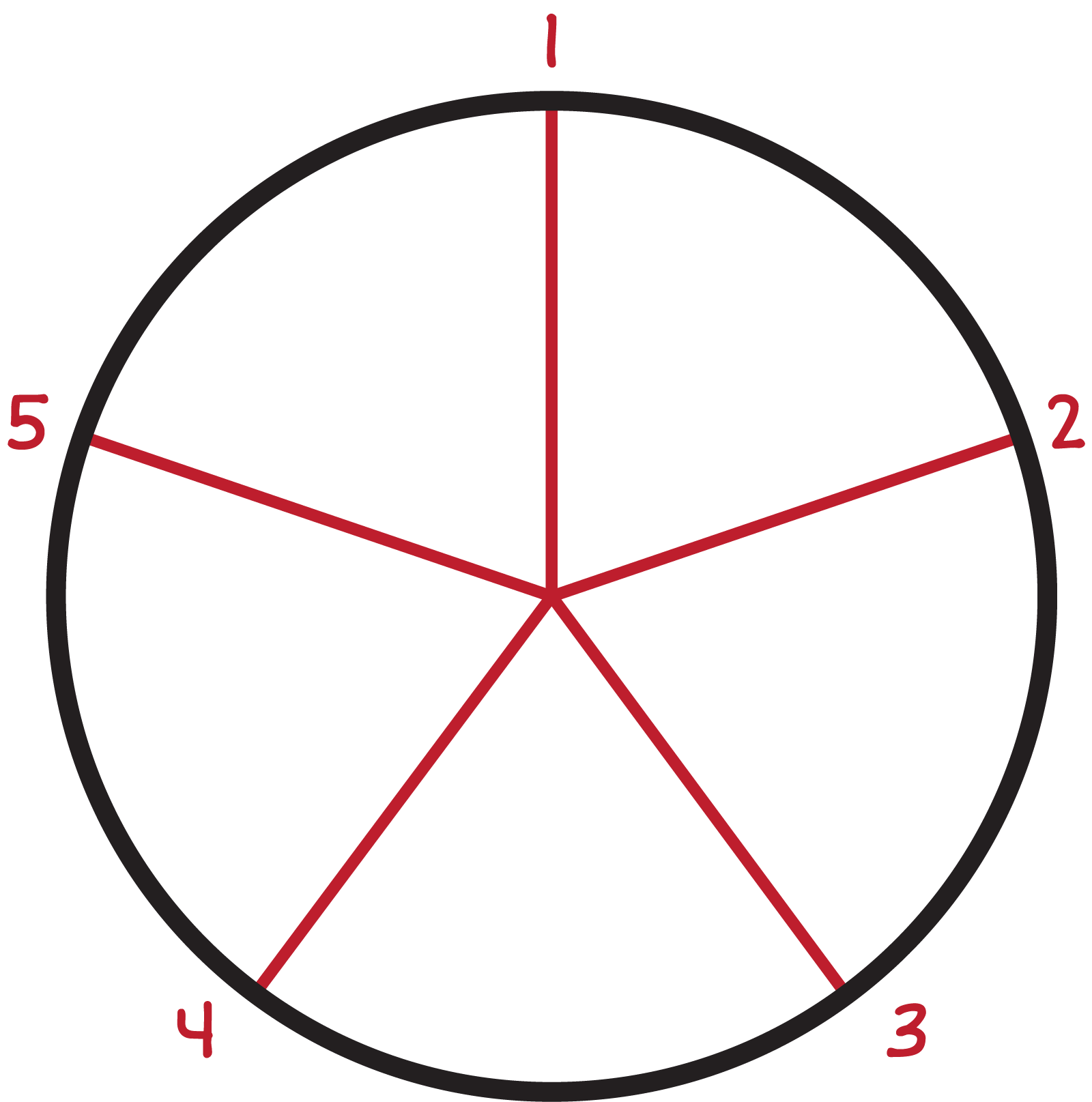
Draw 5 lines that meet in the center.
Partition the circle into 6 equal parts
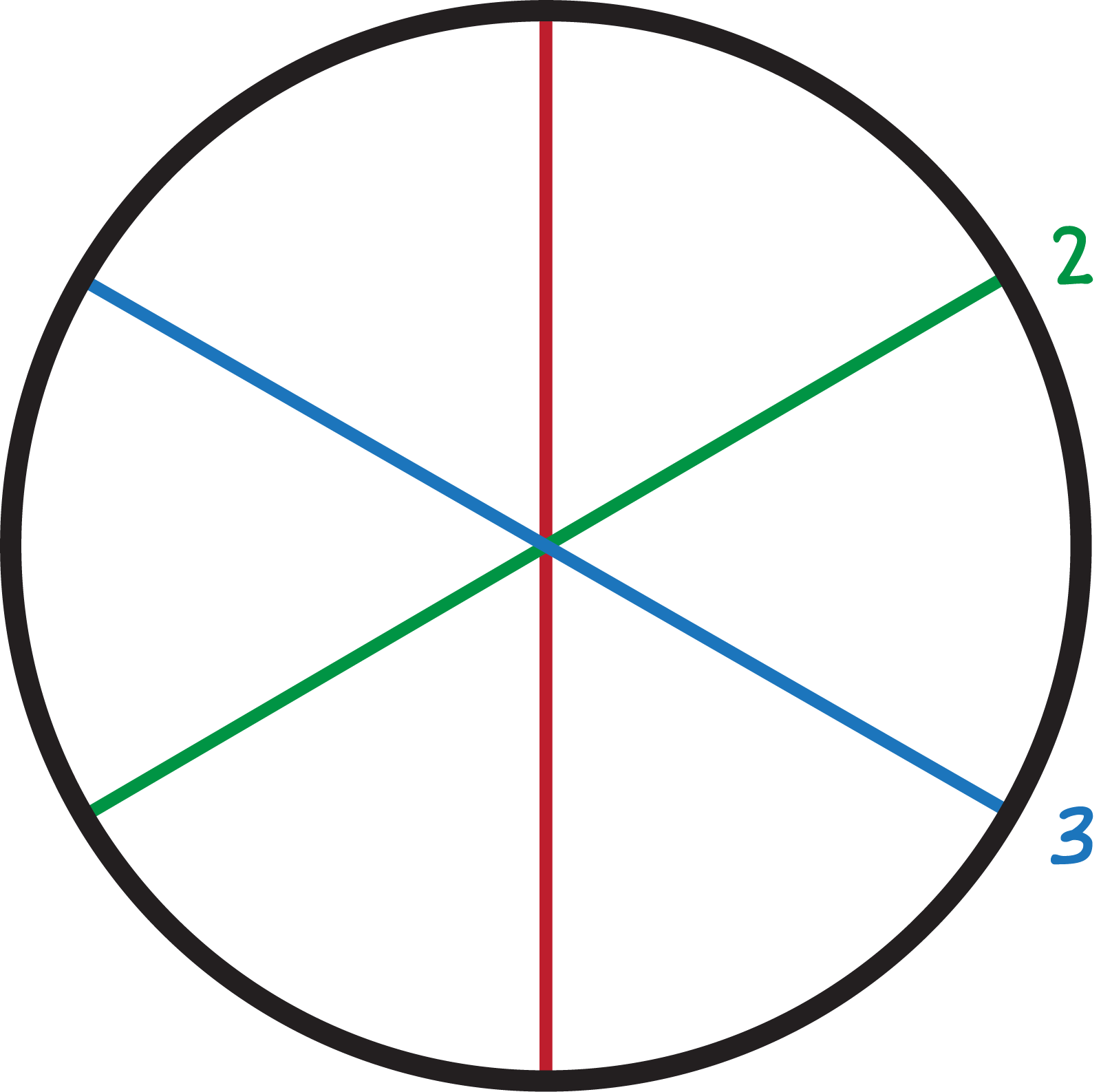
Draw 3 lines that go from one side of the circle to the other and that cross in the middle.
Doubles
You can use both vertical and horizontal lines in squares and rectangles to make doubles. For example, if you needed 6 equal parts, you could make 3 equal parts using vertical lines and then draw a horizontal line across the middle changing the 3 equal parts to 6 equal parts. Here are some examples.
Partition the square into 6 equal parts.
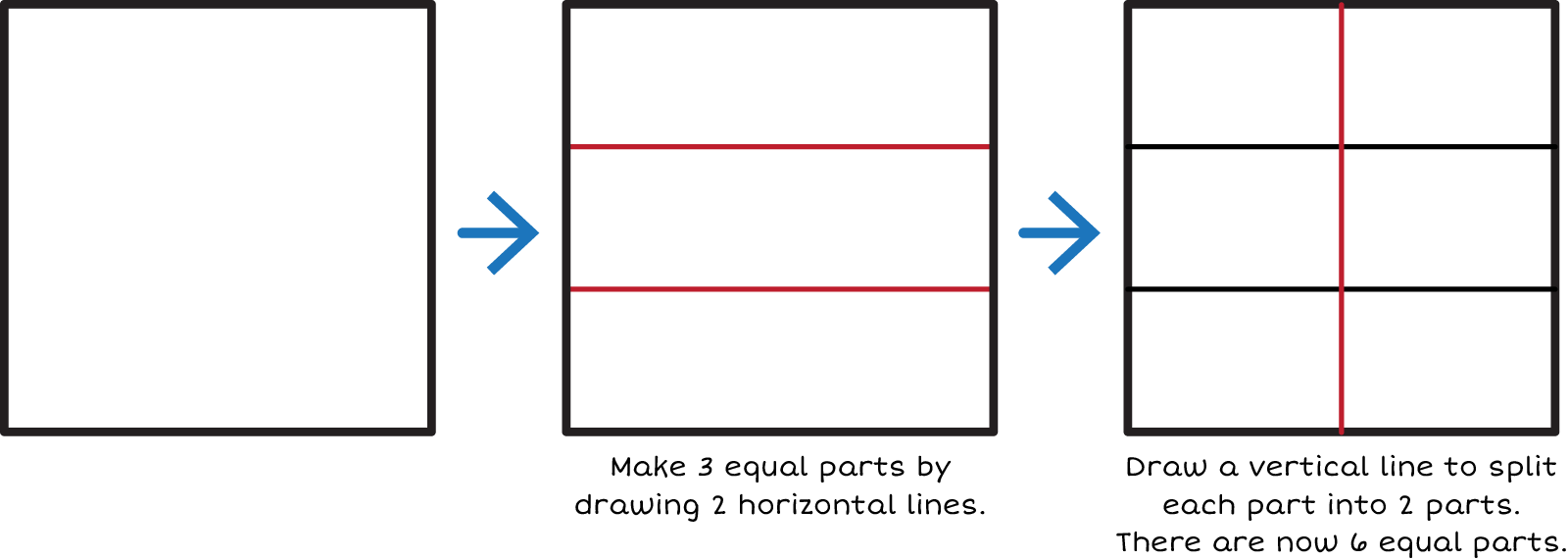 A square, A square with 3 equal parts partitioned with
2 horizontal lines. A square with A square with 6 equal
parts partitioned with 2 horizontal lines and 1 vertical
line.
A square, A square with 3 equal parts partitioned with
2 horizontal lines. A square with A square with 6 equal
parts partitioned with 2 horizontal lines and 1 vertical
line.
Partition the rectangle into 10 equal parts.
A rectangle, the rectangle has an arrow pointing to
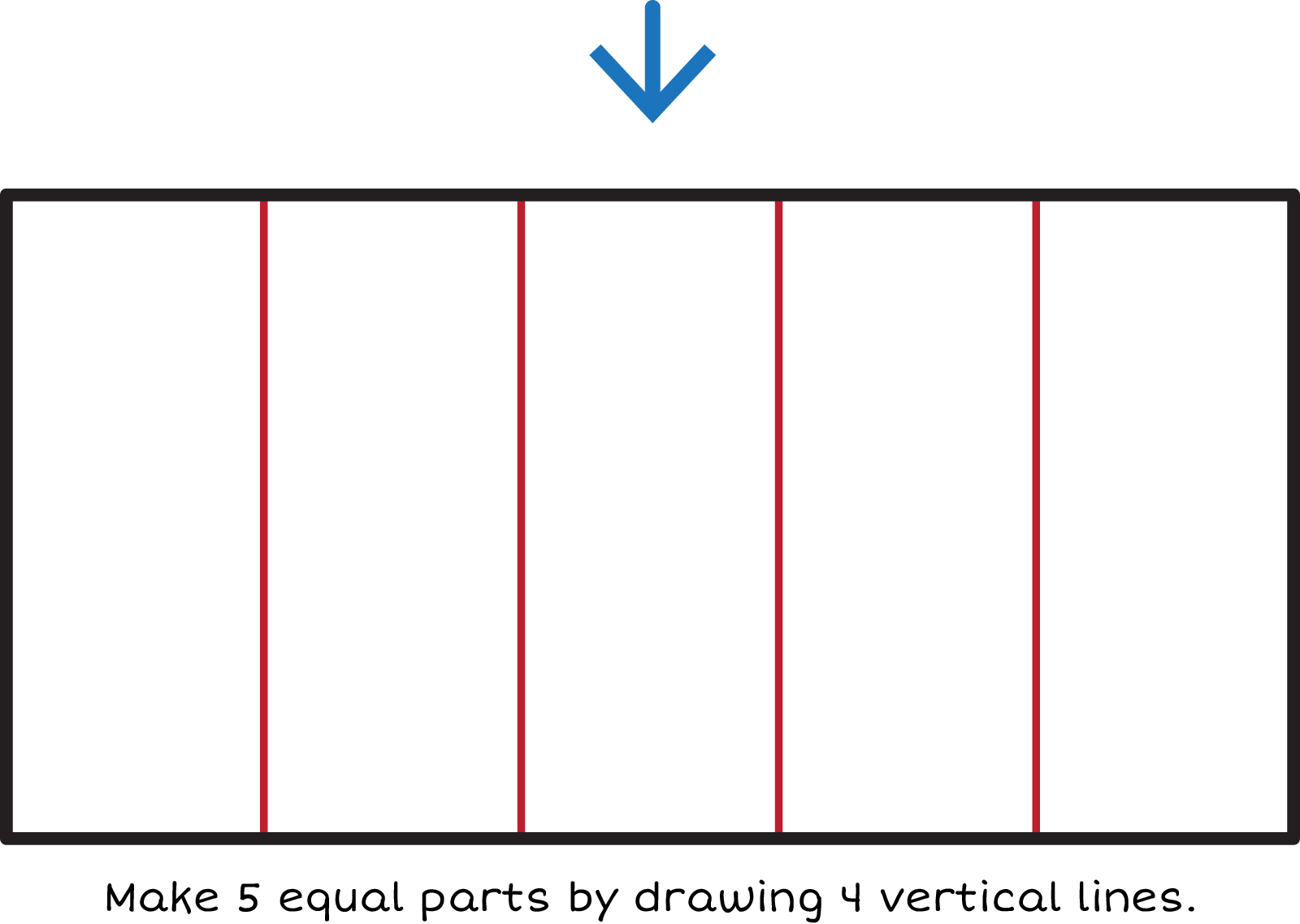 A rectangle with 5 equal parts partitioned with 4
vertical lines. This is pointing too.
A rectangle with 5 equal parts partitioned with 4
vertical lines. This is pointing too.
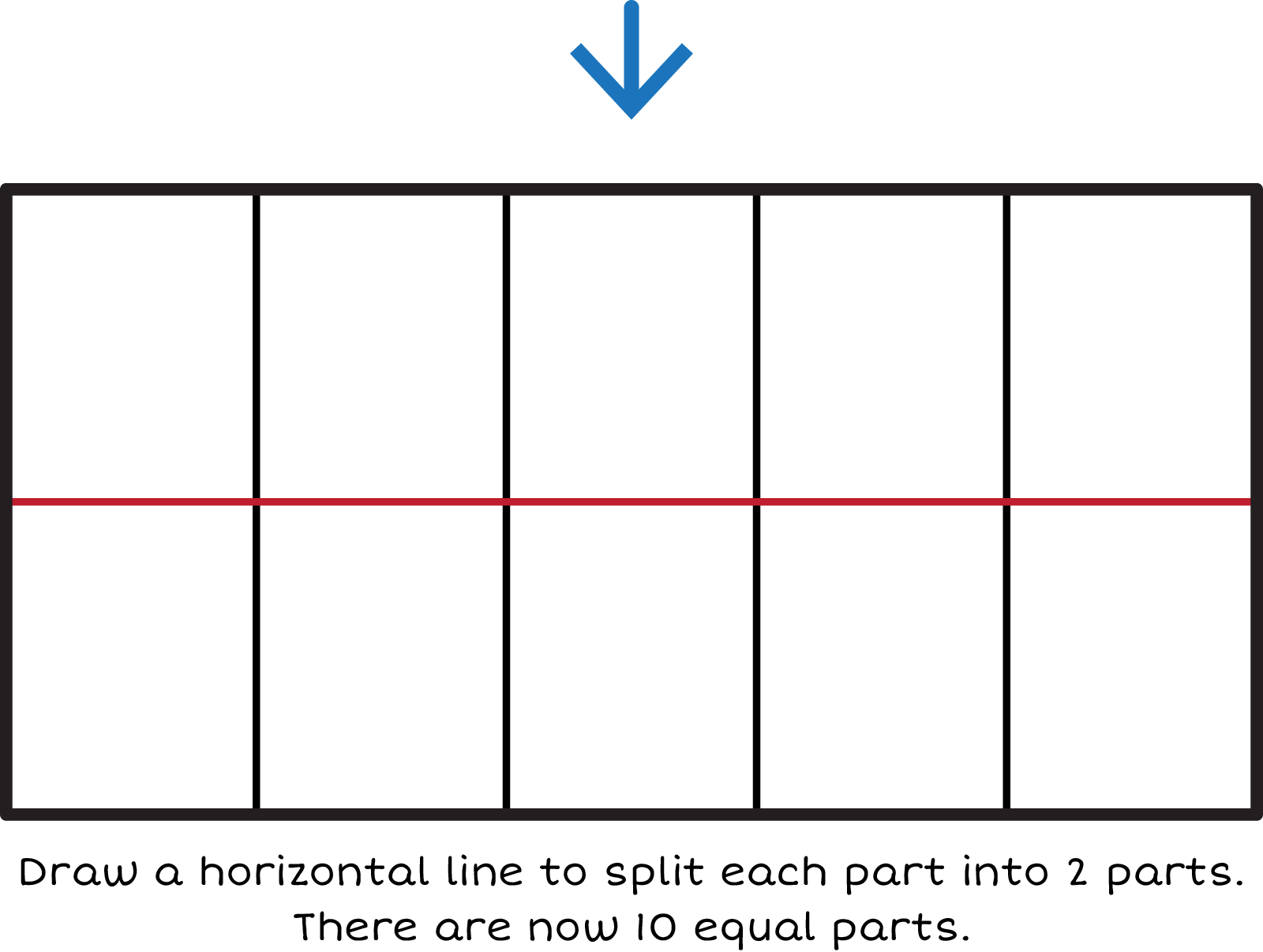 A rectangle with 10 equal parts partitioned with 4
vertical lines and 1 horizontal line.
A rectangle with 10 equal parts partitioned with 4
vertical lines and 1 horizontal line.