Assess Yourself
How well do you understand the ideas in this lesson?
Goal:
Goal:

Show What You Know!
If a square is partitioned into equal parts using all its lines of symmetry, how many equal parts will there be?
- 4
- 6
- 8
- 10
Sorry, that is not right! A square has 4 lines of symmetry, but it will have more equal parts.
Sorry, that is not right! A square will have more than 6 equal parts when partitioned by lines of symmetry.
That’s right! A square will have 8 equal parts when it is partitioned by lines of symmetry.
Sorry, that is not right! That is too many equal parts.
Is this shape partitioned correctly?
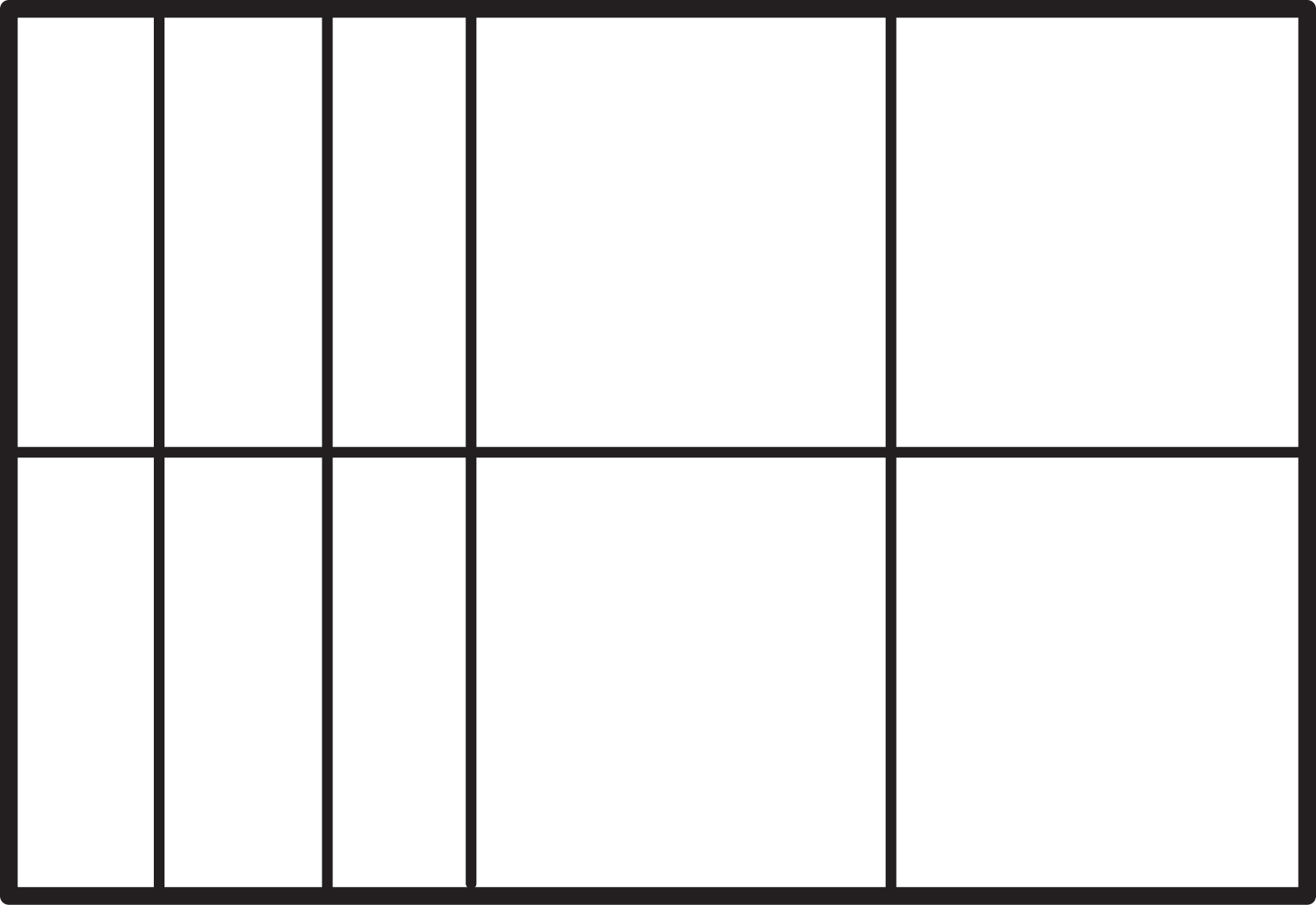
- Yes. It is partitioned correctly into 10 equal parts.
- Yes. It is partitioned into 6 equal parts and 4 equal parts.
- No. You can only partition a rectangle into 4 equal parts.
- No. The parts of the partitioned shape are not equal in size.
Sorry, that is not right! The 10 parts are not equal.
Sorry, that is not right! Every part of the partitioned shape must be the same size.
Sorry, that is not right! A rectangle can be partitioned into more than 4 parts if each part is equal in size.
That’s right! Every part of the shape must be the same size.
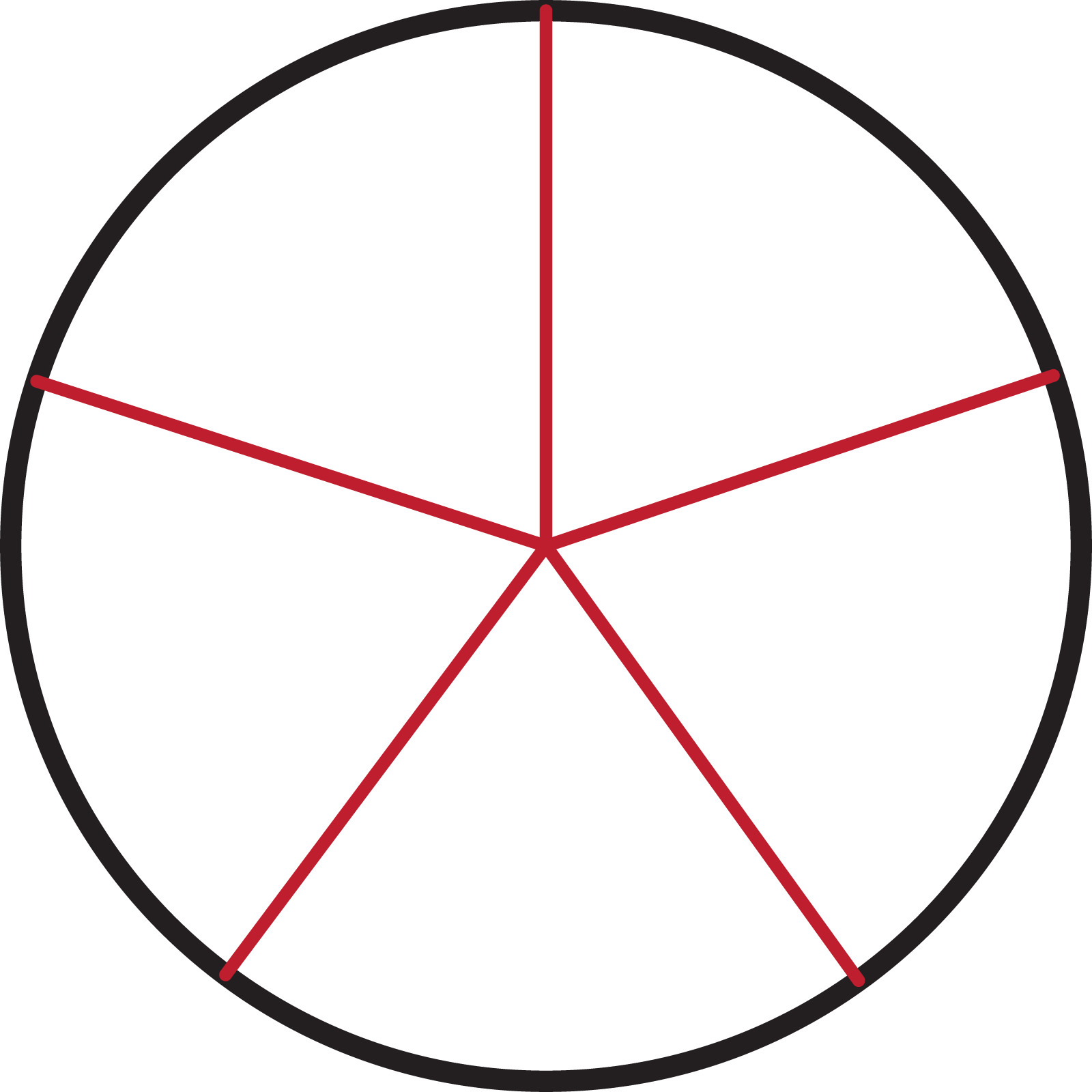
What fraction represents each equal part of this circle?
- \(\Large\frac{0}{5}\)
- \(\Large\frac{1}{5}\)
- \(\Large\frac{3}{5}\)
- \(\Large\frac{5}{5}\)
Sorry, that is not right! \(\Large\frac{0}{5}\) would mean that there are 0 out of 5 equal parts.
That's right! Each part represents 1 out of 5 equal parts.
Sorry, that is not right! \(\Large\frac{3}{5}\) represents 3 out of the 5 equal parts.
Sorry, that is not right! \(\Large\frac{5}{5}\) would mean that you are looking at all 5 of the equal parts, but we want to know what each part represents.
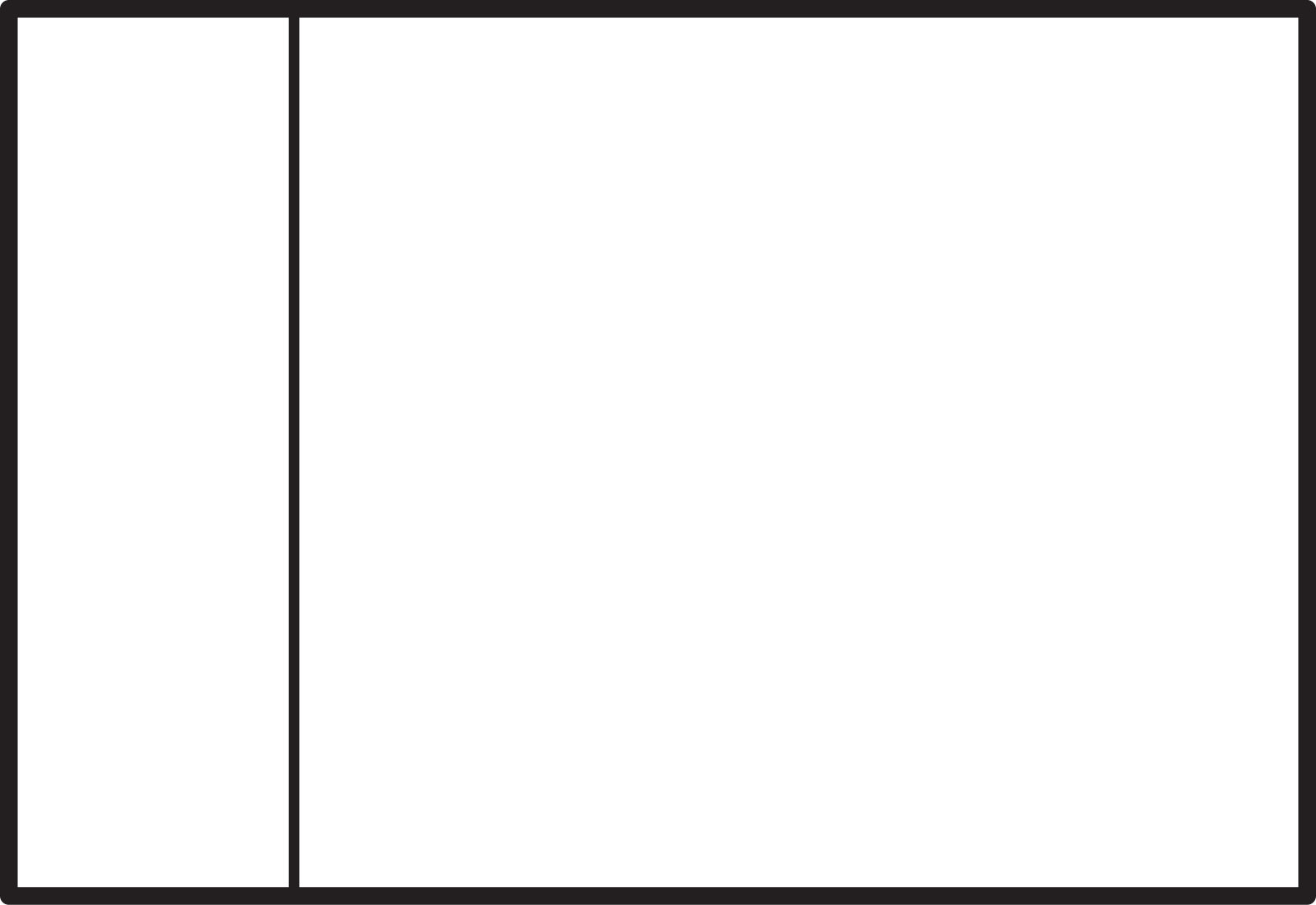
Which shape is correctly partitioned into 2 equal parts?
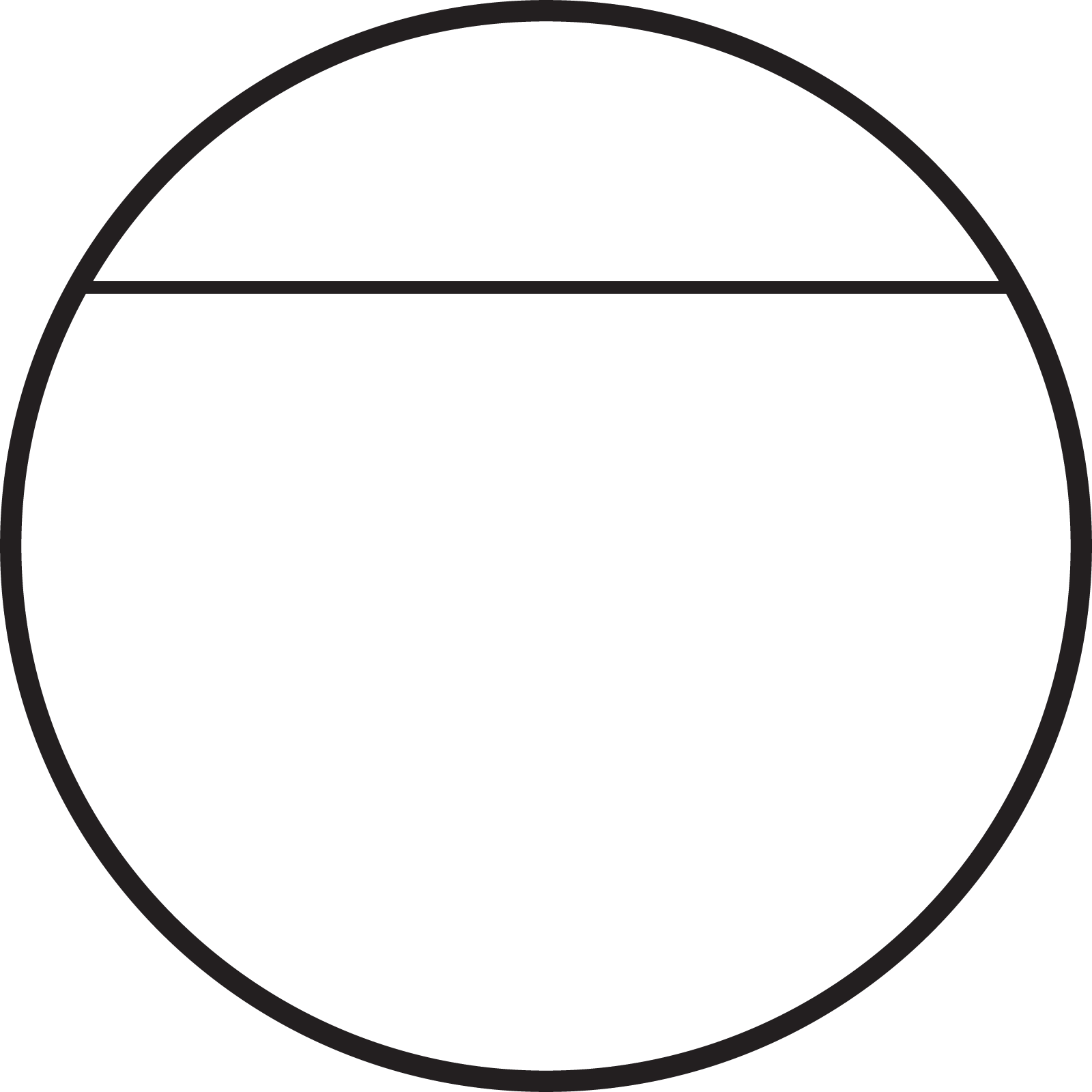
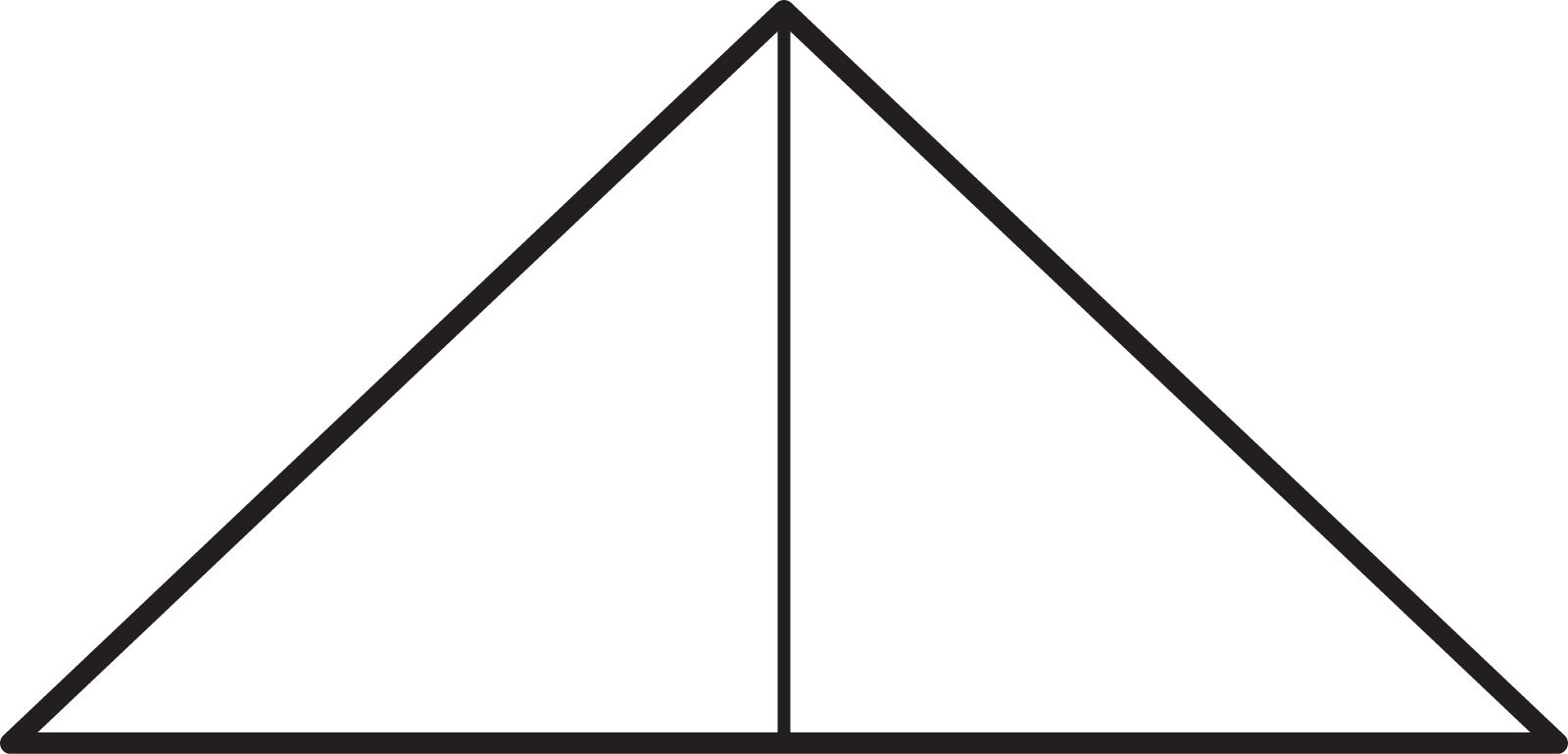
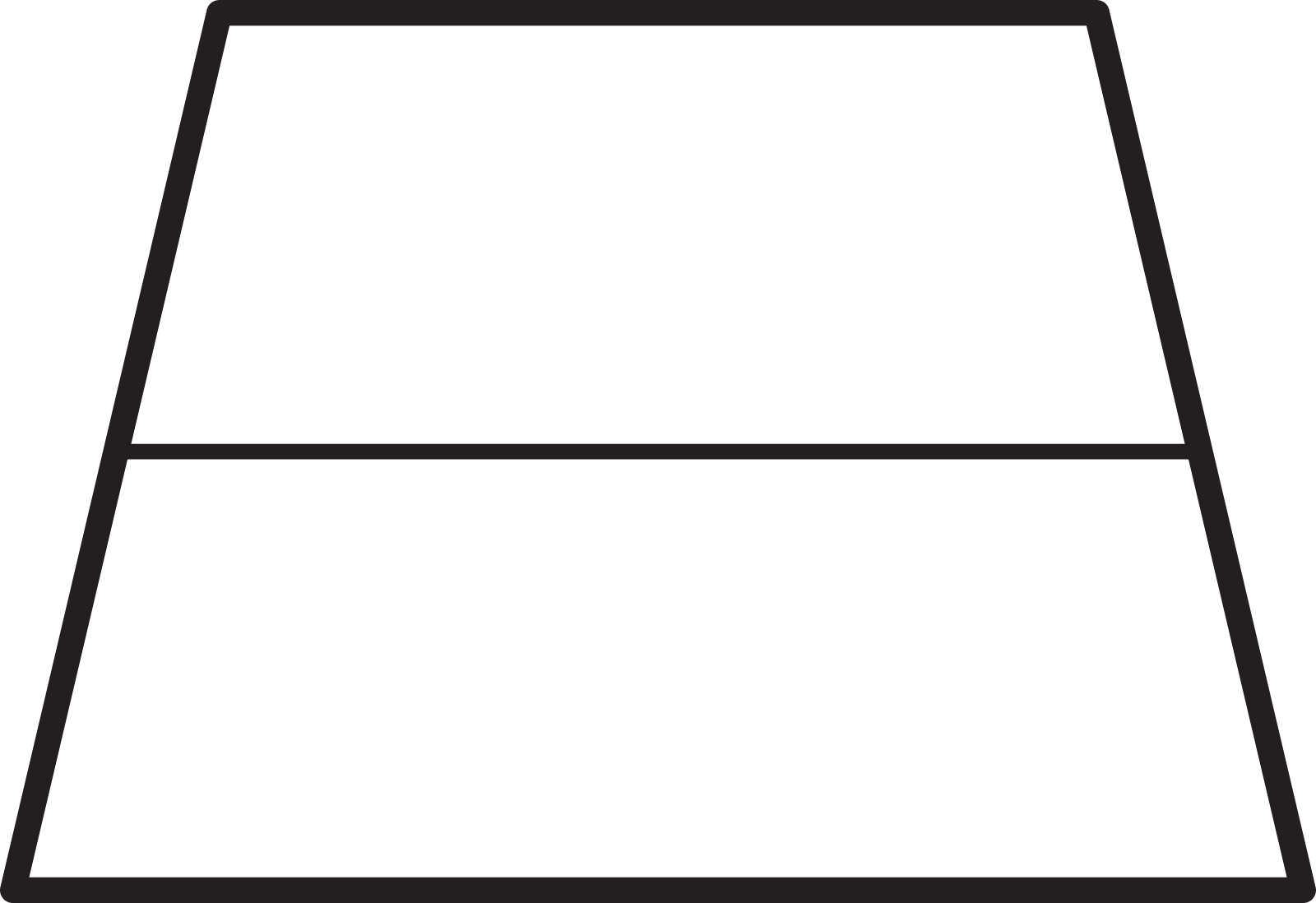
Sorry, that is not right! The top part of the circle is much smaller than the bottom part.
Sorry, that is not right! The right side of the rectangle is much larger than the left side.
That's right! Both sides of the isosceles triangle are the same size.
Sorry, that is not right! The parts of the trapezoid are not the same size.
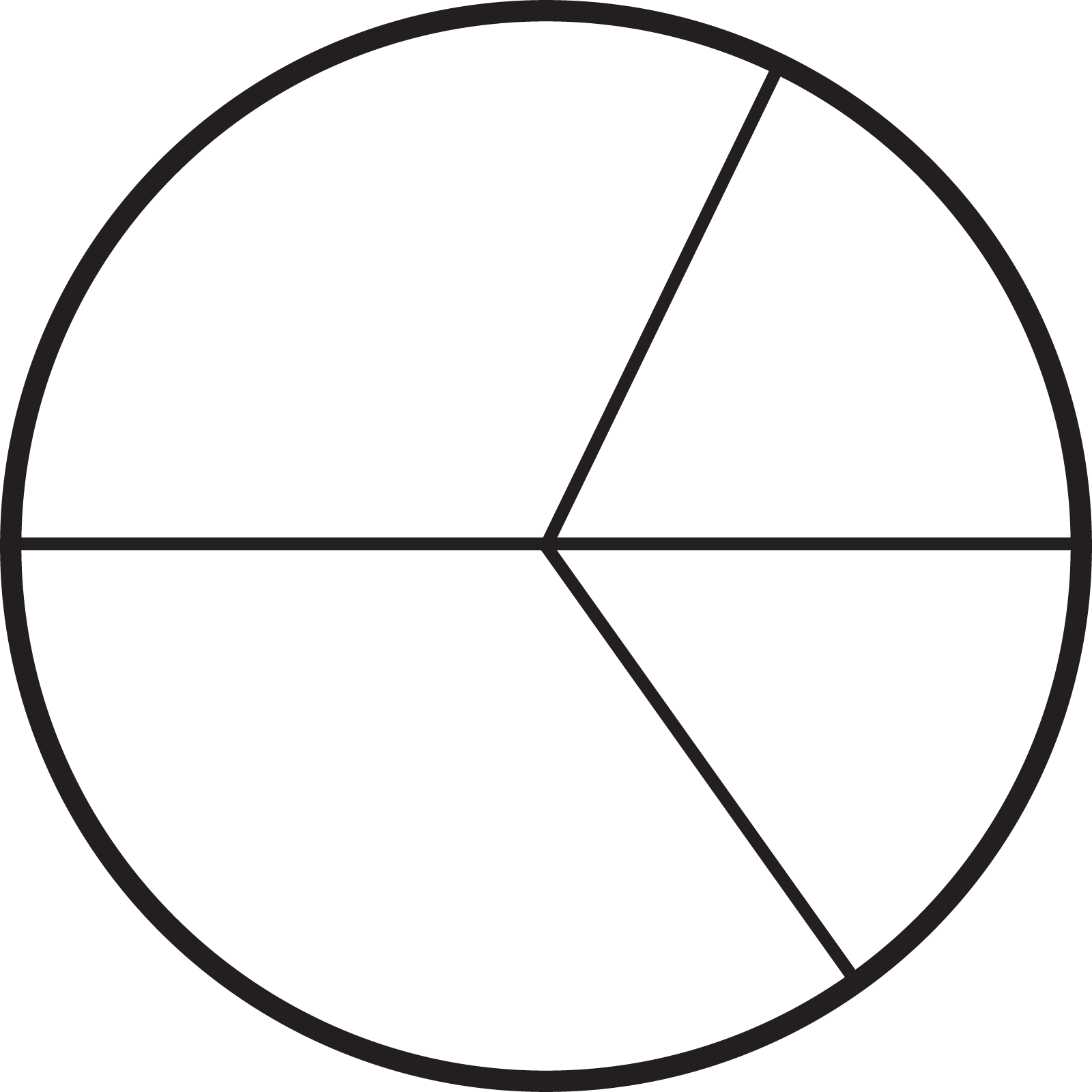
Which circle is partitioned correctly into 4 equal parts?
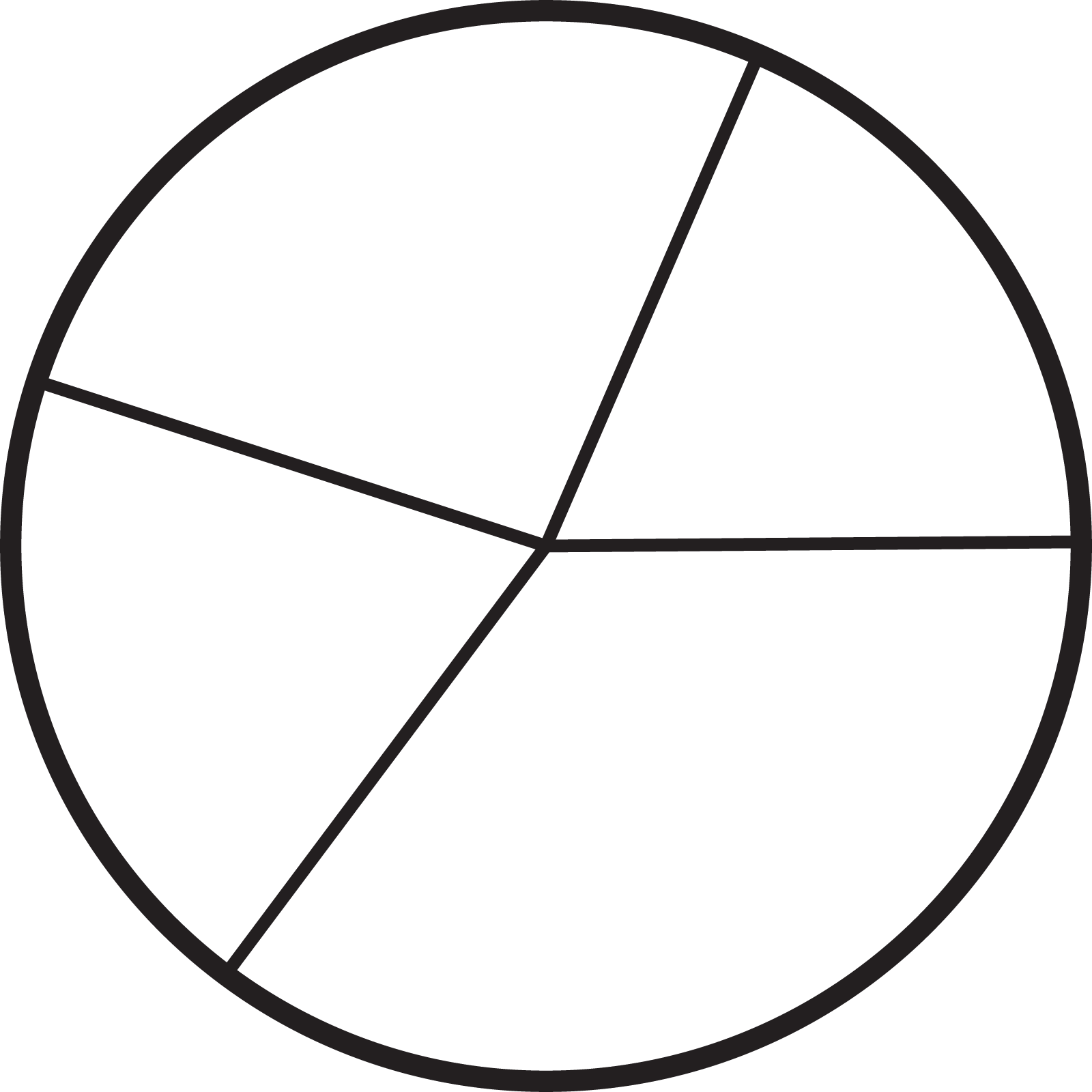
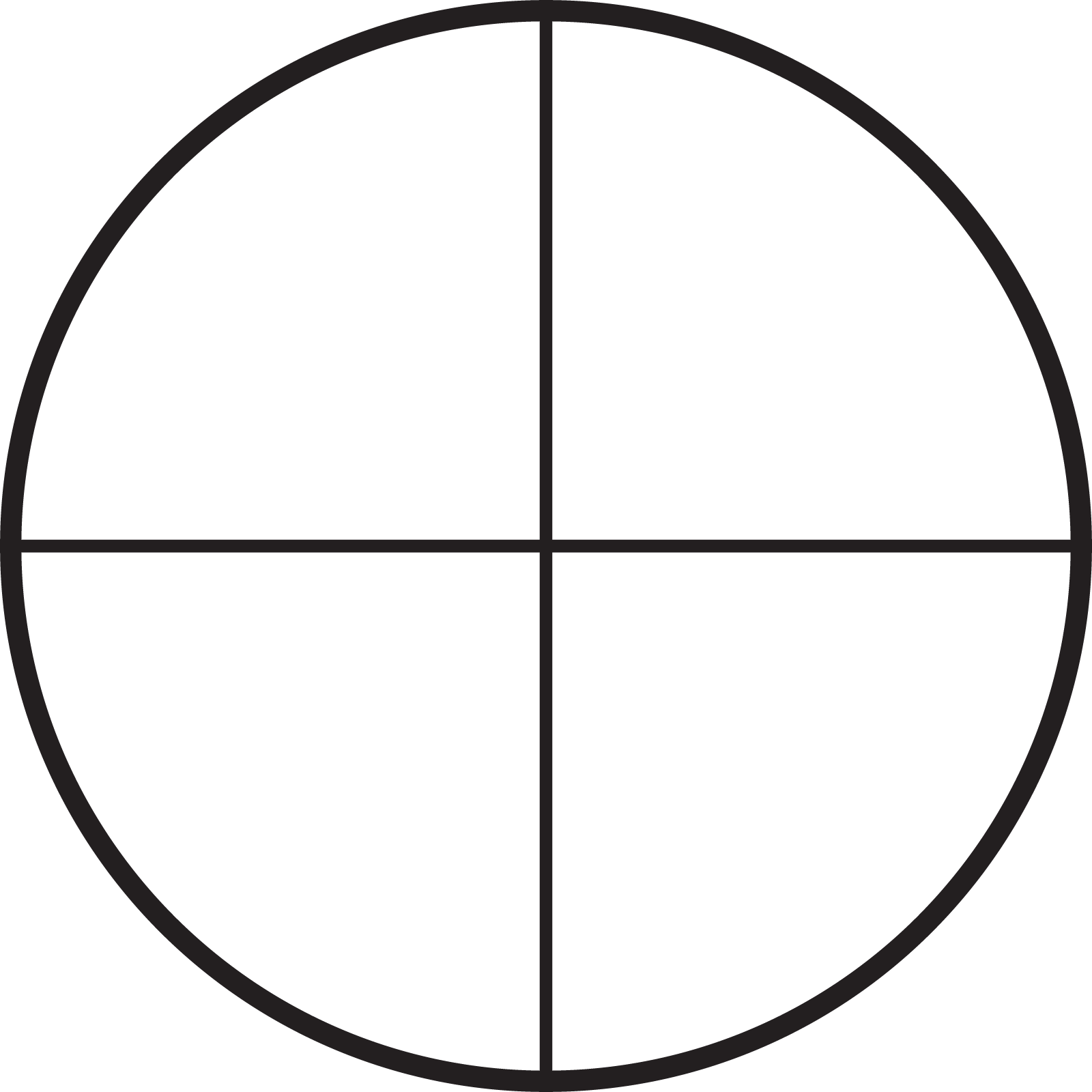
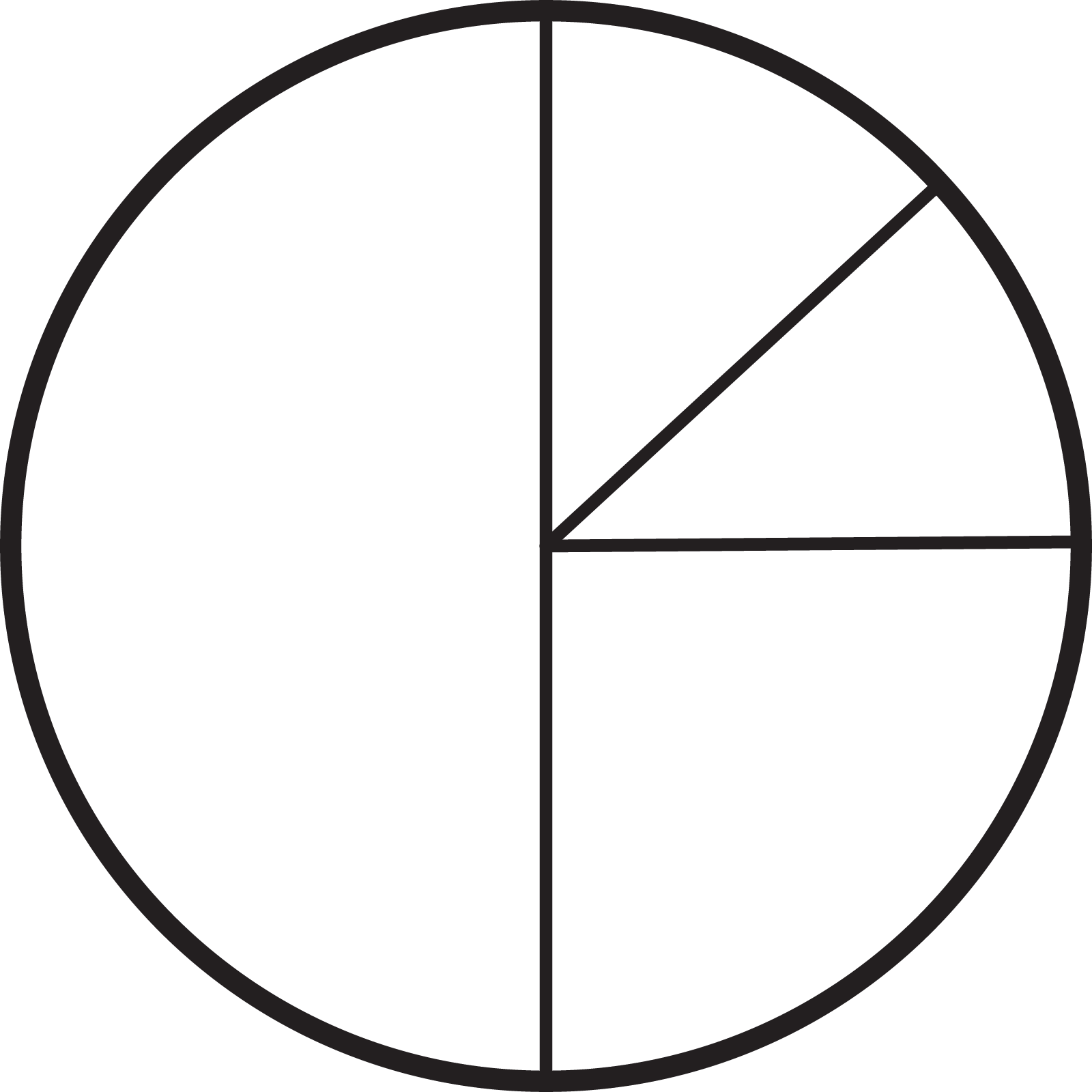
Sorry, that is not right! Every part of the circle is a different size.
That's right! This circle has 4 equal parts.
Sorry, that is not right! Each part of the circle needs to be the same size.
Sorry, that is not right! There are 2 sets of equal parts, but every part that makes up the circle must be equal in size.
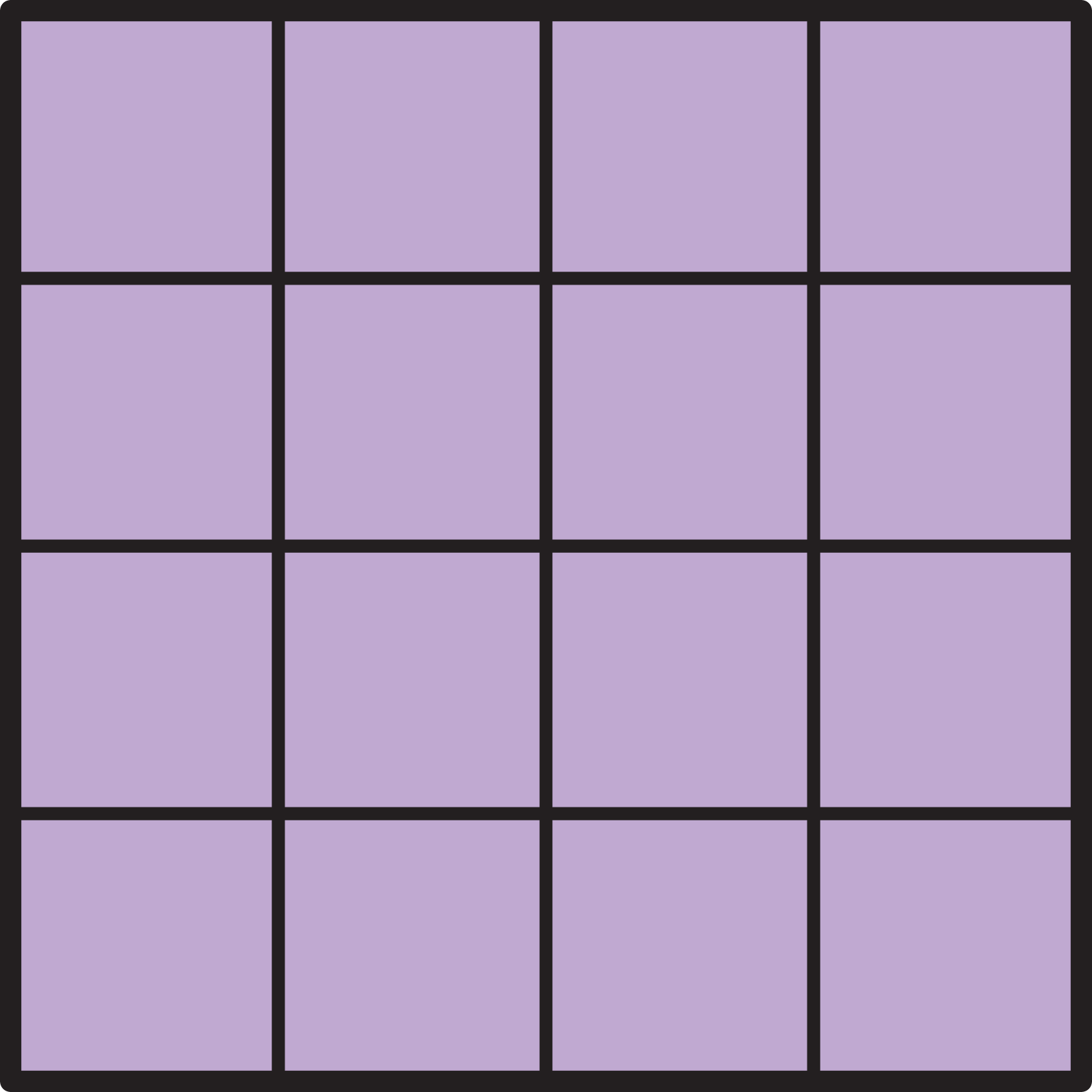
What fraction does each equal part of the square represent?
- \(\Large\frac{1}{16}\)
- \(\Large\frac{1}{12}\)
- \(\Large\frac{1}{8}\)
- \(\Large\frac{1}{4}\)
That's right! There are 16 total parts, so each part represents \(\Large\frac{1}{16}\) of the square.
Sorry, that is not right! There are 16 total parts, not 12.
Sorry, that is not right! There are more than 8 equal parts that make up the square.
Sorry, that is not right! There are 16 equal parts in the square, not 4.
Which partitioned shape is labeled with the correct fractions?
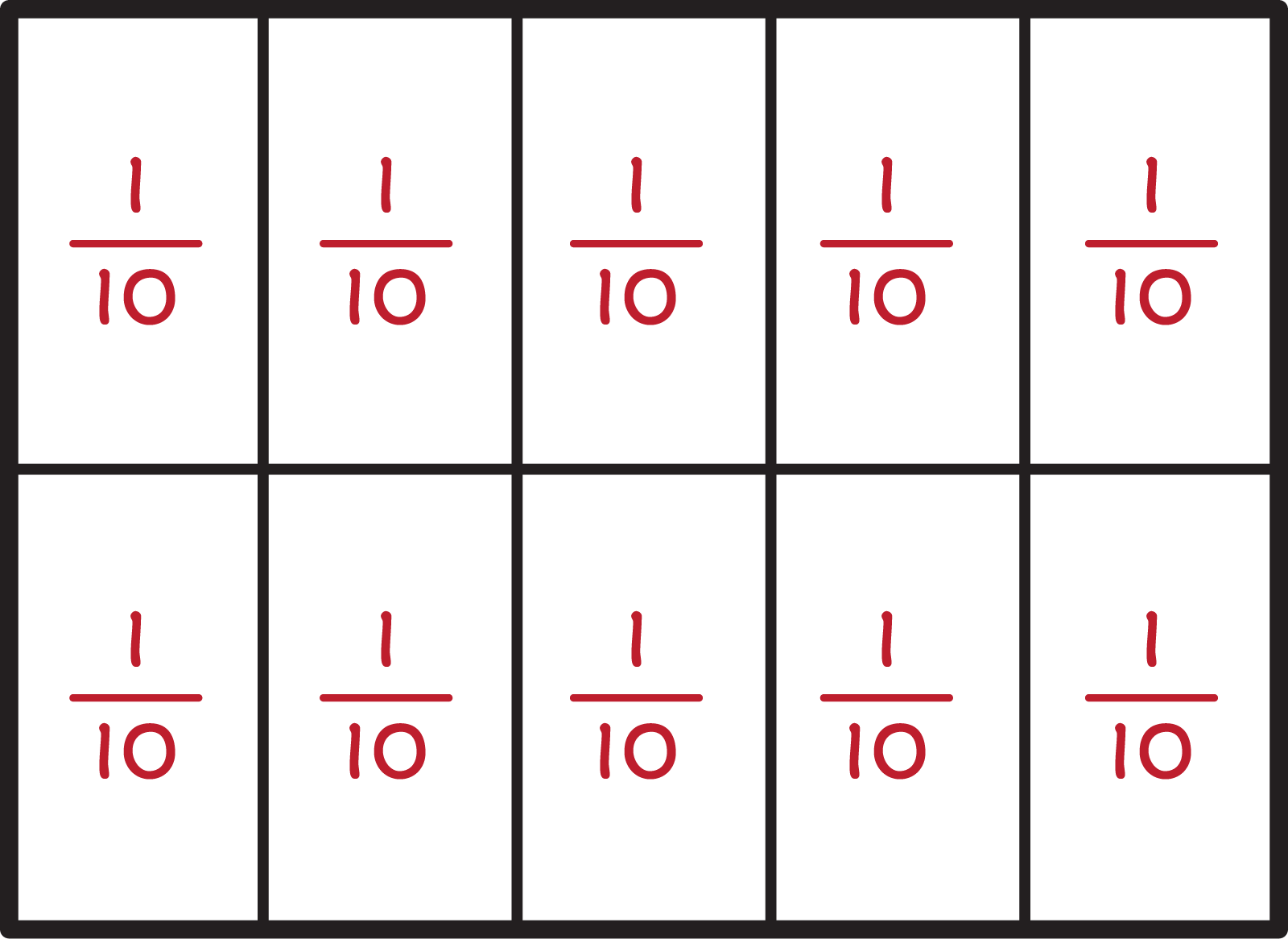
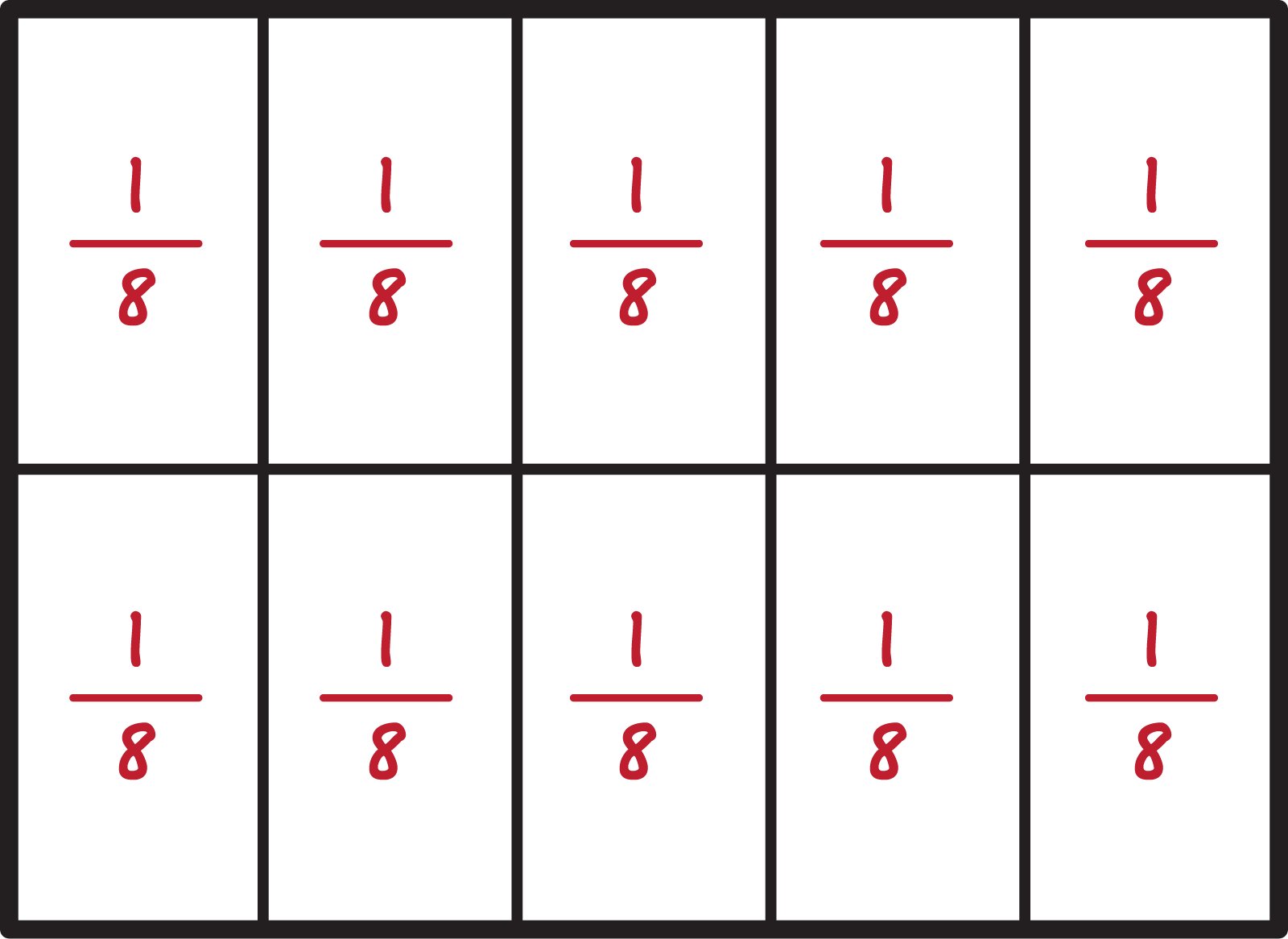
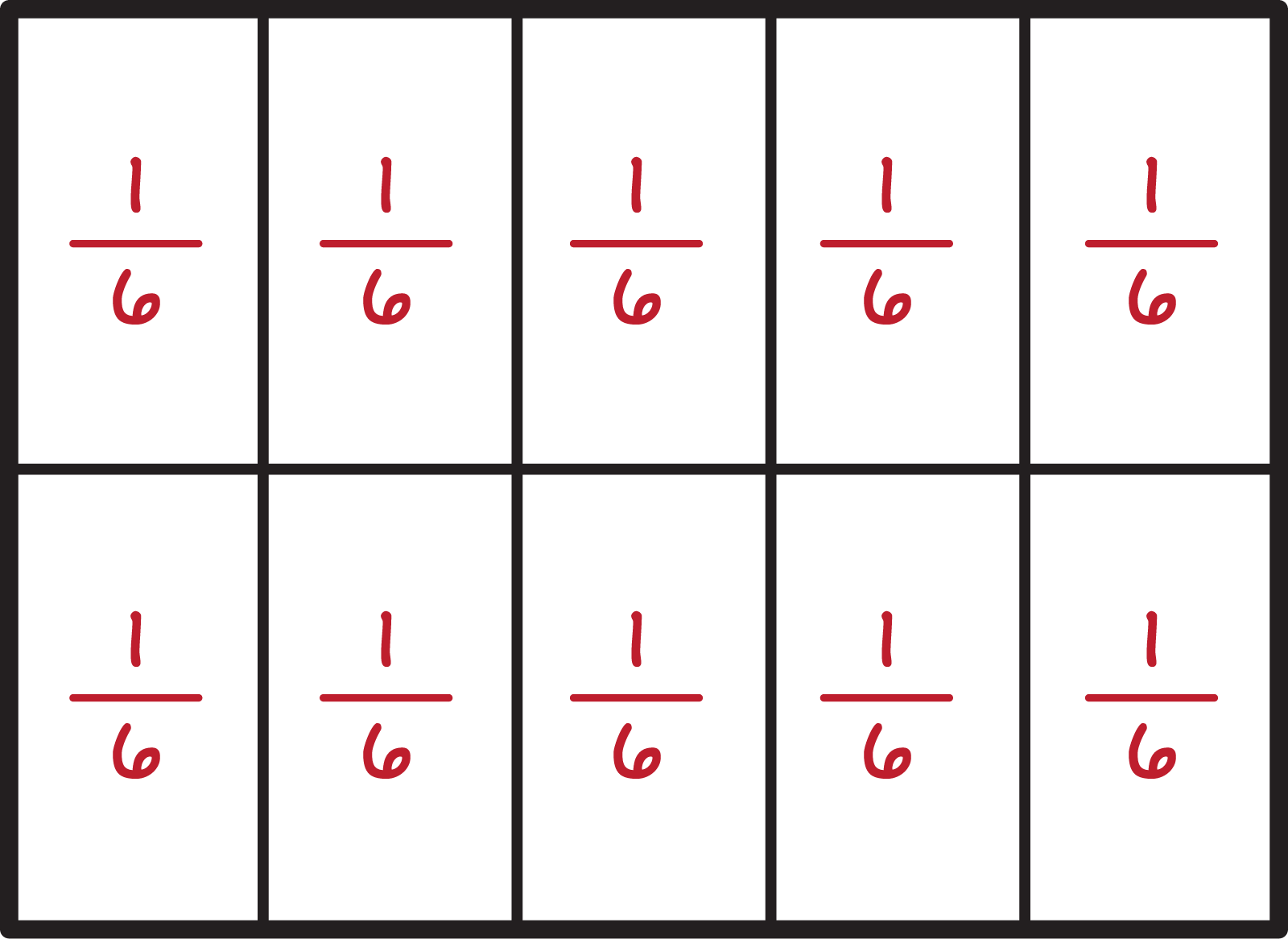
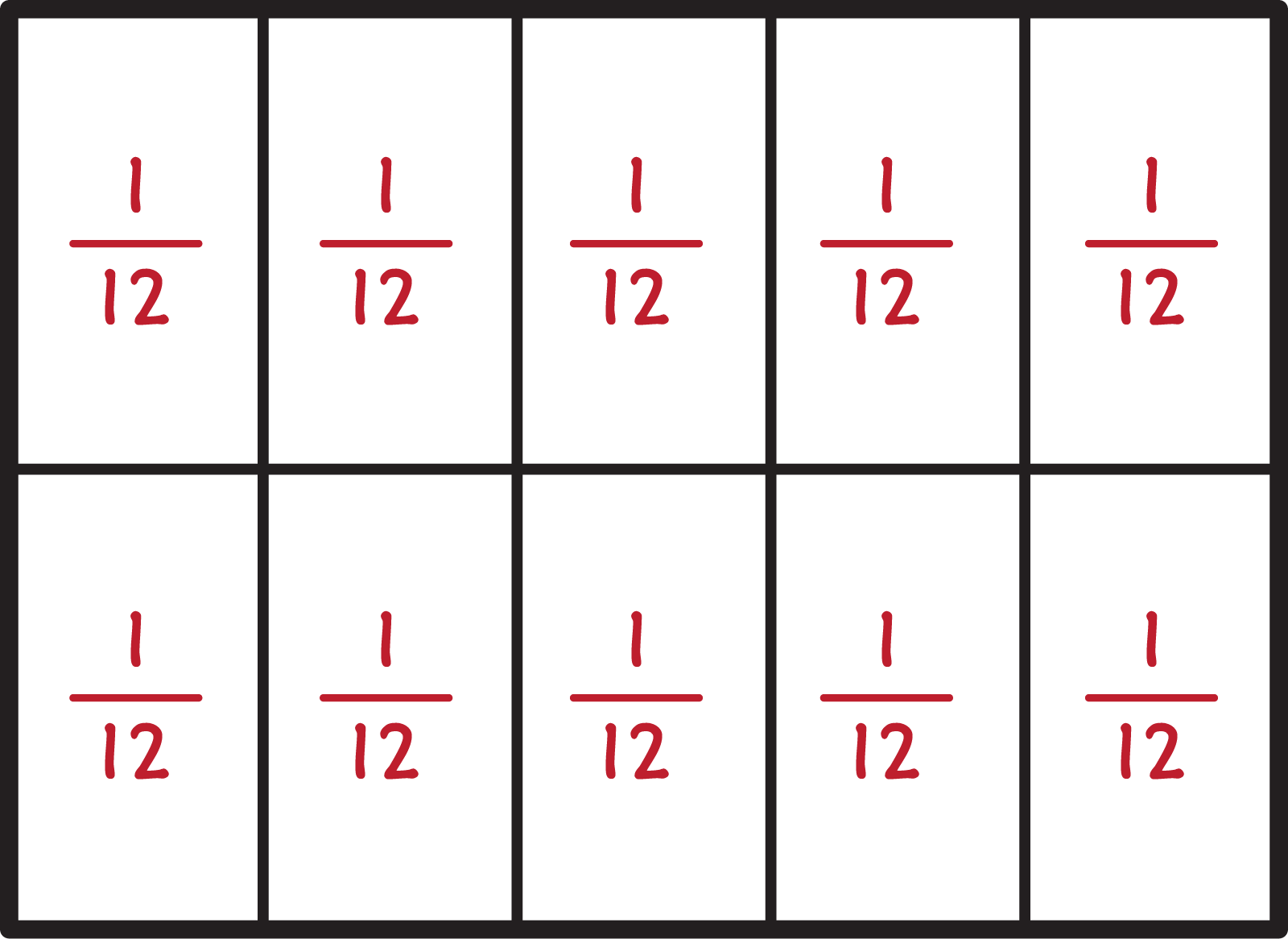
That's right! There are 10 equal parts, so each part represents \(\Large\frac{1}{10}\) of the rectangle.
Sorry, that is not right! There are 10 equal parts in the rectangle, not 8.
Sorry, that is not right! If you count each part of the rectangle, there are 10 total parts, not 6.
Sorry, that is not right! You counted too many equal parts. There are only 10 equal parts in the rectangle.
Daniel cut an apple into 12 equal sized slices. What fraction represents each slice of the apple?
- \(\Large\frac{1}{2}\)
- \(\Large\frac{1}{4}\)
- \(\Large\frac{1}{8}\)
- \(\Large\frac{1}{12}\)
Sorry, that is not right! \(\Large\frac{1}{12}\) would be correct if Daniel cut the apple in half.
Sorry, that is not right! Daniel cut the apple into 12 equal pieces, not 4.
Sorry, that is not right! There were 12 equal apple slices, not 8.
That’s right! There are 12 total pieces of the apple, so each slice represents \(\Large\frac{1}{12}\) of the apple.
Daniel created this racetrack for his toy race cars. What fraction does each lane of his racetrack represent?
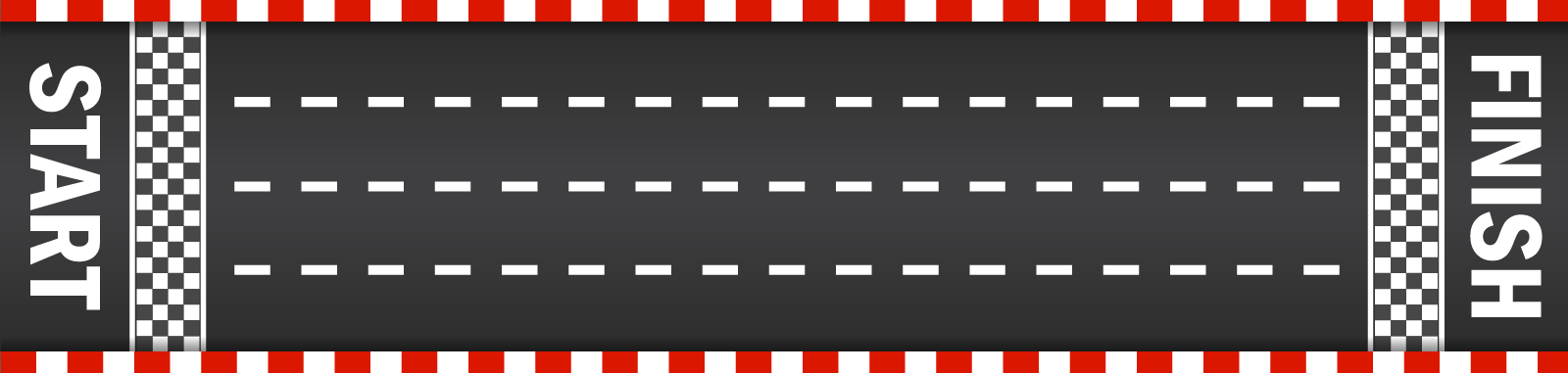
- \(\Large\frac{1}{4}\)
- \(\Large\frac{2}{4}\)
- \(\Large\frac{3}{4}\)
- \(\Large\frac{4}{4}\)
That’s right! Each lane represents \(\Large\frac{1}{4}\) of the racetrack, which is a rectangle.
Sorry, that is not right! \(\Large\frac{2}{4}\) would represent 2 out of the 4 lanes.
Sorry, that is not right! \(\Large\frac{3}{4}\) represents 3 out of the 4 lanes, not each lane.
Sorry, that is not right! \(\Large\frac{4}{4}\) represents all the lanes, not each lane.
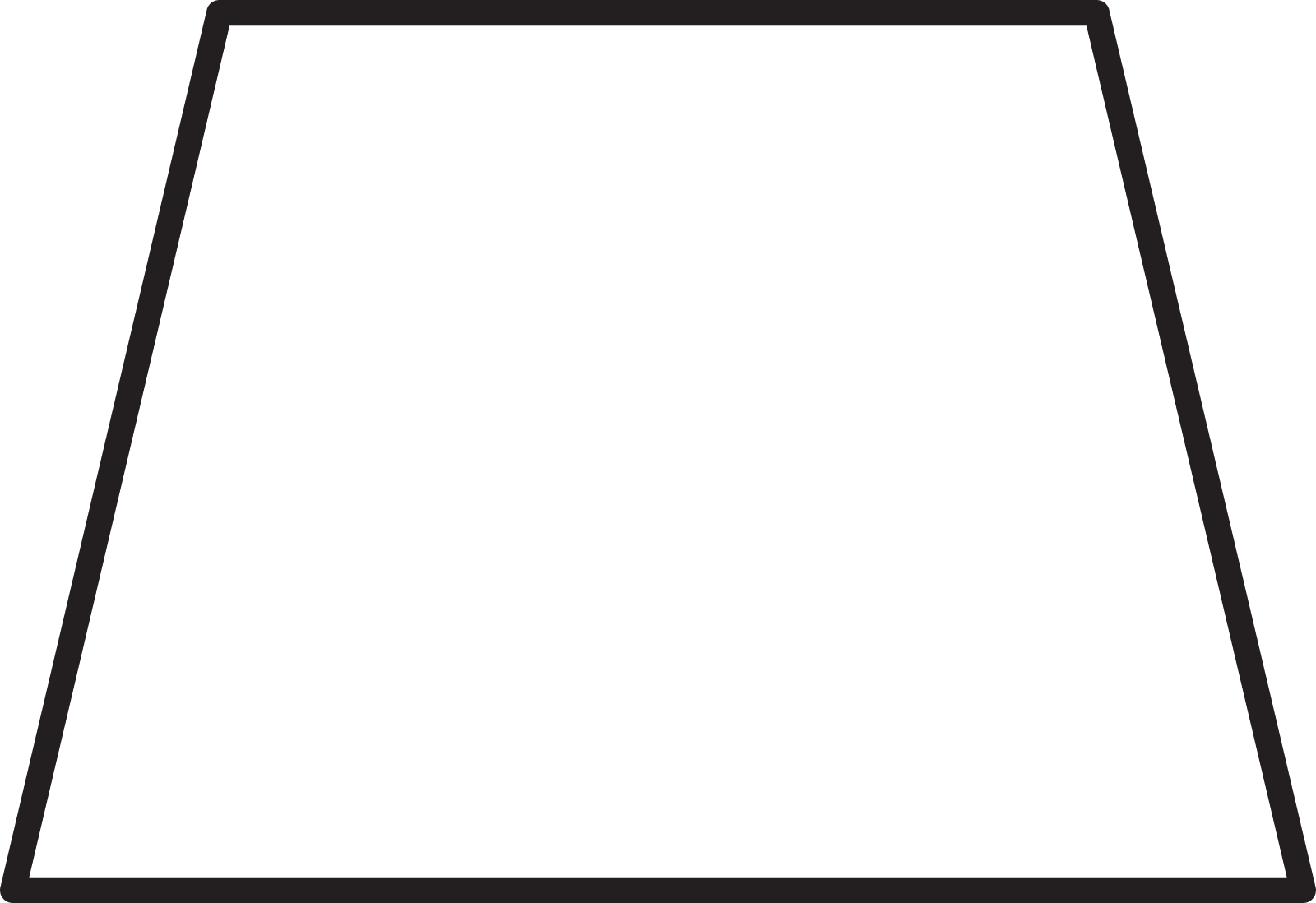
Using only lines of symmetry, how many equal parts can this shape be partitioned into?
- 0
- 1
- 2
- 3
Sorry, that is not right! This trapezoid can be partitioned with 1 line of symmetry creating 2 equal parts.
Sorry, that is not right! This trapezoid has 1 line of symmetry down the middle.
That's right! This trapezoid can be partitioned into 2 equal parts with a line of symmetry that runs down the middle of the trapezoid.
Sorry, that is not right! This trapezoid cannot be partitioned into 3 equal parts.
Summary
Questions answered correctly:
Questions answered incorrectly: