Assess Yourself
How well do you understand the ideas in this lesson?
Goal:
Goal:

Show What You Know!
Are you ready to take this lesson's quiz? These questions will help you find out. Go back to the lesson if you do not know an answer.
Which multiplication equations can you use the commutative property to solve?
- \({10 \times 3 = 30}\) \({6 \times 10 = ?}\)
- \({3 \times 10 = 30}\) \({10 \times 3 = ?}\)
- \({3 \times 3 = 9}\) \({3 \times 4 = ?}\)
- \({3 \times 4 = 12}\) \({6 \times 2 = ?}\)
Sorry, that is not right. The two multiplication equations do not have the same factors.
That is right! These two multiplication equations have the same factors in a different order.
Sorry, that is not right. The two multiplication equations do not have the same factors.
Sorry, that is not right. The two multiplication equations do not have the same factors.
Which multiplication equations can you use the commutative property to solve?
- \({8 \times 5 = 40}\) \({? = 5 \times 7}\)
- \({4 \times 8 = 32}\) \({? = 8 \times 8}\)
- \({7 \times 4 = 28 }\) \({? = 4 \times 7}\)
- \({7 \times 7 = 49}\) \({? = 8 \times 7}\)
Sorry, that is not correct. The two multiplication equations do not have the same factors.
Sorry, that is not correct. The two multiplication equations do not have the same factors.
Correct! These two multiplication equations have the same factors in a different order.
Sorry, that is not correct. The two multiplication equations do not have the same factors.
Which array can you use to check the product of the second multiplication sentence?
\({4 \times 10 = 40}\)
\({10 \times 4 = ?}\)
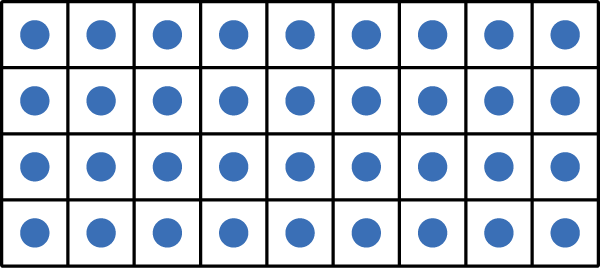
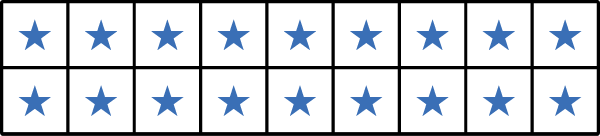

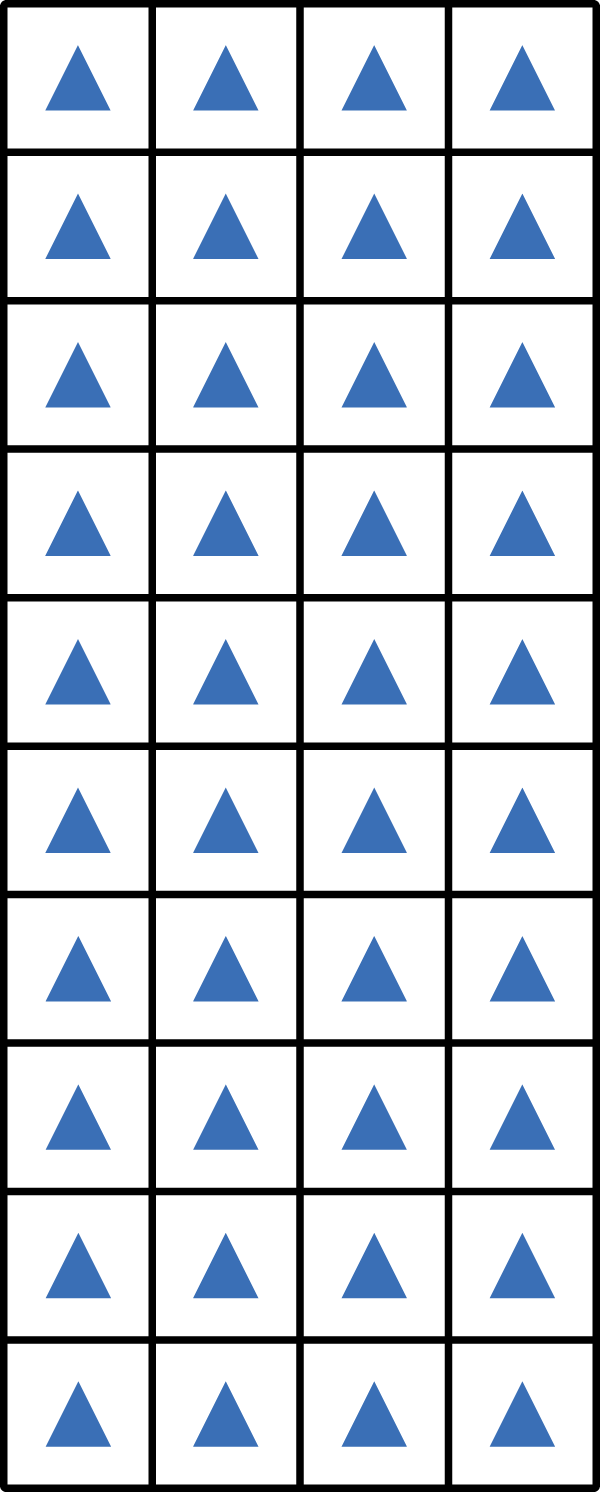
Sorry, that is not right. This array will show the product of \({4 \times 9}\).
Sorry, that is not right. This array will show the product of \({2 \times 9}\).
Sorry, that is not right. This array will show the product of \({10 \times 2}\).
That is right! The 10-by-4 array will show the product of \({10 \times 4}\).
Which array can you use to check the product of the second multiplication sentence?
\({9 \times 5 = 45}\)
\({5 \times 9 = ?}\)
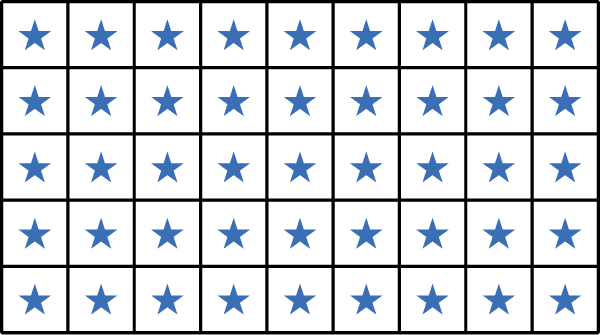
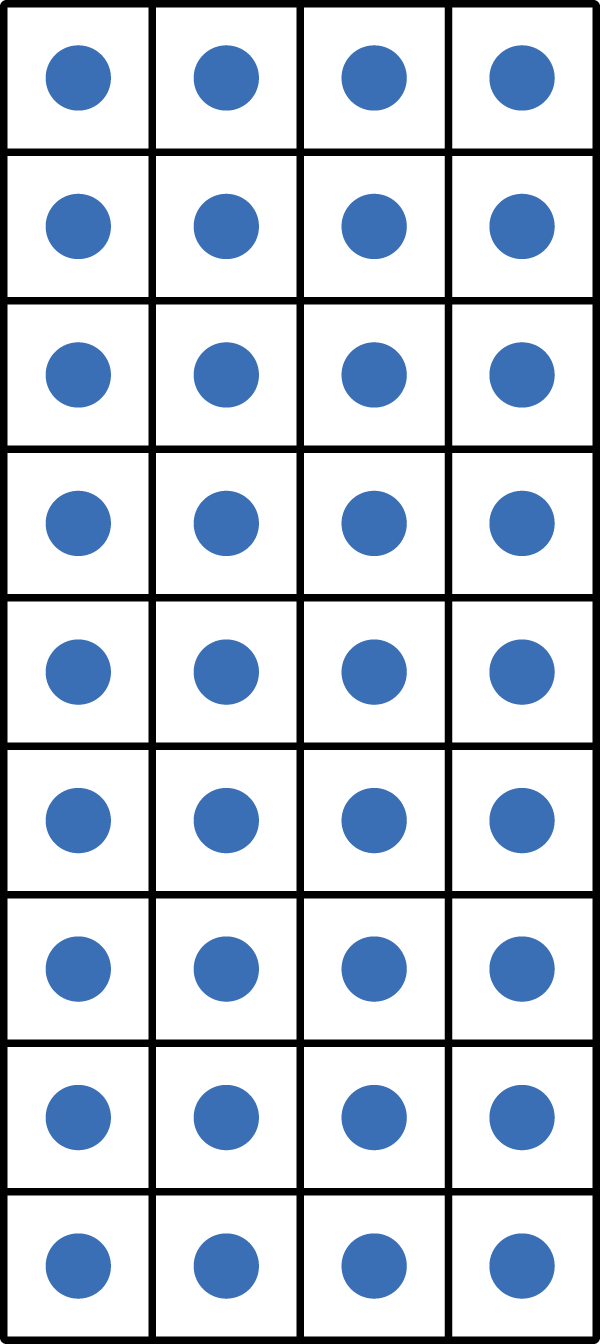
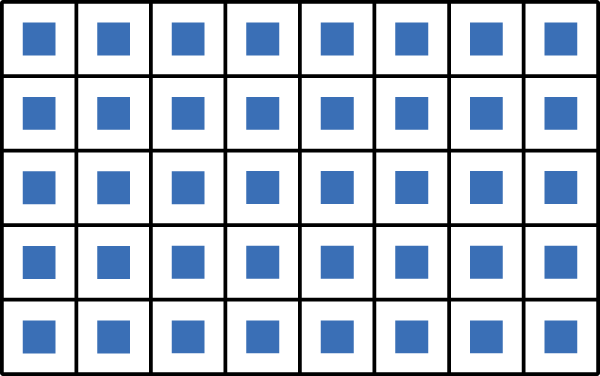
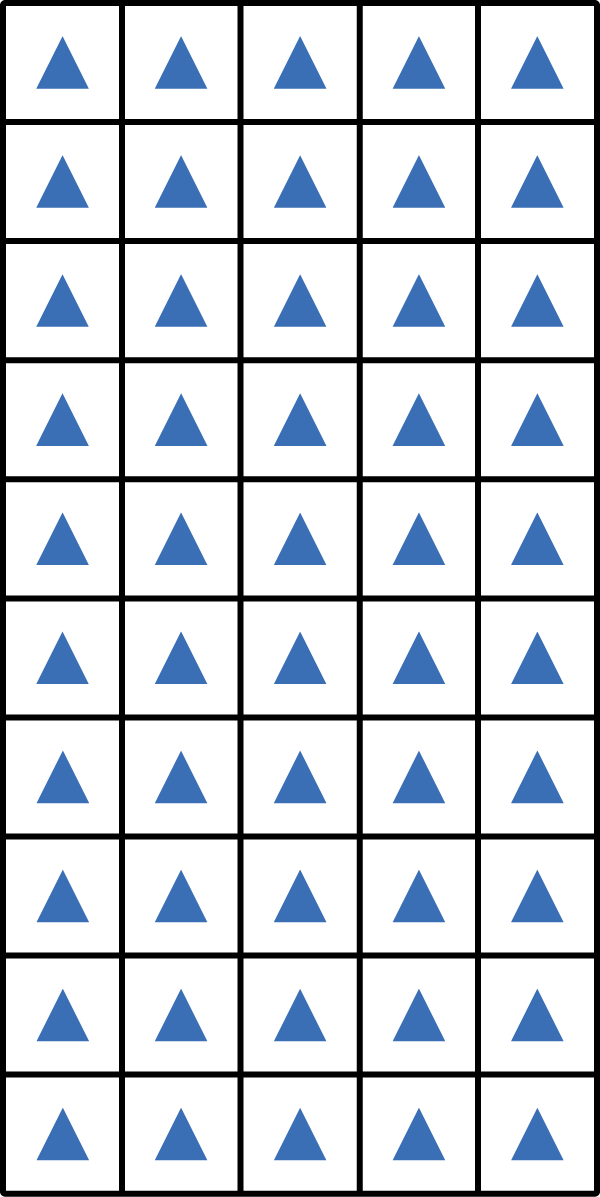
Correct! The 5-by-9 array will show the product of \({5 \times 9}\).
Sorry, that is not right. This array will show the product of \({9 \times 4}\).
Sorry, that is not right. This array will show the product of \({5 \times 8}\).
Sorry, that is not right. This array will show the product of \({10 \times 5}\).
Which array can you use to check the product of the second multiplication sentence?
\({6 \times 7 = 42}\)
\({7 \times 6 = ?}\)
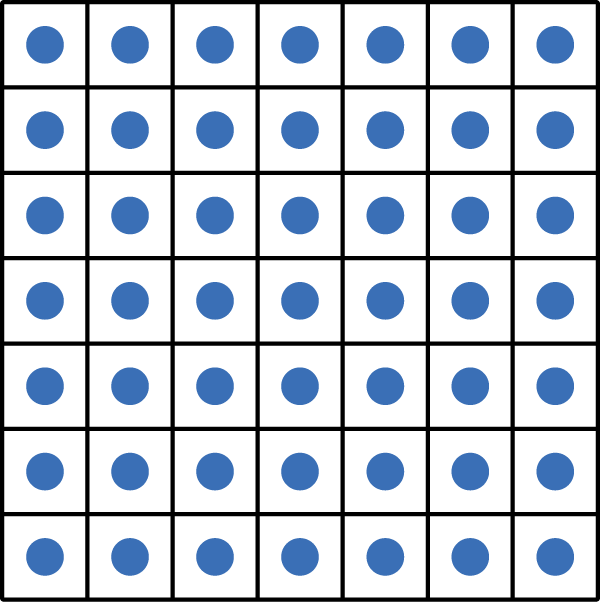
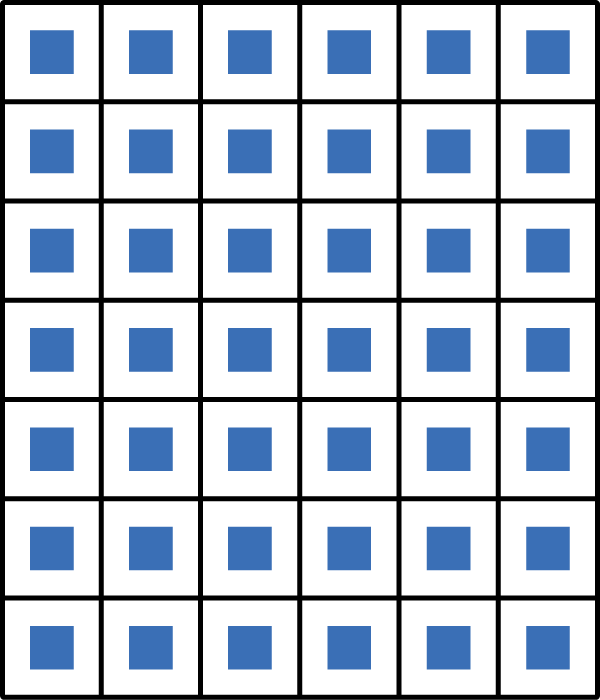
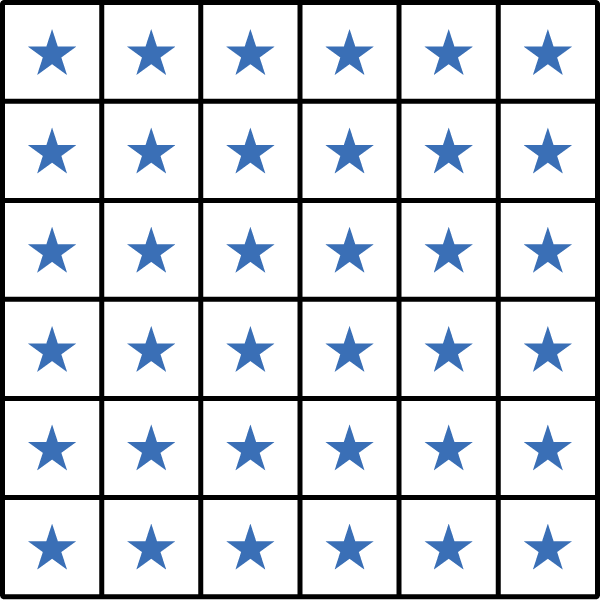
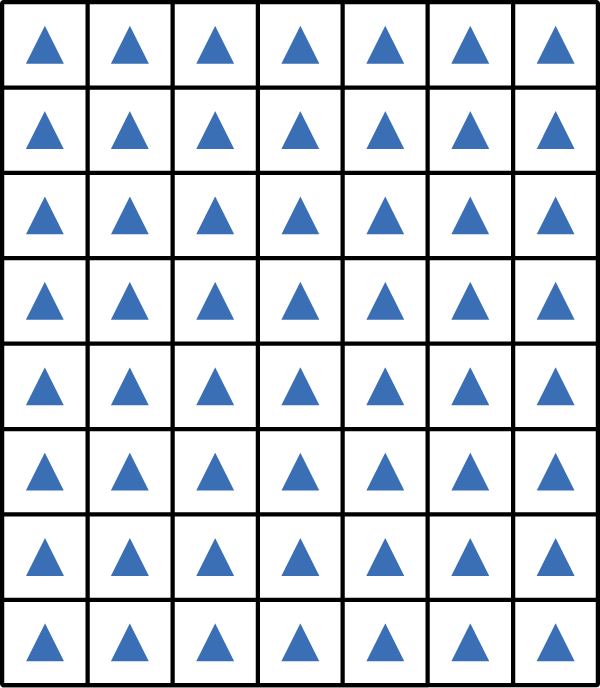
Sorry, that is not right. This array will show the product of 7 x 7.
That is right! The 7-by-6 array will show the product of 7 x 6.
Sorry, that is not right. This array will show the product of 6 x 6.
Sorry, that is not right. This array will show the product of 8 x 7.
Use the commutative property to find the product of the second multiplication sentence.
\({9 \times 3 = 27}\)
\({3 \times 9 = ?}\)
- 27
- 36
- 72
- 24
Correct! You found the correct product.
Sorry, that is not correct. 72 switches the tens and ones place of 27. The commutative property works for the order of the factors, not the product.
Sorry, that is not correct. This is the product of \({8 \times 3}\). Look at the product of the first multiplication sentence!
Use the commutative property to find the product of the second multiplication sentence.
\({7 \times 8 = 56}\)
\({8 \times 7 = ?}\)
- 49
- 64
- 65
- 56
Sorry, that is not right. This is the product of \({7 \times 7}\). Look at the product of the first multiplication sentence!
Sorry, that is not right. 65 switches the tens and ones place of 56. The commutative property works for the order of the factors, not the product.
That is right! You found the correct product.
Use the commutative property to find the product of the second multiplication sentence.
\({10 \times 9 = 90}\)
\({9 \times 10 = ?}\)
- 80
- 90
- 81
- 100
Sorry, that is not correct. This is the product of \({8 \times 10}\). Look at the product of the first multiplication sentence!
Sorry, that is not correct. This is the product of \({9 \times 9}\). Look at the product of the first multiplication sentence!
Sorry, that is not correct. This is the product of \({10 \times 10}\). Look at the product of the first multiplication sentence.
Read the word problem below. Use the commutative property to find the answer. Then, draw an array to check your work. Choose the correct answer with the correct label word.
All of the third grade classes are buying tickets together. There are 7 classes with 9 students in each class. If each student gets one ticket, how many tickets do all of the classes need in all?
\({9 \times 7 = 63}\)
\({7 \times 9 = ?}\)
- 48 Classes
- 72 Tickets
- 63 Tickets
- 60 Classes
Use the product of the first multiplication sentence. Check your work with a 7-by-9 array. Then, choose the correct answer with the correct label word.
Sorry, that is not correct. Look at the product of the first multiplication sentence.
That is right! You used the product of the first multiplication sentence and the correct label word.
Sorry, that is not correct. Look at the product of the first multiplication sentence, and use the correct label word.
Read the word problem below. Use the commutative property to find the answer. Then, draw an array to check your work. Choose the correct answer with the correct label word.
The whole school wants to visit Adventure Land together! The school needs 10 groups of 7 tickets. How many tickets does the school need to go to Adventure Land?
\({7 \times 10 = 70}\)
\({10 \times 7 = ?}\)
- 80 Classes
- 70 Tickets
- 60 Classes
- 72 Tickets
Sorry, that is not correct. Look at the product of the first multiplication sentence, and use the correct label word.
Correct! You used the product of the first multiplication sentence and the correct label word.
Sorry, that is not correct. Look at the product of the first multiplication sentence, and use the correct label word.
Sorry, that is not correct. Look at the product of the first multiplication sentence.
Summary
Questions answered correctly:
Questions answered incorrectly: