Problem Solving
How do you use what you have learned to problem solve?
Goal:
Goal:

Practice!
Goal: Apply what you have learned about multiplication to solve a word problem.
Can you choose a strategy to solve a word problem? Here are the key words and problem-solving steps:
Word Problem Solving Steps
- Read the problem.
- Look for important information.
- Write a math sentence.
- Choose a way to solve.
- Solve and label your answer.
Multiplication Key Words |
||
|---|---|---|
| each | by | of |
| per | in all | total |
You will need a piece of paper, a red highlighter, and a yellow highlighter. Write the problem on your piece of paper. Then follow the steps to solve the problem. Click on the tabs to see how!
The students collected 6 piles of bones. There are 9 bones in each pile. How many bones did they collect in all?
Read the problem and write it down on your piece of paper. Read it as many times as you need to in order to see the important information. What did you notice when you were reading?



The students collected 6 piles of bones. There are 9 bones in each pile. How many bones did they collect in all?
Look for the important information. Make the first number red. It is the number of groups. Make the second number yellow. It is the number in each group. Draw a red circle around the key word or words. Underline the question with a pencil. Click the Show Me button to see!
The students collected 6 piles of bones. There are 9 bones in each pile. How many bones did they collect in all?
The students collected 6 piles of bones. There are 9 bones in each pile. How many bones did they collect in all?
___ \({ \times }\) ___ = ?
Now you need to write a multiplication sentence underneath the problem you wrote. The problem asks us to multiply. We need two factors. Write the multiplication sentence without the product. Click the Show Me button to see how you did!
6 \({ \times }\) 9 = ?
The students collected 6 piles of bones. There are 9 bones in each pile. How many bones did they collect in all?
6 \({ \times }\) 9 = ?
Choose a way to solve 6 x 9. You could draw a picture or make an array. Click the Show Me button to see!
Let’s make a multiplication picture.

The students collected 6 piles of bones. There are 9 bones in each pile. How many bones did they collect in all?
6 \({ \times }\) 9 = ?
Use the picture to solve the problem. You can add the groups of shapes in each circle. Then write the product after the equal sign. Write the product with a label word underneath your math sentence. Click below to check your work!
Question:
What is 6 \({ \times }\) 9 equal to?
6 \({ \times }\) 9 = 54
9 plus 9 equals 18. 18 plus 9 equals 27. 27 plus 9 equals 36. 36 plus 9 equals 45. 45 plus 9 equals 54.
Question:
What word do you need to label the answer? Look at the question in the problem!
“Bones” is the label word. The students collected 54 bones!
The students collected 6 piles of bones. There are 9 bones in each pile. How many bones did they collect in all?
6 \({ \times }\) 9 = 54
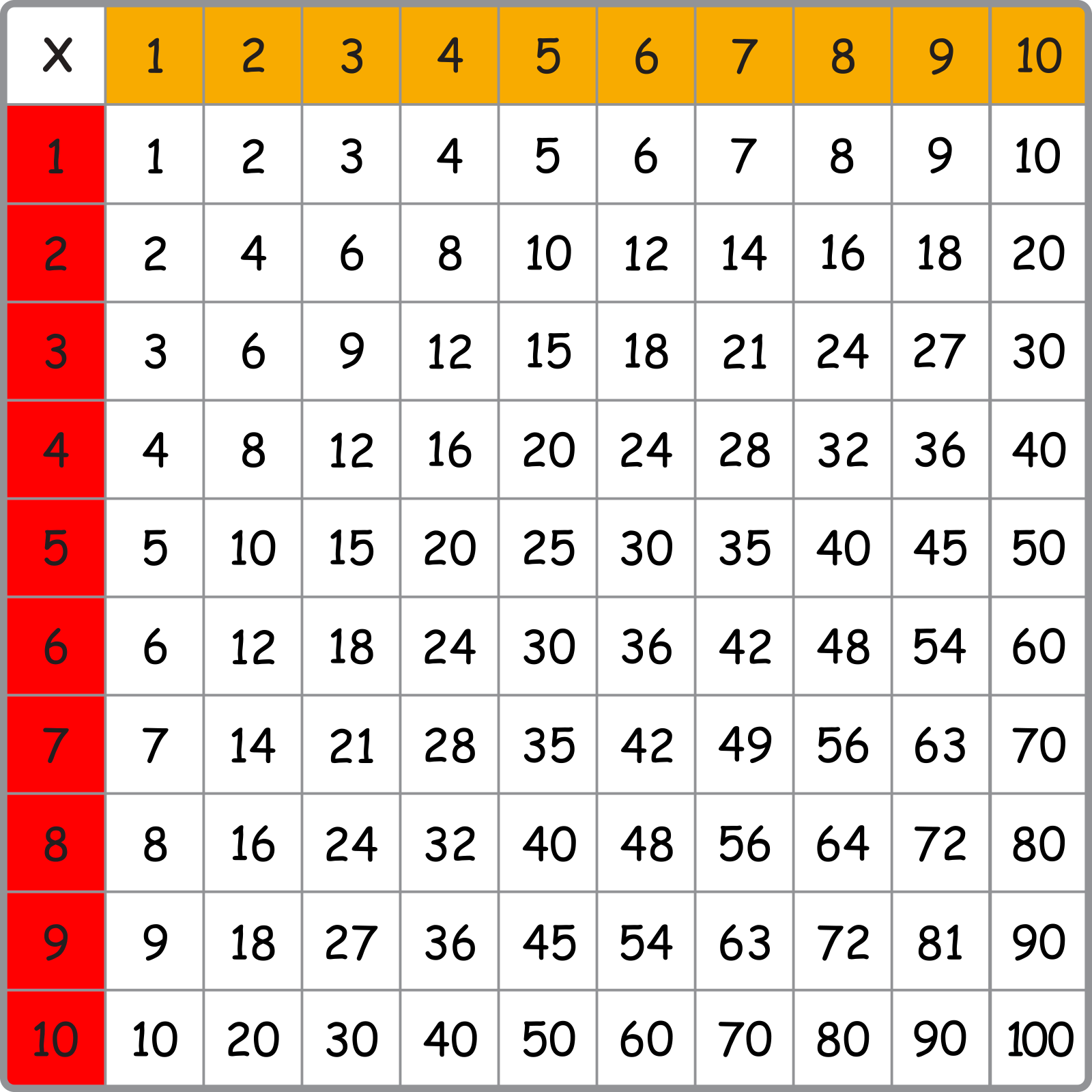
Use the multiplication chart to check your work. Where do 6 and 9 meet on the chart? Is it the same number as the product you found? Click the Show Me button to see how you did!
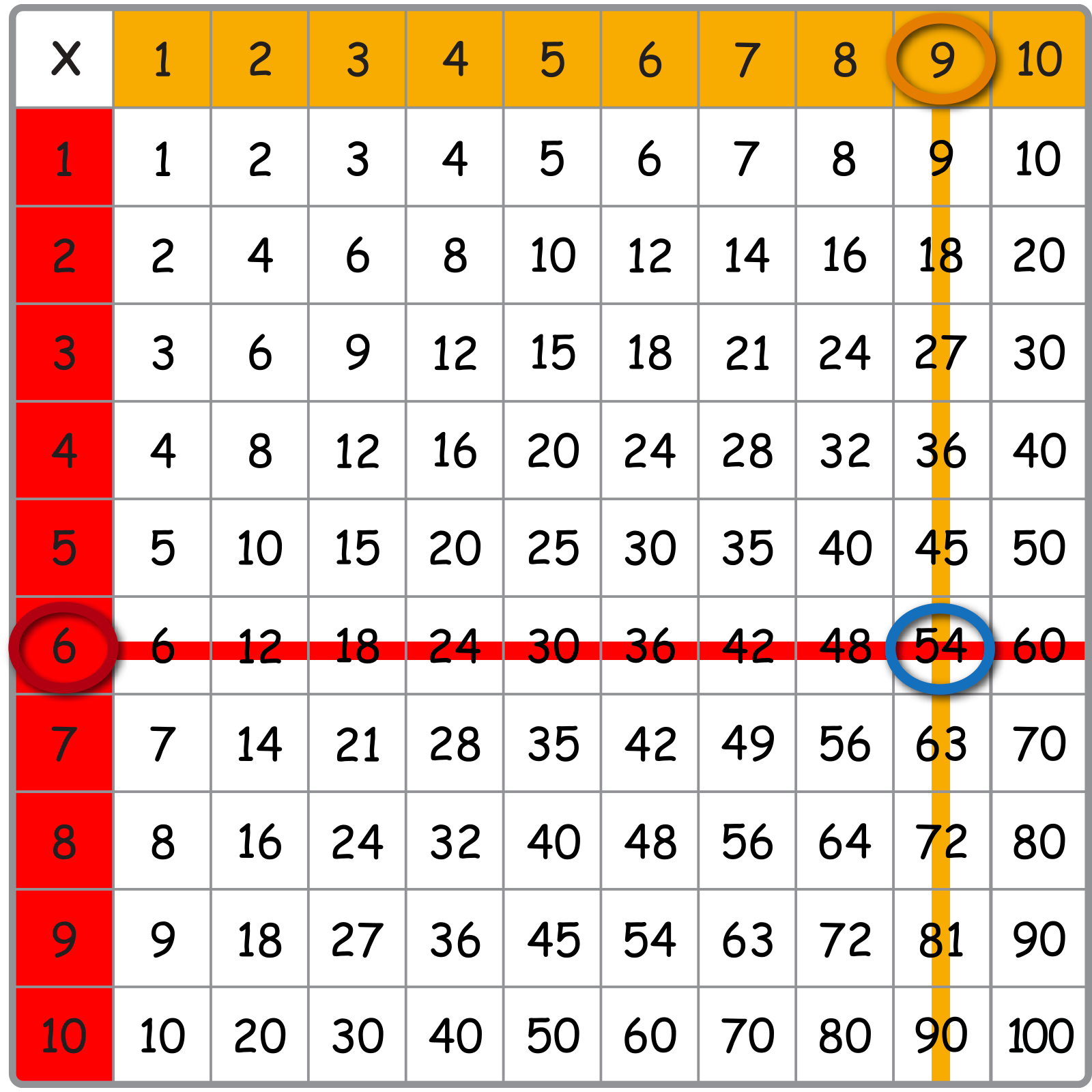
54 is correct!
Now use the steps to try this out on your own! Write the problem down on your piece of paper to help you go through the steps.
Read and Solve
Follow the steps you learned. Use any strategy to solve the problem.
The students collected 7 bags of 7 blankets. How many blankets did they collect in total?
___ \({ \times }\) ___ = ?
Use a strategy to multiply 7 times 7!
Use a strategy to multiply 7 times 7!
Use a strategy to multiply 7 times 7!
You got # out of # correct. Click the Retry button for another attempt.
You got a perfect score. Great job!