Balance is a design principle and is broken down into three types—symmetrical, asymmetrical, and radial. As you study the flashcards below, ask yourself the following questions
- Does this artwork seem visually balanced to you? (Is it like a playground teeter-totter?)
- Is the artwork the same on each side if you split it down the middle?
- Is the artwork balanced, but the visual components are a little different on each side?
- Do the visual components seem to radiate from a central point?
Flip through the flashcards and try to guess which type of balance is illustrated in the artwork.
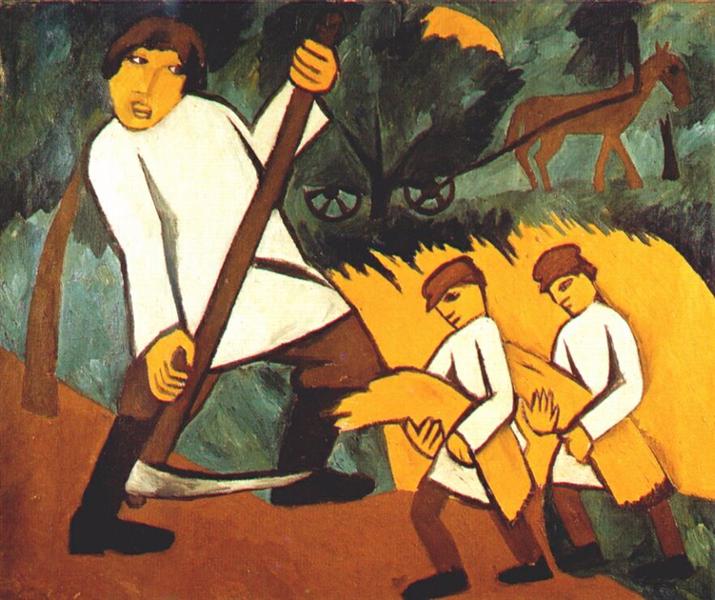
Asymmetrical Balance
If you split this image down the middle vertically, it is not the same on each side.
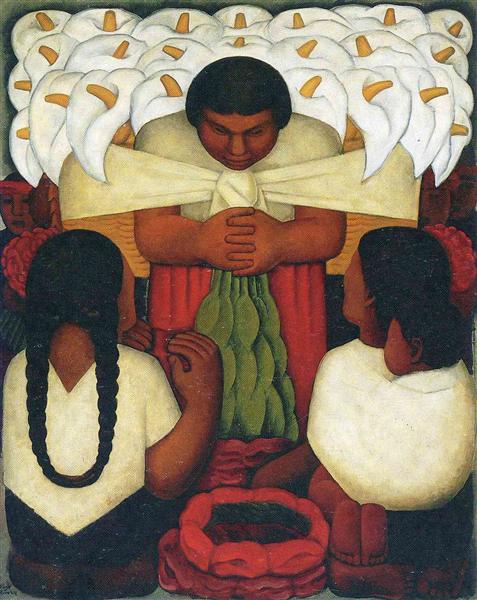
Symmetrical Balance
If you split this image down the middle vertically, it is almost identical on either side.
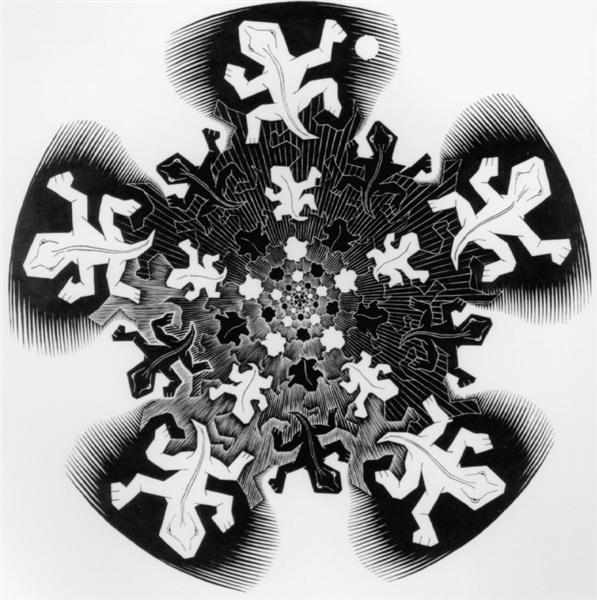
Radial Balance
All elements radiate out from a central point, like spokes on a wheel.
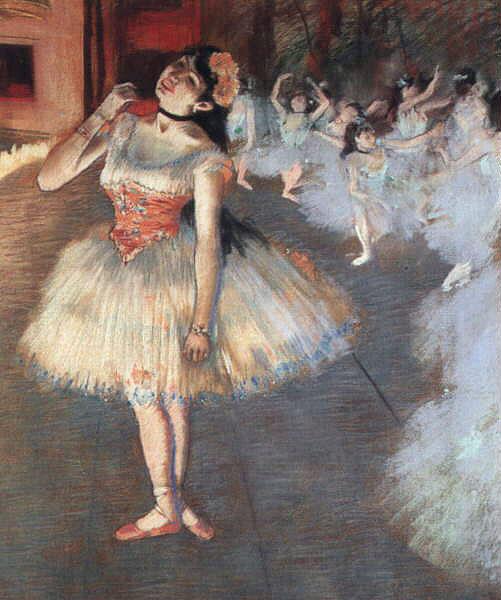
Asymmetrical Balance
When you split this image down the center vertically, it has a large dancer on one side and several smaller dancers on the other.

Symmetrical Balance
When you split this image down the middle vertically, it cuts the main figure almost in half and has a smaller grouping of riders that are similar in size and at the same level on each side.
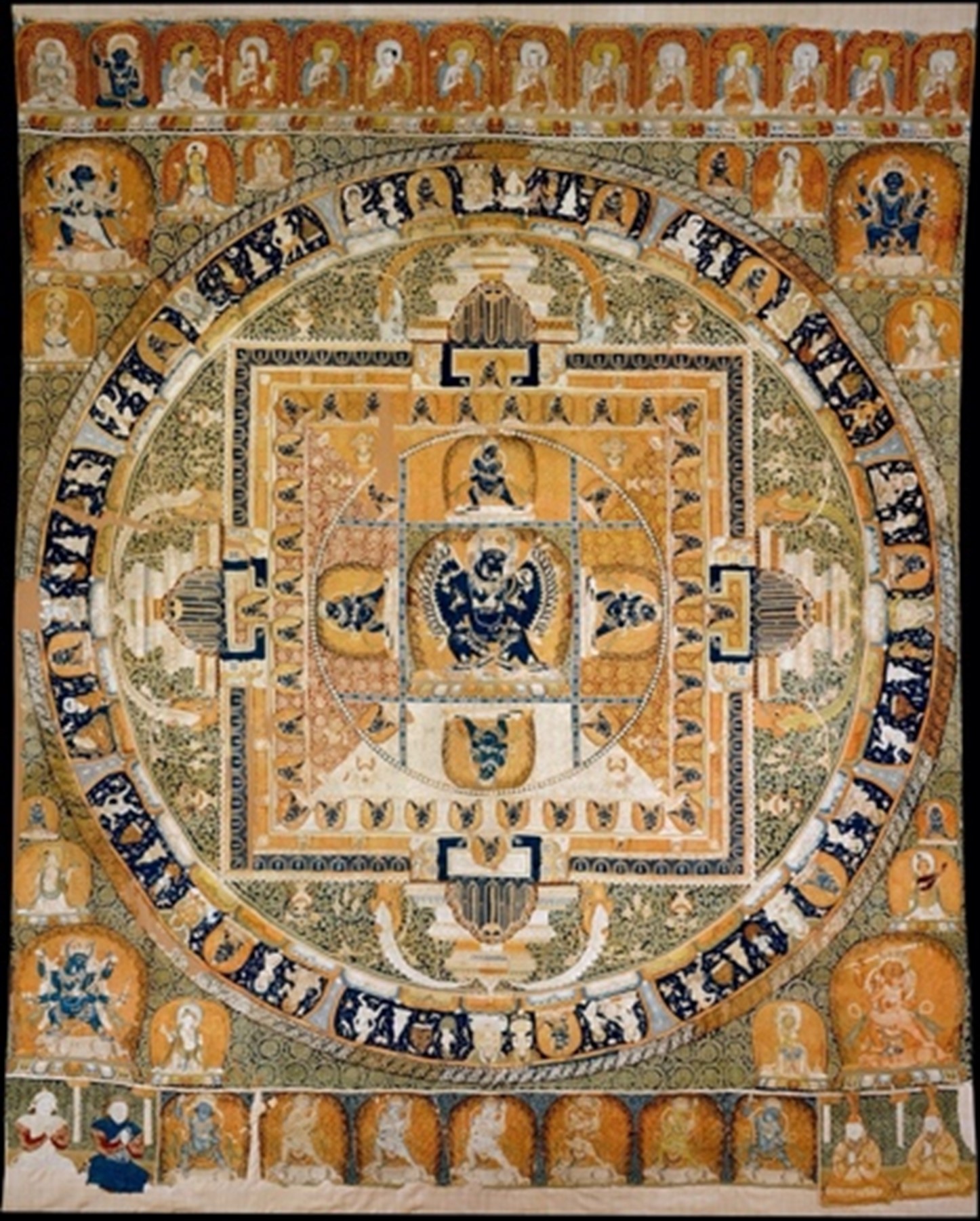
Radial Balance
All elements radiate from a central point. The composition does not have to end in a circle for the balance to be radial.

Asymmetrical Balance
When you split the image in half vertically, this composition has a large tree on one side and two smaller men on the other.

Symmetrical Balance
Almost all portraits, especially those that are frontal facing, will be symmetrical. This is because the human form is typically somewhat symmetrical.
Cards remaining:
How many did you guess correctly? Look again at the images and before moving on, write a definition of each type of balance in your sketchbook. Base your definitions on your prior knowledge and observations. Make sure to use your own words. When you are finished, click on each of the sections below to see the definitions we’ll use in this class.
Symmetrical balance is also called “formal balance.” In this type of balance, the same or similar compositional elements are placed on either side of a dividing line that typically runs vertically through the middle of an artwork. Symmetrical balance creates a sense of stability and order in an artwork. It is typically used with artwork of a serious nature, such as religious artwork.
Asymmetrical balance is also referred to as “informal balance.” It is achieved when an artwork has the same or similar visual weight on either side of a dividing line, but the visual elements used are very different from each other. This type of balance is more dynamic than symmetrical balance and is often used to create emphasis on a central figure or to communicate a strong emotion or mood.
Radial balance is a type of symmetrical balance in which the same or similar visual elements radiate out from a central point, like spokes on a wheel or a spiral. This type of balance is most often seen in nature (flowers, ripples in water), Op Art, and religious or cultural art. When used, it creates a strong central focus in an artwork.
Compare your definitions with the ones given here. Then, add or erase anything that you need to from your definitions. Keep your definitions in your own words; this will help you remember them more clearly in the future.
