
Review
Are you ready to take this lesson's quiz? The questions below will help you find out. Make sure you understand why each correct answer is correct—if you don't, review that part of the lesson.
What are the three types of balance?
- Symmetrical, Formal, Radial
- Symmetrical, Asymmetrical, Radial
- Formal, Informal, Asymmetrical
- Symmetrical, Implied, Radial
The three types of balance are symmetrical, asymmetrical, and radial. Formal is another word for symmetrical balance, and informal is another word for asymmetrical balance. Implied is a term used when talking about types of texture that are created in 2-dimensional art.
The three types of balance are symmetrical, asymmetrical, and radial. Formal is another word for symmetrical balance, and informal is another word for asymmetrical balance. Implied is a term used when talking about types of texture that are created in 2-dimensional art.
The three types of balance are symmetrical, asymmetrical, and radial. Formal is another word for symmetrical balance, and informal is another word for asymmetrical balance. Implied is a term used when talking about types of texture that are created in 2-dimensional art.
The three types of balance are symmetrical, asymmetrical, and radial. Formal is another word for symmetrical balance, and informal is another word for asymmetrical balance. Implied is a term used when talking about types of texture that are created in 2-dimensional art.
What type of balance does this artwork have?
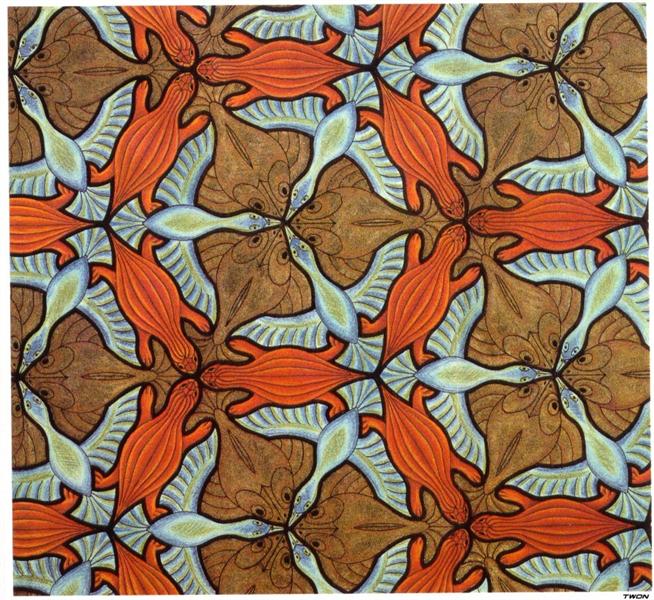
- Formal
- Symmetrical
- Asymmetrical
- Radial
This artwork has radial balance because the elements radiate out from a central point. This creates a kaleidoscope effect within the artwork.
This artwork has radial balance because the elements radiate out from a central point. This creates a kaleidoscope effect within the artwork.
This artwork has radial balance because the elements radiate out from a central point. This creates a kaleidoscope effect within the artwork.
This artwork has radial balance because the elements radiate out from a central point. This creates a kaleidoscope effect within the artwork.
Which type of balance creates a feeling of stability and seriousness?
- Symmetrical
- Informal
- Asymmetrical
- Implied
Symmetrical balance creates a feeling of stability and seriousness because it anchors the viewer's eyes to a central figure (typically) and can create a somber, serious mood within an artwork.
Symmetrical balance creates a feeling of stability and seriousness because it anchors the viewer's eyes to a central figure (typically) and can create a somber, serious mood within an artwork.
Symmetrical balance creates a feeling of stability and seriousness because it anchors the viewer's eyes to a central figure (typically) and can create a somber, serious mood within an artwork.
Symmetrical balance creates a feeling of stability and seriousness because it anchors the viewer's eyes to a central figure (typically) and can create a somber, serious mood within an artwork.
Summary
Questions answered correctly:
Questions answered incorrectly:
